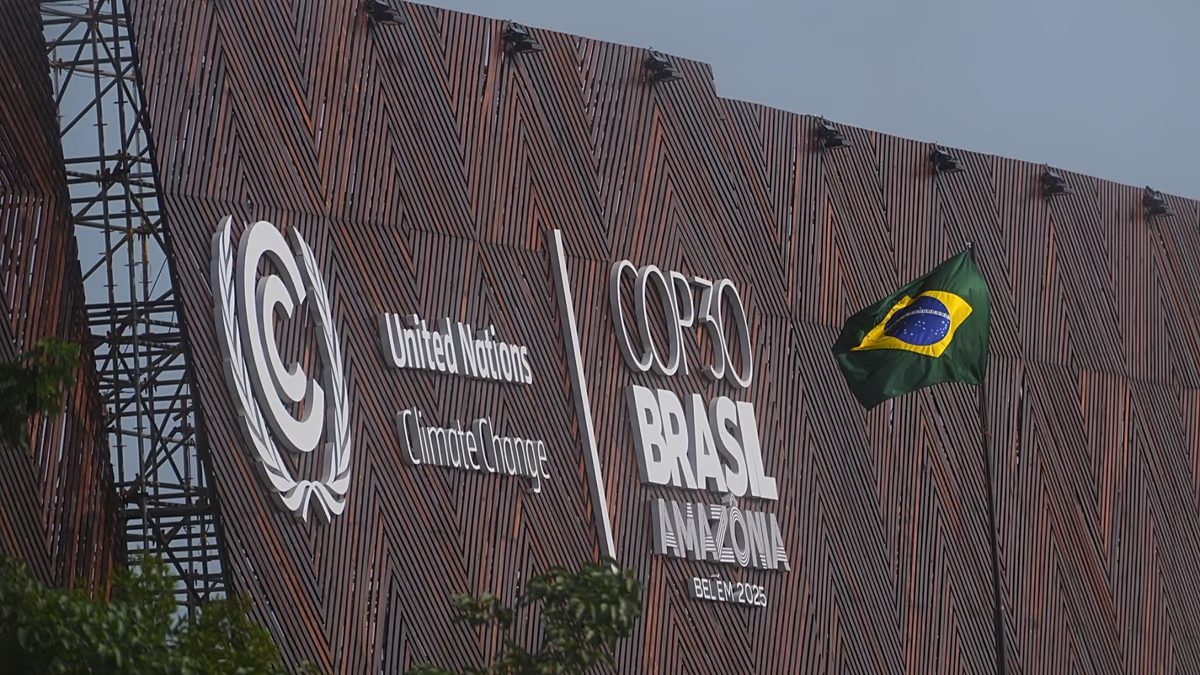

The recent UN climate summit, COP30, held in Belém, Brazil, concluded without a concrete plan to phase out fossil fuels, sparking widespread criticism. Many are labeling the outcome an ineffective step towards addressing global warming, despite urgent calls for action. The failure to establish a clear roadmap for reducing reliance on oil, coal, and gas underscores the significant political hurdles in achieving international climate goals. The summit’s lack of ambition is particularly stark given the increasing impacts of climate change worldwide and the need for decisive COP30 progress.
The absence of a commitment to phase down fossil fuels is attributed, in part, to the withdrawal of the United States from leading international climate talks and the resistance from major fossil fuel producing nations like Saudi Arabia and the United Arab Emirates. These countries openly opposed any binding targets that would threaten their economies. The European Union, while maintaining its commitment to climate action, ultimately backed the final text despite acknowledging its shortcomings.
The Disappointing Outcome of COP30 and the Future of Fossil Fuels
Negotiations at COP30 were fraught with tension, culminating in a final agreement that fell short of expectations for many. One day before the summit’s end, the EU reportedly considered withholding endorsement of the text, highlighting the depth of their concerns over the lack of concrete commitments. Ultimately, the bloc decided to support the agreement, framing it as a minimal step forward while vowing to intensify efforts domestically and through international financing of clean energy projects.
European Commissioner for Climate Action, Wopke Hoekstra, stated the EU “stood united, fighting for ambition on climate action”, despite the compromises made. However, many observers feel that ambition was severely diluted. Dutch MEP Mohammed Chahim (S&D) pointed to the growing fragmentation of the international order and the influence of the BRICS nations as key factors hindering progress.
Geopolitical Challenges to Climate Action
Chahim explained that resistance from oil-producing nations, combined with the opposing stance of BRICS – an organization comprising Brazil, Russia, India, China, and South Africa – created a difficult environment. He stated that the EU, along with the United Kingdom, were left “rowing against the tide” to salvage what little progress was possible.
Irish Climate, Environment and Energy Minister Darragh O’Brien acknowledged the difficulty of supporting the final text, emphasizing that it was “not a choice made lightly.” He expressed regret over the absence of a credible roadmap for phasing out fossil fuels, a goal supported by over 80 countries, including Ireland. Former U.S. Vice President Al Gore also voiced his disappointment on social media, criticizing the “fierce opposition by petrostates” that prevented the development of such a plan.
Despite this setback, Gore indicated the Brazilian COP30 Presidency would continue to spearhead efforts to create a roadmap, drawing on support from the numerous nations already aligned with this objective.
Ignoring the Science and Calls for Accountability
Climate researchers and environmental advocacy groups have been particularly critical of the outcome, describing it as a missed opportunity to address the urgency of the climate crisis. Nikki Reisch, director of the climate & energy programme at the Centre for International Environmental Law, termed the result an “empty deal”, asserting it disregarded both scientific evidence and legal obligations to transition away from fossil fuels and hold polluters accountable.
Doug Weir, director of the Conflict and Environment Observatory, labeled the final text a “moral failure,” citing the disproportionate impact of climate change on vulnerable communities. This sentiment reflects the growing frustration with the slow pace of negotiations and the perceived prioritization of economic interests over environmental protection.
A report from Climate Analytics suggests that full implementation of pledges made at the previous COP28 in Dubai could have reduced the rate of global warming significantly. According to the report, tripling renewable energy, doubling energy efficiency, and addressing methane emissions by 2030 could have cut the anticipated warming to below 2°C. However, current policies still point to a likely 2.6°C increase.
World leaders convened in Belém for two weeks, aiming to assess progress towards limiting global temperature rise to 1.5°C, as outlined in the Paris Agreement. The next steps in global climate negotiations will unfold at COP conferences hosted in Australia and Turkey, where renewed pressure will likely mount for more ambitious commitments.
The lack of a firm commitment at COP30 highlights the ongoing challenges of international climate cooperation. Moving forward, increased pressure on major emitters, strengthened financial support for developing nations, and a renewed focus on net-zero emissions will be crucial to achieving meaningful progress in the fight against climate change.