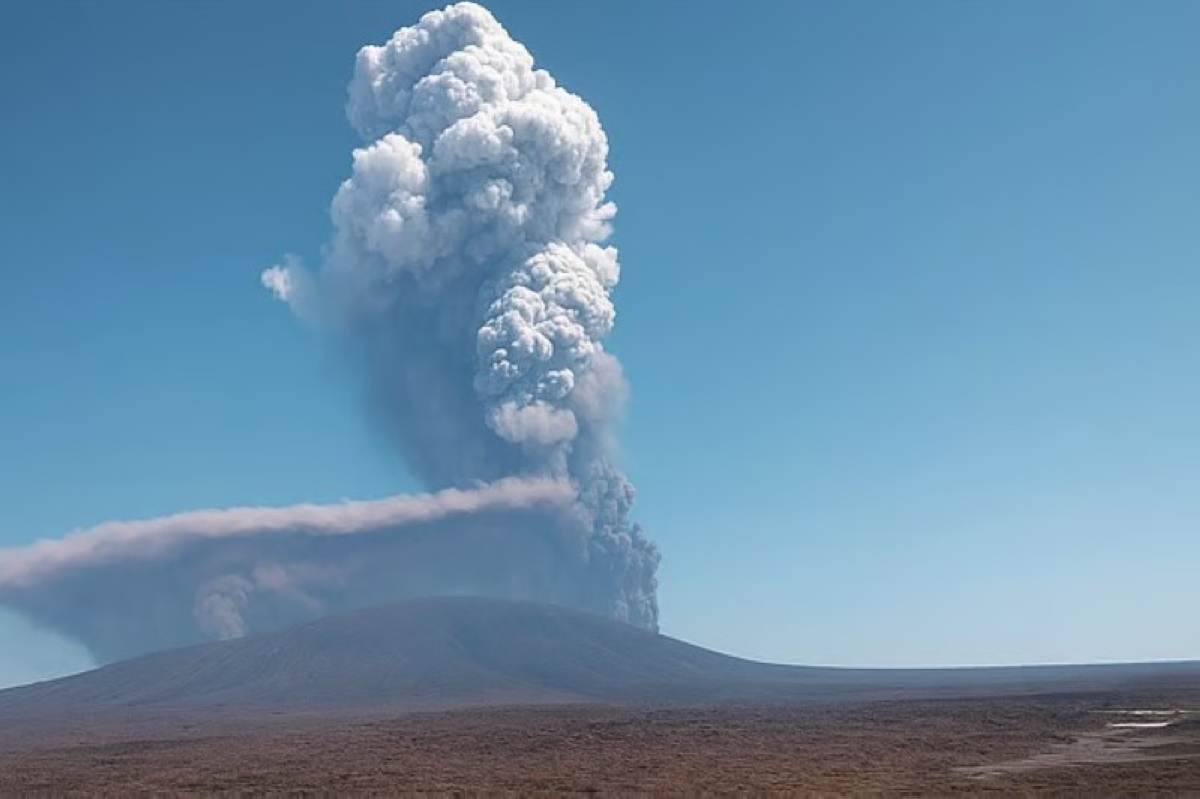

JEDDAH — The National Center for Meteorology (NCM) in Saudi Arabia has confirmed that the recent eruption of the Haile Gobi volcano in Ethiopia poses no immediate threat to the Kingdom’s atmospheric conditions. The NCM is closely monitoring the situation following the volcano’s awakening after millennia of dormancy, but current data suggests that any volcanic ash will not reach Saudi airspace. This assessment is crucial for air travel and public health considerations.
The eruption, which began on Sunday morning in the Afar region of Ethiopia, generated a significant plume of ash extending over 10 kilometers into the atmosphere. Initial concerns focused on the potential for this ash cloud to drift westward, impacting neighboring countries including Saudi Arabia, but the NCM reports no such expected trajectory. Monitoring continues around the clock and further updates will be issued if necessary.
Understanding the Potential Impact of Volcanic Ash
Volcanic ash consists of tiny fragments of rock, minerals, and glass created during explosive eruptions. These particles can be highly abrasive and pose a significant risk to aircraft engines, causing potential failures. Additionally, high concentrations of ash can reduce visibility and contaminate water supplies. While the immediate threat to Saudi Arabia appears minimal, understanding these risks is key to effective meteorological monitoring.
Monitoring Efforts and Technology
The NCM relies on a network of advanced national systems to track cloud movements and various weather phenomena. Spokesman Hussein Al-Qahtani emphasized the center’s consistent observation of regional atmospheric conditions. This continuous monitoring incorporates data from satellites, radar systems, and ground-based observation stations to build a comprehensive picture of the situation.
Satellite imagery has been instrumental in assessing the eruption’s intensity and the dispersion of the ash cloud. Initial images showed a dense column rising rapidly, allowing meteorologists to estimate the volume of ejected material and its likely path. However, wind patterns at different altitudes significantly influence the trajectory of the ash, and these patterns are dynamic.
The Haile Gobi Eruption and Regional Context
The Haile Gobi volcano is located within the Afar region, a geologically active area known as the East African Rift Valley. This region is characterized by ongoing volcanic activity and seismic events. The volcano had been dormant for thousands of years, meaning no historical records exist of previous eruptions aiding in predictive modeling.
The eruption’s location also plays a role in its potential impact. The Afar region’s unique atmospheric conditions and prevailing wind patterns will determine how far and in what direction the ash travels. Current conditions indicate that the plume is primarily moving eastward, away from the Arabian Peninsula, according to initial reports.
Saudi Arabia’s Preparedness and Response
Despite the current low-risk assessment, the NCM is actively prepared to implement necessary measures should the situation change. This includes the potential issuance of alerts and updates to relevant authorities and the public. The center’s proactive approach aims to mitigate any potential disruptions caused by shifting weather patterns.
Furthermore, the NCM is coordinating with regional and international meteorological organizations to share data and insights regarding the eruption. This collaboration ensures a comprehensive understanding of the event and allows for a coordinated response if the ash cloud’s path alters. Effective communication is vital in cross-border weather events.
The impact on air quality in Saudi Arabia is currently expected to be negligible. However, the NCM continues to analyze atmospheric composition for any changes, following standard protocols for such events. Close observation will help identify any unexpected transport of particulate matter.
In contrast to potential disruptions from volcanic ash, Saudi Arabia regularly deals with dust storms and sandstorms, often originating from neighboring deserts. These events, though different in origin, require similar monitoring and preparedness strategies. The NCM has well-established procedures for issuing warnings and advisories regarding these common weather hazards.
Meanwhile, aviation authorities in Saudi Arabia are in close contact with the NCM, receiving regular updates on the volcano’s activity and potential risks to air travel. While no disruptions have been reported as of today, they are prepared to adjust flight paths or ground aircraft if conditions warrant it.
The eruption also highlights the importance of broader volcanic ash monitoring globally. Several international agencies, including the Volcanic Ash Advisory Centers (VAACs), provide crucial information to airlines and meteorological services worldwide. These centers utilize sophisticated models and real-time data to predict the movements of ash clouds and issue timely warnings. Understanding long-range atmospheric transport is core to this process.
The NCM will continue to monitor the situation at Haile Gobi volcano and provide updates as new information becomes available. The next assessment is scheduled for later this week, considering any shifts in wind patterns or further volcanic activity. While current indicators show no direct impact on Saudi Arabia, the dynamic nature of atmospheric conditions necessitates ongoing vigilance and proactive preparedness.