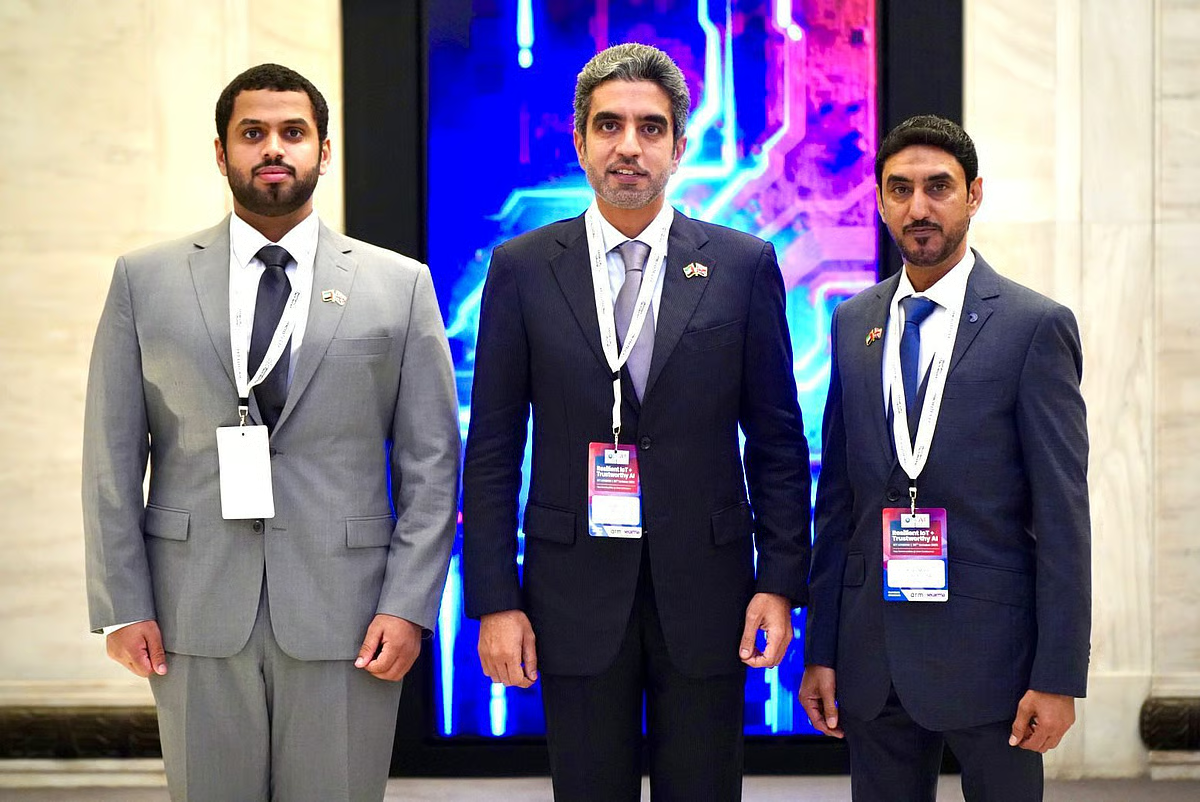

Dubai’s General Directorate of Residency and Foreigners Affairs (GDRFA) recently participated in key international events focused on the future of government services, showcasing advancements in digital transformation and artificial intelligence. The GDRFA delegation attended the International Conference on Innovation and Entrepreneurship and the Lab Innovations Exhibition, both held in Birmingham, UK, earlier this month. These engagements aimed to explore new strategies for enhancing government efficiency and citizen experience.
The events, which concluded on November 23rd, provided a platform for the GDRFA to demonstrate Dubai’s commitment to becoming a leading smart city. Discussions centered on streamlining government processes, bolstering Dubai’s infrastructure for integrated services, and fostering a more responsive and user-friendly public sector. The participation underscores the emirate’s broader ambitions for technological innovation.
Dubai Accelerates Digital Transformation with AI Focus
The GDRFA’s presence at the Birmingham events highlights Dubai’s ongoing investment in digital transformation initiatives. According to the Dubai Government, the emirate aims to become a fully digital government by 2025, a goal requiring significant advancements in areas like artificial intelligence, data analytics, and cybersecurity. This push is driven by a desire to improve service delivery, reduce costs, and enhance transparency.
Exploring Innovative Government Service Design
The Lab Innovations Exhibition, in particular, offered a showcase of cutting-edge technologies applicable to government operations. Delegates from the GDRFA explored solutions related to automated processes, biometric identification, and personalized citizen services. These technologies are seen as crucial for creating a more efficient and convenient experience for residents and visitors.
The International Conference on Innovation and Entrepreneurship provided a forum for discussing the broader ecosystem needed to support government innovation. This included topics such as fostering public-private partnerships, attracting skilled talent, and creating a regulatory environment that encourages experimentation. The conference emphasized the importance of a collaborative approach to digital transformation.
However, implementing these changes presents challenges. Concerns around data privacy, cybersecurity threats, and the potential for technological disruption require careful consideration. The GDRFA, along with other government entities, is actively working to address these issues through robust security protocols and ethical guidelines.
Strengthening Dubai’s Smart City Infrastructure
Dubai has consistently ranked highly in global smart city indices, and the GDRFA’s participation in these events reinforces its commitment to maintaining that position. The emirate’s strategy focuses on integrating various government services through a unified digital platform, allowing citizens to access information and complete transactions seamlessly. This approach aligns with global trends towards citizen-centric government.
Additionally, the GDRFA is exploring the use of artificial intelligence to enhance its core functions, such as visa processing, immigration control, and residency management. AI-powered systems can automate repetitive tasks, improve accuracy, and provide personalized support to customers. The ministry said that early trials have shown promising results in reducing processing times and improving customer satisfaction.
Meanwhile, the focus on an “agile” government model reflects a shift towards more flexible and responsive service delivery. This involves adopting iterative development processes, embracing user feedback, and empowering government employees to make data-driven decisions. This contrasts with traditional bureaucratic structures that can be slow to adapt to changing needs.
The GDRFA’s efforts are also aligned with the UAE’s broader national strategy for artificial intelligence, which aims to position the country as a global leader in the field. This strategy includes investments in research and development, talent acquisition, and the creation of a supportive regulatory framework. The UAE government views AI as a key driver of economic growth and social progress.
The discussions in Birmingham also touched upon the importance of interoperability between different government systems. Seamless data exchange is essential for creating a truly integrated service experience. The GDRFA is working with other government entities to establish common data standards and protocols, facilitating the flow of information across departments. This is a complex undertaking, requiring significant coordination and investment.
Related to this, the concept of “human-centred design” was a recurring theme throughout the events. This approach emphasizes the importance of understanding the needs and preferences of citizens when designing government services. The GDRFA is incorporating user research and feedback into its development process, ensuring that new technologies are user-friendly and accessible. This focus on user experience is considered critical for driving adoption and maximizing the benefits of digital government.
The GDRFA’s participation in these international events demonstrates a proactive approach to adopting best practices in government service design and smart city development. The insights gained from these engagements will inform the emirate’s ongoing efforts to enhance its digital infrastructure and improve the lives of its residents.
Looking ahead, the GDRFA is expected to publish a detailed report outlining the key takeaways from the Birmingham events and the next steps for implementing new initiatives. A timeline for the rollout of specific AI-powered services is anticipated by the first quarter of 2024, though the exact details remain subject to ongoing evaluation and budgetary considerations. Further announcements regarding public-private partnerships in the technology sector are also expected in the coming months.