
European leaders are demanding a central role in ongoing Ukraine negotiations, particularly regarding matters of direct EU jurisdiction like economic sanctions against Russia and the handling of immobilized Russian Central Bank assets. This push comes after concerns arose that a preliminary peace plan, drafted by the United States and Russia, initially excluded significant European input, potentially sidelining the bloc from discussions shaping the continent’s future security. The situation highlights increasing tensions between the US and Europe over the best path toward resolving the conflict.
The initial 28-point plan, discussed Sunday in Geneva, Switzerland, reportedly included terms advantageous to Moscow, igniting a scramble among European officials to amend the framework. While details remain largely undisclosed, reports suggest the plan touched on Ukraine’s potential EU and NATO accession, as well as the scale of its future armed forces. Negotiations continue, with adjustments made following feedback from European representatives.
European Involvement in Ukraine Peace Talks Intensifies
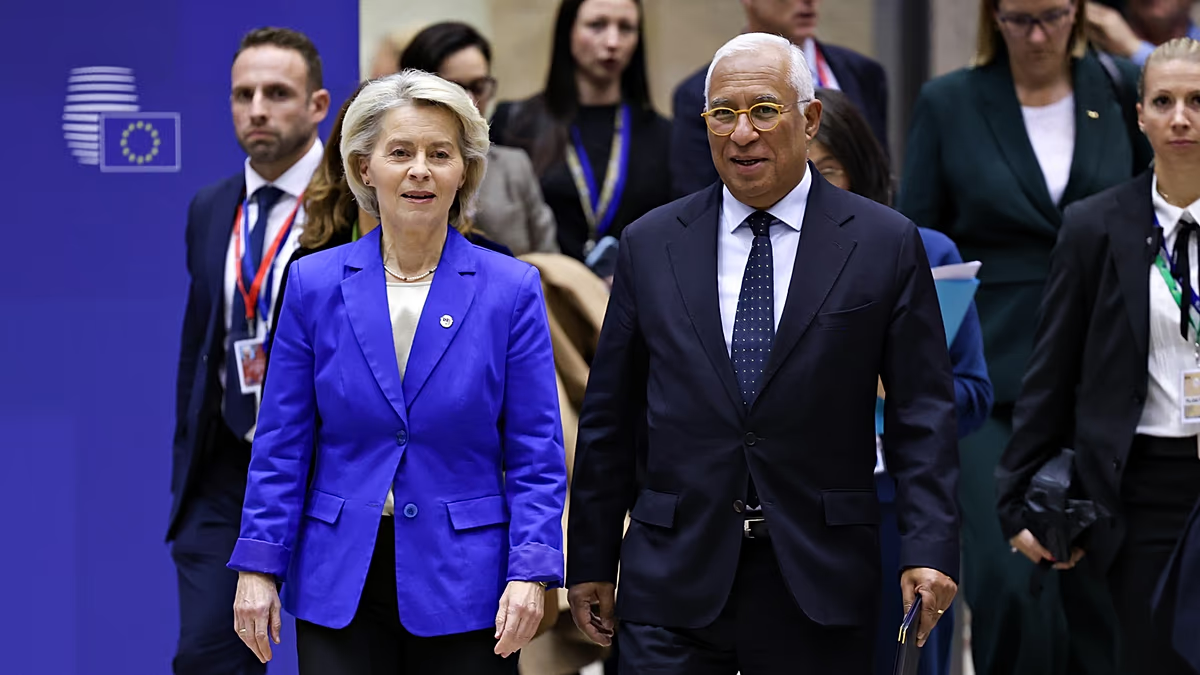
António Costa, President of the European Council, stated on Monday that discussions between the US and Ukraine “were constructive and that progress was achieved on several issues.” However, he underscored that any resolution impacting the European Union – specifically sanctions, EU enlargement related to Ukraine, and the management of frozen Russian assets – necessitates “full involvement and decision by the European Union.” Costa made these remarks following a special EU leaders’ meeting in Luanda, Angola.
The urgency for European integration into the process stems from fears that a deal negotiated without them could undermine the EU’s extensive support for Ukraine and its long-term security interests. The EU has committed over €187 billion in assistance to Ukraine since the start of the full-scale invasion and granted the country candidate status for membership.
Concerns Over Russian Assets and Reparations
A key point of contention revolves around the approximately €300 billion in Russian Central Bank assets frozen within European borders. While the initial US-Russia proposal reportedly called for their release, European officials strongly opposed this, arguing that these funds should be used to compensate Ukraine for the extensive damage caused by the war. Euronews reports that some officials view unfreezing the assets as “economic brutality” that would jeopardize future reparations efforts.
Leaders such as Sweden’s Ulf Kristersson and Lithuania’s Gitanas Nausėda are now pushing for the swift approval of a loan financed by these frozen assets, intended to bolster Ukraine’s defense capabilities and reconstruction. This demand is adding pressure to previously scheduled debates about the loan, aiming for a decision in December.
Shifting Positions and US Flexibility
Even positions originally presented as firm are undergoing revision. Ursula von der Leyen, President of the European Commission, initially stated there “cannot be limitations” on the size of the Ukrainian armed forces. However, she later clarified that any capping would require Kyiv’s explicit consent. She emphasized that Ukraine’s territory and sovereignty must be respected and that the decision on its future military strength remains solely with Ukraine.
US Secretary of State Marco Rubio acknowledged that certain “equities,” like the Russian assets, would require separate negotiation with the EU and NATO allies, signaling a willingness to address European concerns. He also indicated that the Thanksgiving deadline, initially pushed by the Trump administration, is now considered flexible. The focus, Rubio stated, is on achieving a lasting peace as quickly as possible, rather than adhering to an arbitrary timeline.
Volodymyr Zelenskyy, the Ukrainian President, has actively sought increased European involvement, reportedly to mitigate potential Russian influence on any agreement reached with the US. He stressed the importance of careful consideration for all joint actions with partners.
The ongoing Ukraine negotiations represent a delicate balancing act, with European leaders striving to secure their interests and ensure a just and durable resolution to the conflict. The future of European security and its relationship with Ukraine hinge on the outcome of these discussions. Monitoring the progress on the reparations loan and the continued evolution of the peace plan will be crucial in the coming weeks.