
Dubai has announced its largest-ever three-year budget for the 2026-2028 financial cycle, totaling AED 246 billion (approximately $66.8 billion USD). The plan prioritizes investments in strategic sectors including technology, space, and entrepreneurship, signaling a continued push for diversification and solidifying Dubai’s position as a global economic hub. This Dubai budget reflects ambitious goals outlined by the emirate’s leadership.
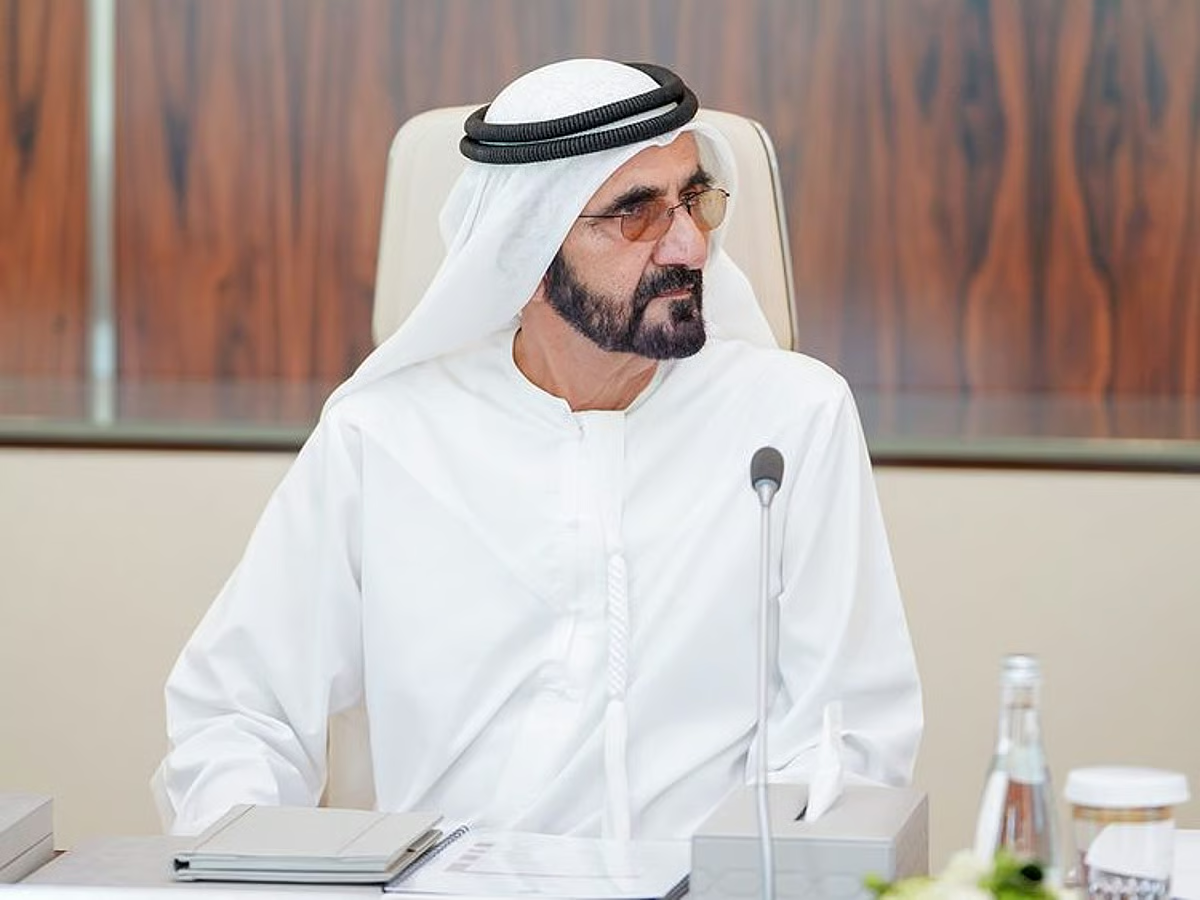
The announcement, made by Sheikh Mohammed bin Rashid Al Maktoum, Ruler of Dubai, and Sheikh Hamdan bin Mohammed bin Rashid Al Maktoum, Crown Prince of Dubai, highlights a commitment to both rapid growth and fiscal responsibility. Government departments and entities are expected to implement the budget across various projects and initiatives over the next three years. The plan demonstrates confidence in the emirate’s economic resilience and future prospects.
Understanding the 2026-2028 Dubai Budget and its Focus
Central to the new Dubai budget is a drive to double the emirate’s Gross Domestic Product (GDP) and become one of the world’s top three urban economies within the next decade. This aligns with the broader “Dubai Economic Agenda D33,” launched in 2023, which outlines a series of goals for economic development and diversification. The agenda focuses on increasing foreign direct investment and promoting innovation across key sectors.
According to official statements, approximately AED 90 billion is allocated to infrastructure development. This includes projects designed to improve transportation, utilities, and overall city infrastructure, aiming to enhance Dubai’s attractiveness to both residents and businesses. Adequate infrastructure is seen as critical for supporting anticipated growth in population and economic activity.
Key Investment Areas
The budget specifically earmarks substantial funding for future-focused sectors. A significant portion will be dedicated to accelerating digital transformation initiatives across government services and the private sector. This includes investments in cloud computing, cybersecurity, and data analytics.
Space research and development also receive considerable attention. Dubai’s space program, spearheaded by the Mohammed Bin Rashid Space Centre (MBRSC), continues to expand, with projects like the Emirates Mars Mission and the development of advanced satellite technologies. These initiatives contribute to the advancement of scientific knowledge and the growth of a high-tech industry within the emirate.
Furthermore, support for entrepreneurship is a key pillar of the budget. This will be achieved through various programs aimed at providing funding, mentorship, and resources to small and medium-sized enterprises (SMEs). The government recognizes SMEs as vital engines of job creation and economic innovation.
Economic Context and Strategic Objectives
Dubai’s economy has historically been reliant on trade, tourism, and real estate. However, in recent years, the emirate has actively pursued diversification strategies to reduce this dependence and build a more resilient economic base. The UAE’s economic outlook remains positive, though subject to global economic conditions.
The current financial plan follows a period of strong economic growth for Dubai. The emirate’s GDP grew by 10.7% in 2022 and an estimated 5.8% in 2023, according to Dubai Statistics Centre data. This growth has been driven by an increase in tourism, a rebound in the real estate market, and the expansion of non-oil sectors.
However, challenges remain. Global economic uncertainty, rising interest rates, and geopolitical tensions pose risks to Dubai’s economic outlook. The budget reflects a pragmatic approach, balancing ambitious growth targets with a commitment to fiscal stability. This strategic allocation of resources aims to mitigate potential risks and ensure long-term sustainability.
Sheikh Hamdan emphasized the budget’s role in attracting global investors and innovators. By showcasing a commitment to future technologies and a supportive business environment, Dubai aims to position itself as a hub for innovation and investment. This is expected to create new opportunities and drive economic growth across various sectors.
Impact on Key Sectors and Future Development
The increased investment in digital technologies is expected to benefit several sectors, including finance, healthcare, and logistics. The adoption of artificial intelligence (AI) and other advanced technologies will likely lead to improved efficiency, enhanced productivity, and the development of new products and services. This support for AI development is intended to position Dubai as a leader in the field.
The focus on infrastructure development will have a positive impact on the real estate sector, which remains a significant contributor to Dubai’s economy. New transportation links, improved utilities, and enhanced public spaces are likely to stimulate demand for both residential and commercial properties.
Meanwhile, the continued investment in tourism is expected to attract more visitors to the emirate. Dubai is already a popular tourist destination, and the government aims to further enhance its appeal by developing new attractions, improving tourism infrastructure, and promoting the emirate as a safe and welcoming destination.
The budget’s success will depend on the effective implementation of its various initiatives and the ability of government entities to manage resources efficiently. Monitoring key performance indicators (KPIs), such as GDP growth, foreign direct investment, and SME development, will be crucial for assessing the budget’s impact.
The next step involves detailed planning and execution by individual government departments and entities. They will be required to submit detailed implementation plans outlining how they intend to utilize their allocated funds. The Department of Finance will oversee the implementation process and monitor progress against established goals. A comprehensive review is anticipated in late 2026, with adjustments potentially made based on early performance data and evolving economic conditions. Ongoing monitoring of global economic trends and their potential impact on Dubai’s economy will also be critical.