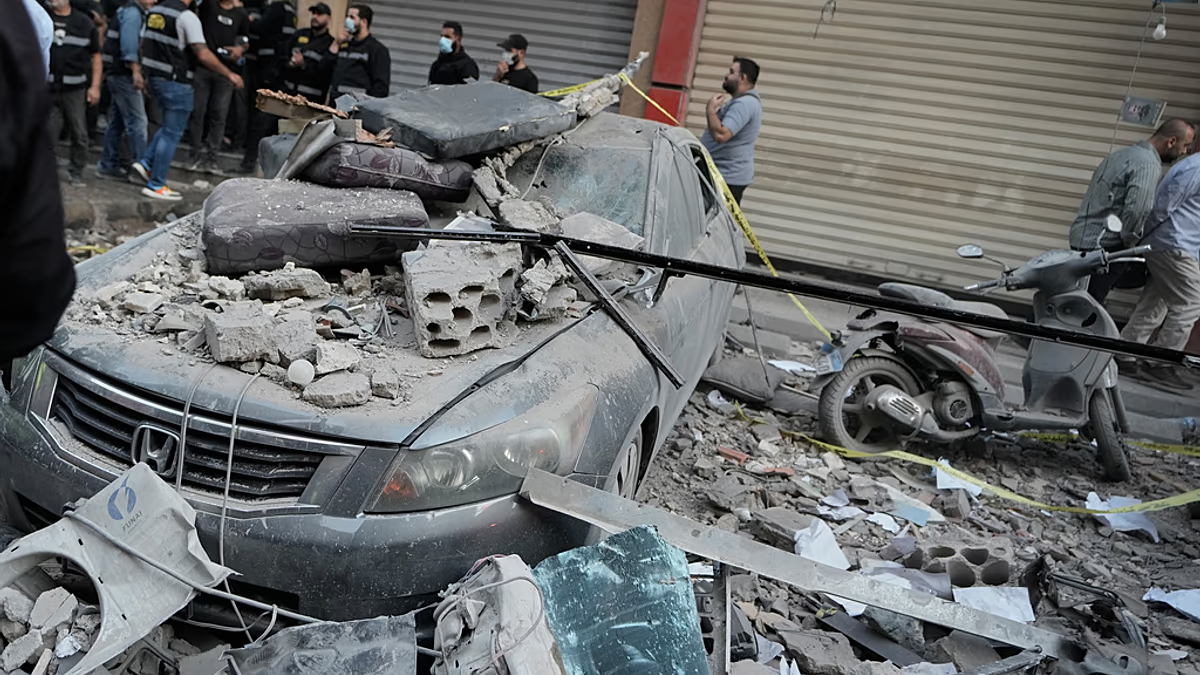

Israel confirmed Sunday the killing of Haitham Tabatabai, a senior Hezbollah commander, in a strike in Beirut, Lebanon. The attack, which took place in the southern suburbs of the capital, resulted in multiple casualties and has triggered warnings of a potential escalation in the ongoing Middle East conflict. This marked the first Israeli strike within Beirut since June of the previous year, signaling a shift in the parameters of the conflict.
Lebanese authorities reported five deaths and 28 injuries following the Israeli strike. Hezbollah initially acknowledged the incident, stating a “figure” connected to the resistance had likely been killed, and later confirmed Tabatabai’s death. The incident quickly prompted calls for international intervention to prevent further hostilities.
Escalation Risks Following Hezbollah Commander’s Death
The targeted killing of Tabatabai, who led Hezbollah’s elite Radwan unit, represents a significant development in the increasingly tense border clashes between Israel and the Lebanese militant group. Israeli Defense Minister Israel Katz stated the strike was a necessary measure to protect Israeli citizens and vowed continued forceful action. Recent reports indicate a pattern of escalating exchanges.
Hezbollah officials, gathered at the site of the attack, indicated a response is being considered. Mahmoud Qamati, deputy chairman of Hezbollah’s political council, warned the strike “opens the door to an escalation of attacks across Lebanon,” suggesting the group is weighing its options for retaliation.
Tabatabai’s position within Hezbollah made him a key target. He was widely considered the successor to Ibrahim Akil, another senior commander killed in September 2024, suggesting Israel is systematically targeting the group’s leadership structure. According to the Israeli military, Tabatabai was central to Hezbollah’s war preparations.
Context of the Conflict
The current conflict is deeply rooted in regional tensions, and operates alongside the ongoing war in Gaza. While nominally separate, the activities of Hamas and Hezbollah are intertwined, and Israel views the organization as a critical threat. Cross-border fire between Hezbollah and Israeli forces has been a recurring feature of the region for decades – however, the intensity has increased in recent months.
Lebanese President Joseph Aoun strongly condemned the attack, claiming Israel was deliberately violating ceasefire terms. He called for a robust international response to halt attacks against Lebanon and its civilians. The president’s statement highlights the delicate political situation within Lebanon itself, where the country already grapples with a severe economic crisis and political instability.
Israel’s foreign ministry justified the strike by citing repeated Hezbollah ceasefire violations, framing the attack as a defensive measure. However, the timing and location of the strike, deep within Beirut, raise concerns about the potential for wider civilian impact and further escalation.
The precision of the strike, targeting a specific individual, underscores Israel’s intelligence capabilities within Lebanon. It remains unclear what specific actions prompted the timing of the operation, or what impact the removal of Tabatabai will have on Hezbollah’s operational effectiveness and military strategy.
The situation remains highly volatile, and observers are closely monitoring Hezbollah’s response. Any significant retaliation could trigger a larger-scale conflict, drawing in other regional actors and potentially destabilizing the wider area. Continued diplomatic efforts are crucial to de-escalate tensions and prevent further violence, particularly given the fragile state of the region following the attacks in Gaza and the escalating tensions. Follow developing news for updates on the situation.