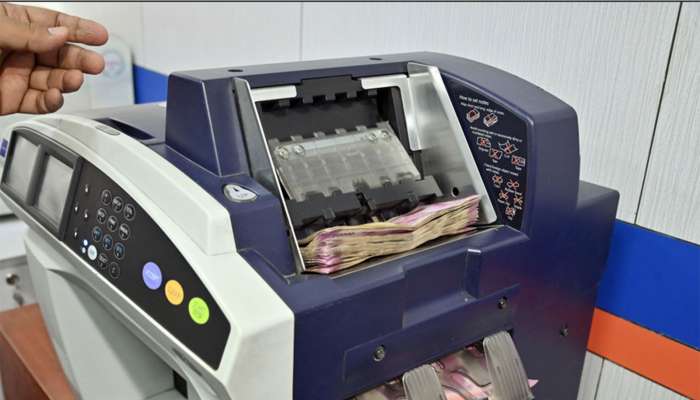

The Indian rupee experienced significant pressure on Friday, hitting a new record low of 89.43 against the US dollar. This decline is attributed to a confluence of factors, including increased global demand for the dollar, consistent selling by foreign investors, and underlying trade imbalances within the Indian economy. While the situation presents challenges, experts suggest the Reserve Bank of India (RBI) is actively managing the volatility to prevent disruptive swings.
Factors Contributing to the Rupee’s Decline
Several interconnected forces are driving the Indian rupee’s depreciation. The strengthening US dollar, fueled by higher interest rates and a relatively robust US economy, is a primary driver. The dollar index, measuring the US currency against six major peers, rose to 100.09, further illustrating its dominance.
This strength in the dollar is occurring alongside a cautious approach from foreign investors. Global risk-off sentiment leads to capital flight from emerging markets like India, increasing the demand for the perceived safety of the US dollar. This outflow of funds directly impacts the rupee’s value.
Deteriorating Trade Fundamentals
Beyond the global macroeconomic picture, India’s own trade fundamentals are exacerbating the situation. Prajyot Chopda of Rajwade Treasury Consultants LLP points to a record goods deficit of USD 41.7 billion in October, a substantial 60% increase year-over-year. This widening deficit is a key concern.
Specifically, export momentum has slowed considerably, contracting by 11.8% to USD 34.4 billion. Simultaneously, imports have surged, driven in part by a tripling of gold imports to USD 14.7 billion, bringing the total import bill to USD 76.1 billion. Even excluding gold and crude oil – traditionally volatile commodities – the non-oil, non-gold deficit has widened by a significant 77% to USD 14.6 billion. This indicates a broader weakening in India’s trade position.
The Role of US Economic Policy
The US Federal Reserve’s monetary policy is playing a crucial role in the rupee’s current predicament. According to Prasenjit Paul, Equity Analyst at Paul Asset, the US economy has demonstrated steady growth while inflation has remained stubbornly above the Fed’s target.
This has necessitated maintaining higher interest rates for a longer period, attracting capital to the US and bolstering the dollar. Consequently, foreign portfolio inflows into India have become inconsistent during periods of global economic uncertainty, further contributing to the downward pressure on the Indian currency.
RBI’s Intervention and Currency Management
Despite the challenging conditions, analysts generally agree that the RBI is managing the situation effectively, deploying a strategy of controlled adjustments rather than outright defense of a specific exchange rate. The central bank’s approach contrasts with that of many other Asian nations, which often experience sharper, more volatile currency fluctuations.
As Paul explains, the rupee tends to adjust gradually, guided by the RBI’s interventions. This prevents sudden, disruptive swings that could harm trade and investment. The RBI’s actions are supported by India’s substantial foreign exchange reserves, providing a healthy buffer for necessary interventions. Attempting to artificially inflate the rupee’s value would be unsustainable given the sustained demand for dollars globally.
India’s Structural Vulnerabilities and Hedging Imbalance
India’s reliance on imported crude oil significantly amplifies its vulnerability to external shocks. Economies that are net exporters of commodities or consistently run current account surpluses find their currencies naturally supported, a situation India doesn’t currently enjoy.
Jyoti Bhandari, Founder & CEO of Lovak Capital, highlights a concerning “hedging imbalance” where importers are aggressively buying dollars to protect themselves against further depreciation, while exporters are delaying currency conversions, anticipating even more favorable rates. This behavior further exacerbates the downward pressure on the Indian rupee.
Outlook and Recommendations
The consensus among experts is that the RBI will continue its measured approach, intervening to smooth volatility rather than rigidly defend a target rate. They emphasize that a gradual and orderly depreciation is preferable to a sharp, destabilizing fall.
Companies operating in India are advised to actively hedge their currency exposures to mitigate risk. Investors, similarly, should prioritize diversification across both domestic and international assets to navigate the current environment with prudence. Successfully navigating this period requires a proactive and diversified strategy.
The current depreciation of the Indian rupee is a complex issue stemming from both global and domestic factors. Although the situation necessitates careful monitoring, the RBI’s proactive management and India’s underlying economic strengths suggest a capacity to weather the storm and maintain financial stability. Maintaining a focus on long-term economic fundamentals and adopting prudent financial strategies will be key to minimizing the impact of short-term volatility.