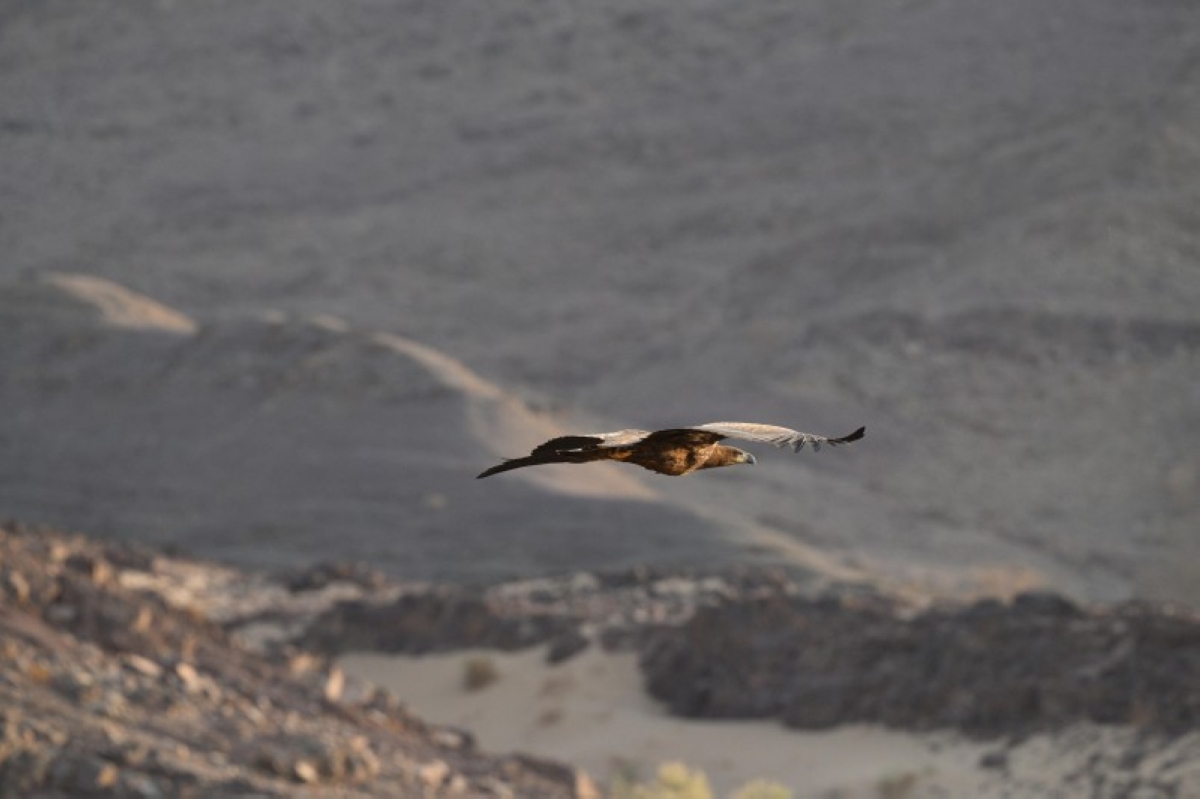

The Prince Mohammed bin Salman Royal Reserve has announced a significant wildlife sighting: a white-tailed eagle. This marks the first confirmed observation of the migratory eagle in Saudi Arabia in over two decades, highlighting the growing importance of the reserve as a biodiversity hotspot. The rare visitor was spotted in Wadi Thalbah, a key wetland within the protected area.
Ali Al-Faqih, Director of Biodiversity and Research at the reserve, documented the sighting with photographs. The occurrence underscores successful habitat restoration efforts and supports the Kingdom’s ambitious environmental targets outlined in Vision 2030. It also emphasizes the value of ongoing monitoring of bird migration patterns within Saudi Arabia.
The Return of the White-tailed Eagle: A Symbol of Conservation Success
The white-tailed eagle, typically found in the northern hemisphere, rarely ventures this far south. Its appearance in the Prince Mohammed bin Salman Royal Reserve is considered a positive indicator of environmental health and the effectiveness of local conservation initiatives. This exceptional sighting reinforces the reserve’s role as a crucial stopover point for migratory species.
Expanding Biodiversity Documentation
Since 2021, the reserve has undertaken six comprehensive, multi-season biodiversity studies. These research projects have been conducted in collaboration with experts from Saudi Arabia, and from five additional countries, demonstrating an international commitment to the area’s preservation. According to reserve officials, the studies have thus far identified 247 bird species, including seven with newly documented range extensions.
These findings represent approximately 49 percent of all bird species currently recorded within the Kingdom, a proportion expected to increase as research continues. The substantial number of species documented within the reserve demonstrates the importance of its diverse ecosystems.
The Prince Mohammed bin Salman Royal Reserve encompasses a vast 24,500 square kilometers of both terrestrial and marine environments. This includes a remarkable range of ecological zones, from volcanic landscapes to the depths of the Red Sea. It connects significant development projects such as NEOM, The Red Sea Project, and AlUla.
Despite covering just one percent of Saudi Arabia’s land area and 1.8 percent of its marine space, the reserve surprisingly safeguards more than half of the Kingdom’s documented biodiversity. This makes it a premier location for wildlife observation and scientific study in the Middle East, and a critical component of broader regional conservation efforts.
Saudi Arabia’s Vision 2030 and Environmental Goals
The white-tailed eagle sighting aligns with the core tenets of Saudi Arabia’s Vision 2030. A key goal of the plan is to protect 30 percent of the nation’s land and sea by the end of the decade. The reserve’s activities directly support this target through habitat restoration and biodiversity enhancement.
The reserve operates under the direction of the Royal Reserves Council, which is chaired by Crown Prince Mohammed bin Salman. This organizational structure ensures high-level support and coordination with national environmental programs, including the Saudi Green Initiative and the wider Middle East Green Initiative.
The region surrounding the reserve is experiencing considerable economic development, including large-scale tourism and infrastructure projects such as Wadi Al-Disah and Amaala. Maintaining biodiversity within this context requires a careful balance between progress and preservation, a challenge the reserve is actively addressing.
Ongoing monitoring efforts are crucial for understanding the impact of these developments on local wildlife populations. Data gathered from these studies informs adaptive management strategies and helps to mitigate potential negative effects on sensitive ecosystems. The protection of vital flyways is another element of the overall strategy.
The recent detection of the eagle underscores the need for sustained investment in biodiversity research and wildlife management. Additionally, it highlights the potential for ecotourism to contribute to the economic well-being of surrounding communities, while simultaneously incentivizing environmental stewardship.
Looking ahead, the Royal Reserves Council will likely continue to prioritize biodiversity monitoring and habitat restoration within the Prince Mohammed bin Salman Reserve and its seven sister reserves. Future surveys are planned to further assess avian populations and track changes in species distribution. The long-term impact of Vision 2030’s environmental initiatives remains to be seen, but the return of the white-tailed eagle offers a promising early sign. The success of these programs will depend on continued collaboration between local and international experts, and a commitment to sustainable development practices.