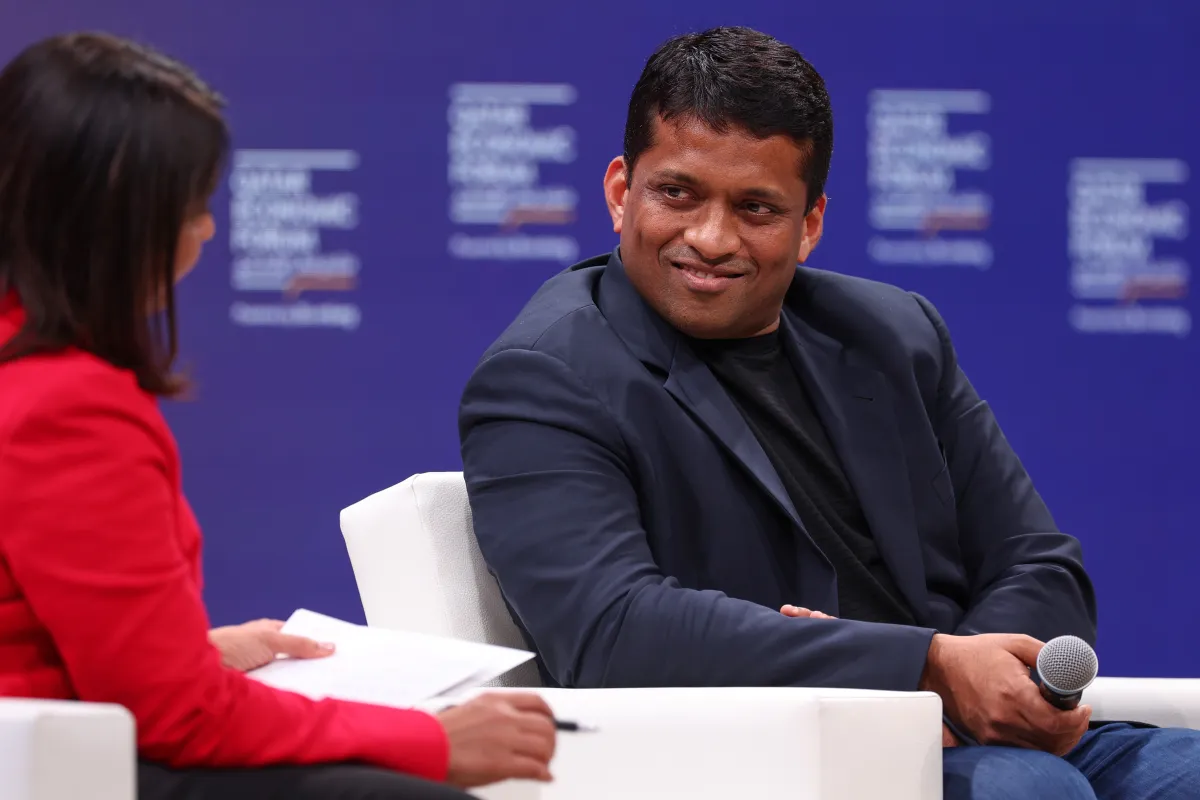

The founder of Indian ed-tech firm Byju’s, Byju Raveendran, is contesting a U.S. bankruptcy court order demanding he pay over $1.07 billion. The judgment stems from allegations that funds were improperly transferred from Byju’s U.S. operations, marking a significant escalation in the company’s ongoing financial and legal troubles. Raveendran denies any wrongdoing and plans to appeal the decision, a dramatic turn for the once high-flying startup.
Byju’s Founder Faces Billion-Dollar Judgment in U.S. Bankruptcy Case
A Delaware bankruptcy judge issued the default judgment after finding Raveendran repeatedly disregarded court orders and provided insufficient information regarding approximately $533 million allegedly transferred from Byju’s U.S. unit, Alpha, in 2022. The judge also cited concerns over a limited-partnership stake valued at around $540.6 million. This ruling is a direct result of legal action initiated by lenders seeking to recover funds related to a $1.2 billion term loan extended to the ed-tech company in 2021.
The dispute began in April when a group of U.S. lenders, led by GLAS Trust, filed suit against Raveendran and his wife, Divya Gokulnath, also a Byju’s co-founder, over the missing loan proceeds. Raveendran and Gokulnath initially countered, accusing the lenders of attempting a hostile takeover. They subsequently announced intentions to file a $2.5 billion lawsuit against GLAS Trust and others in India, though this filing has not yet occurred.
Timeline of Non-Compliance
The court’s recent order followed a September 29 hearing where the judge highlighted a pattern of non-compliance spanning several months. Specifically, Raveendran reportedly missed hearings, failed to meet extended deadlines, and ignored a previous contempt order that imposed daily sanctions of $10,000, which remain unpaid.
U.S. Bankruptcy Judge Brendan Shannon described the relief granted as “extraordinary,” stating the circumstances were “unique” and justified such a measure. The parties involved have been given seven days to respond to the judgment.
Raveendran’s legal team, Lazareff Le Bars, has stated they believe the court erred in its judgment and will pursue appeals. They argue the court issued the ruling without allowing Raveendran a full opportunity to present his defense and that the court overlooked evidence demonstrating GLAS Trust was aware the Alpha funds were intended for Byju’s parent company, Think & Learn, and not personal use.
Additionally, counsel for Raveendran indicated that the founders are preparing to file claims against GLAS Trust and other parties in multiple jurisdictions, potentially seeking damages exceeding $2.5 billion. These claims are expected to be filed before the end of 2025, barring a settlement.
The Fall of an Indian Startup Giant
This default judgment represents a significant setback for Raveendran and Byju’s, a company that was once considered India’s most valuable startup, boasting a $22 billion valuation. The company has faced a series of challenges, including lawsuits, funding difficulties, substantial layoffs, and a struggle for control as creditors attempt to recoup their investments. The situation highlights the risks inherent in the rapidly evolving ed-tech sector and the broader startup ecosystem.
Earlier rulings affirmed the Delaware court’s jurisdiction over the case, with the judge stating Raveendran’s activities related to U.S. fundraising and his role as a director of a U.S. corporation established a connection. This countered Raveendran’s attempts to challenge the court’s authority.
Recent filings in the Delaware case alleged that a substantial portion of the $533 million missing from Byju’s U.S. unit was “round-tripped” back to Raveendran and his associates. Raveendran has vehemently denied these allegations, maintaining the funds were not used for personal gain. The allegations center around the movement of capital and its ultimate destination, raising questions about financial transparency and corporate governance.
Meanwhile, in India, Byju’s is currently undergoing a court-supervised sale process following the initiation of insolvency proceedings last year. Early bidders for the company include Manipal Education and Medical Group (MEMG) and Ronnie Screwvala’s UpGrad, signaling potential restructuring or acquisition scenarios. The Byju’s insolvency process is a separate but related legal battle unfolding in India.
The future of Byju’s remains uncertain. The company faces a complex web of legal challenges and financial pressures. The next steps will likely involve Raveendran’s legal team filing formal appeals and potentially engaging in settlement negotiations with the lenders. The outcome of these proceedings, and the progress of the Indian insolvency process, will determine the fate of the once-prominent ed-tech company and its founder. Investors and stakeholders will be closely watching for updates on the appeals process and any potential restructuring plans. The financial crisis at Byju’s also serves as a cautionary tale for other startups in the region.