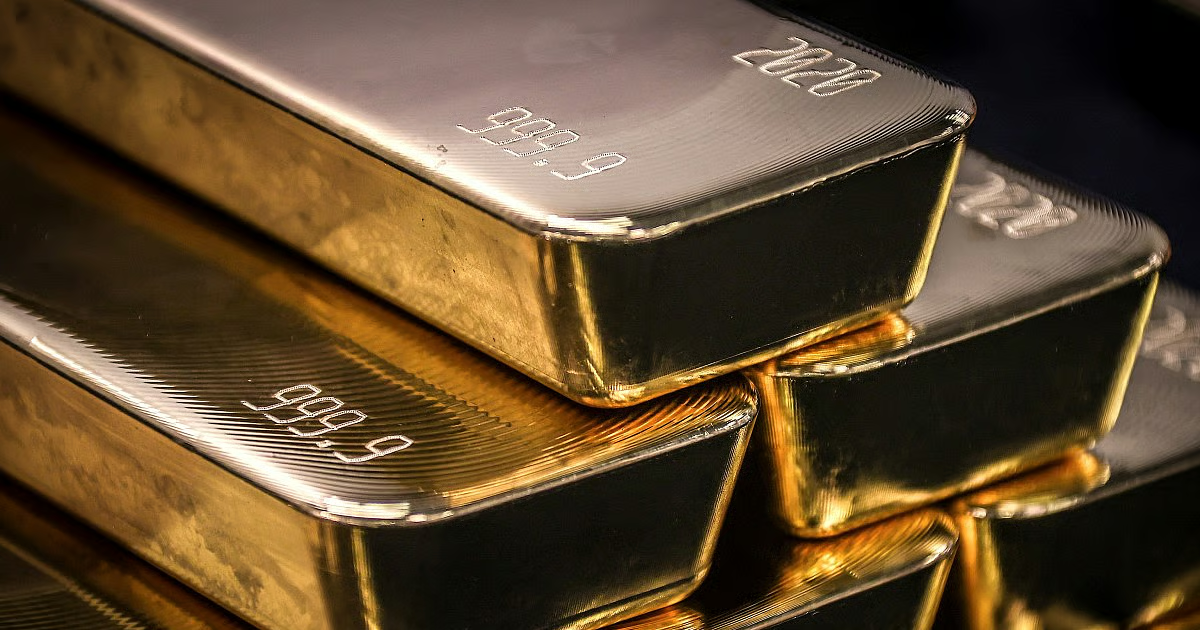

Global gold production remains a critical indicator of economic and geopolitical stability, and recent data highlights the leading nations in this valuable commodity. This article details the top 20 gold-producing countries, showcasing the global distribution of this precious metal. According to the latest figures from the World Gold Council and national mining ministries, China maintained its position as the world’s largest gold miner, with substantial output also coming from Australia, Russia, and Canada.
These statistics, compiled from official government reports and industry analyses released throughout 2023 and early 2024, reveal shifts in production influenced by factors like investment, operational costs, and geopolitical events. Overall global gold mining output totaled roughly 3,222 tonnes in 2023, a slight increase compared to the previous year. These numbers are vital for understanding the dynamics of the global gold market and its impact on international finance.
Understanding Global Gold Production
The extraction of gold is a geographically concentrated industry. A handful of nations consistently account for the majority of worldwide supply. This concentration creates both opportunities and vulnerabilities, as production in these countries can be affected by a wide range of variables, from internal policy changes to international trade relations and labor disputes. Furthermore, varying levels of technological advancement and exploration success contribute to ongoing shifts in the rankings.
Key Players and Their Contributions
China’s dominance in gold mining is driven by substantial domestic demand and significant government investment in the sector. The country produced approximately 330 tonnes of gold in 2023. Australia consistently ranks among the top producers, benefitting from a stable regulatory environment and large-scale operations.
Russia represents another considerable source of gold, with its production often playing a role in stabilizing the country’s economy. However, recent geopolitical tensions and international sanctions have introduced uncertainty around future Russian gold output. Canada and the United States also hold prominent positions, benefiting from well-established mining infrastructure and substantial reserves.
Africa plays an incredibly important role in gold supply. Several countries on the continent significantly contribute to global production, driven by both large-scale mining operations and artisanal mining. Ghana, for example, remains a consistent presence in the top ten.
Top 20 Gold-Producing Countries (2023 Data)
Here’s a look at the top 20 gold-producing countries, based on the latest available data. Figures are approximate and may vary slightly depending on the reporting agency.
- China (330 tonnes)
- Australia (120 tonnes)
- Russia (110 tonnes)
- Canada (100 tonnes)
- United States (90 tonnes)
- Indonesia (90 tonnes)
- Ghana (80 tonnes)
- Tanzania (70 tonnes)
- South Africa (60 tonnes)
- Peru (60 tonnes)
- Uzbekistan (50 tonnes)
- Brazil (50 tonnes)
- Mexico (40 tonnes)
- Democratic Republic of the Congo (40 tonnes)
- Papua New Guinea (35 tonnes)
- Mali (30 tonnes)
- Colombia (25 tonnes)
- Turkey (25 tonnes)
- Argentina (20 tonnes)
- Philippines (20 tonnes)
It’s important to note that these figures represent mine production and do not include recycled gold. Recycled gold is a substantial component of the overall precious metals supply and its volume varies significantly based on economic conditions and consumer behavior.
Several factors contributed to the rankings. Ghana and Tanzania saw increases in production due to new mine developments and improved efficiency. South Africa, historically a dominant force, continues to experience declining output due to aging mines and challenging geological conditions.
Impact of Geopolitical Events
Geopolitical events have a direct and measurable impact on the gold market. The war in Ukraine initially drove up gold prices as investors sought safe-haven assets. Supply chain disruptions, particularly those affecting equipment and consumables for mining operations, also played a role.
Additionally, increased global uncertainty, stemming from factors like inflation and rising interest rates, tends to support gold prices. Central bank purchasing of gold has also been a significant trend. According to the World Gold Council, central banks collectively added substantial gold reserves in 2023, further bolstering demand.
In contrast, a strengthening US dollar can sometimes put downward pressure on gold prices, as it becomes more expensive for international buyers. Regulatory changes within key producing nations can also influence output and market dynamics. For example, stricter environmental regulations could lead to mine closures or reduced production capacity.
The Role of Artisanal and Small-Scale Mining
While large-scale industrial mining dominates the statistics, artisanal and small-scale gold mining (ASM) plays a crucial role, particularly in developing countries. ASM often provides livelihoods for millions of people, but it is frequently associated with environmental damage and social issues.
Efforts are underway to formalize and regulate ASM, promoting responsible mining practices and ensuring fair labor standards. However, the informal nature of much of this activity makes accurate data collection challenging. The contribution of ASM to overall gold production is often underestimated in official statistics.
Future Outlook and Considerations
The future of gold production is subject to numerous uncertainties. Exploration for new gold deposits is ongoing, but the discovery rate has been declining in recent years. This suggests that maintaining current production levels will become increasingly challenging.
The industry is also facing growing pressure to adopt more sustainable mining practices, addressing environmental concerns and minimizing social impacts. Technological advancements, such as improved ore processing techniques and automation, could help to increase efficiency and reduce costs. The World Gold Council is expected to release its updated report on global gold production in the fourth quarter of 2024, which will provide a more comprehensive overview of the latest trends and developments. Monitoring these reports and the evolving geopolitical landscape is crucial for understanding the future of the gold market.
Fluctuations in energy prices, alongside evolving environmental regulations, will be central to influencing the cost of gold extraction. These considerations will continue to shape the dynamics of the global gold market and the rankings of the top gold-producing countries in the years to come.