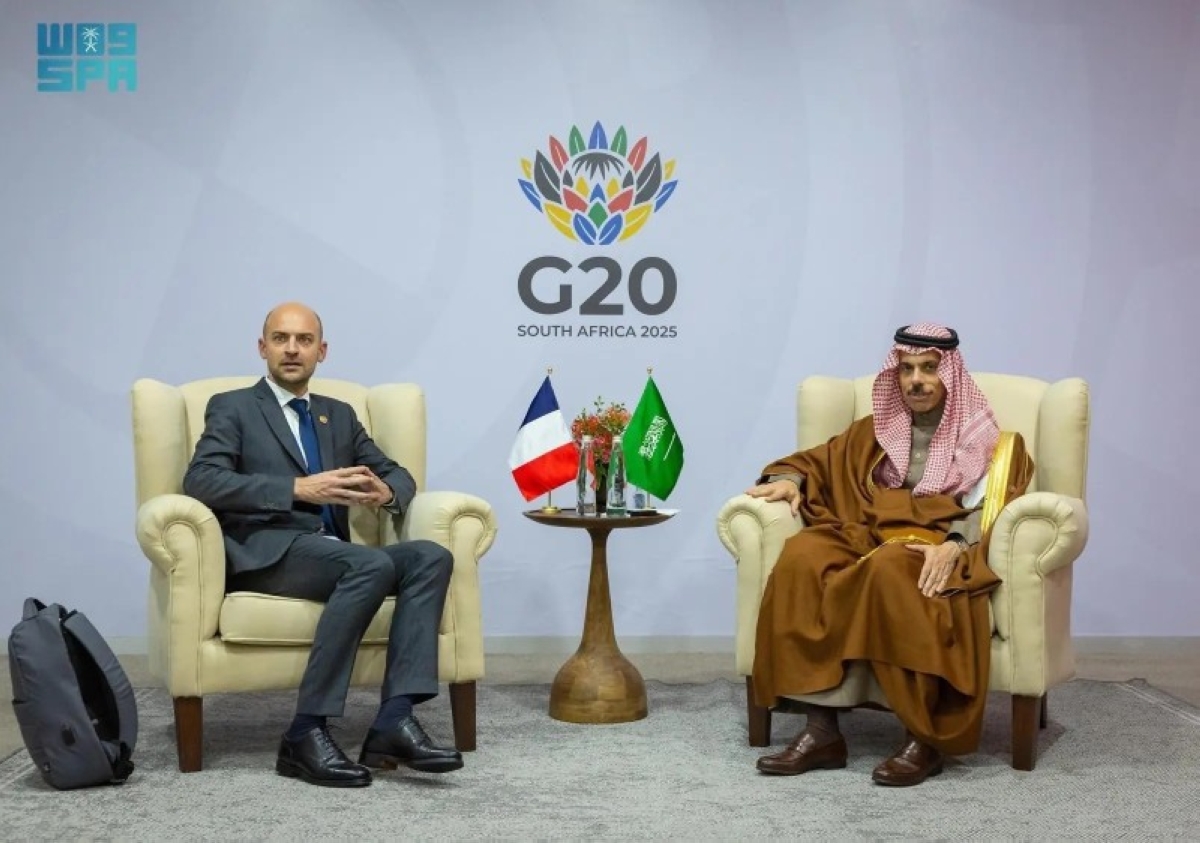

Johannesburg served as the backdrop for significant diplomatic engagements this weekend as Saudi Foreign Minister Prince Faisal bin Farhan held bilateral talks with counterparts from France, Egypt, and Argentina. These meetings, conducted on the sidelines of the G20 Leaders’ Summit, focused on strengthening Saudi Arabia’s international relations and addressing pressing regional concerns. Discussions centered on cooperation across multiple sectors and the evolving geopolitical landscape.
The meetings took place on Saturday, with Prince Faisal meeting separately with French Minister for Europe and Foreign Affairs Jean-Noël Barrot, Egyptian Minister of Foreign Affairs, Immigration, and Expatriates Dr. Badr Abdelatty, and Argentinian Minister of Foreign Affairs, International Trade and Worship Pablo Quirno. Saudi Ambassador to South Africa Faisal Al-Harbi and Director General of the Foreign Minister’s Office Waleed Al-Ismail also attended the discussions, according to a statement released by the Saudi Ministry of Foreign Affairs.
Strengthening Bilateral Ties and Saudi Arabia’s International Relations
These meetings underscore Saudi Arabia’s commitment to proactive diplomacy and its efforts to diversify its partnerships on the global stage. The Kingdom has been increasingly assertive in its foreign policy, seeking to play a more prominent role in mediating regional conflicts and fostering economic collaboration. This push for stronger ties is particularly notable as Saudi Arabia pursues its Vision 2030 economic diversification plan.
With France, discussions likely touched upon existing energy partnerships and potential collaborations in technology and defense. France is a key European ally for Saudi Arabia, and both nations share concerns regarding regional stability, particularly in the Middle East and Africa. Additionally, the ministers likely discussed the ongoing situation in Sudan and the need for a peaceful resolution.
The meeting with Egypt focused on deepening cooperation in areas of mutual economic benefit, including infrastructure projects and investment opportunities. Egypt is a crucial partner for Saudi Arabia within the Arab League and a key player in regional security initiatives. The two countries have historically maintained close political and economic ties, and these talks aim to solidify that relationship further. The ministers also addressed the situation in Libya and the importance of a unified approach to resolving the conflict.
Focus on Economic Cooperation
A significant aspect of the talks with Argentina revolved around enhancing trade and investment links, particularly in the agricultural and energy sectors. Argentina’s position as a major agricultural exporter aligns with Saudi Arabia’s strategy to diversify its food sources. The two countries have also expressed interest in exploring opportunities within the burgeoning green energy sector.
The shift in Saudi Arabian foreign policy, moving beyond its traditional focus on OPEC and oil, is becoming increasingly apparent. They are actively seeking relationships defined by shared economic and security interests, signaled by the range of countries represented at the G20 summit. This broader engagement is intended to enhance the Kingdom’s influence and resilience in a rapidly changing world.
The discussions weren’t limited to bilateral concerns. The ministers also exchanged views on broader regional developments, including the war in Ukraine and its global implications. They reportedly emphasized the importance of upholding international law and finding diplomatic solutions to complex challenges. The meetings provided a platform for aligning positions on key issues and coordinating efforts to promote peace and stability.
The G20 summit itself has been marked by debates over global economic governance and the need for increased cooperation to address issues such as climate change and debt sustainability. Saudi Arabia, as a major economic power, is actively participating in these discussions, advocating for policies that promote inclusive growth and sustainable development. The Kingdom’s stance on these issues is likely to have been reflected in the bilateral meetings.
The meetings also come at a time of heightened geopolitical tension in the Middle East, with ongoing conflicts in Yemen and Syria, and persistent concerns about Iran’s nuclear program. Saudi Arabia has been actively working to de-escalate these tensions and promote dialogue, and the discussions with France, Egypt, and Argentina likely included an assessment of the current situation and potential avenues for mediation. The pursuit of diplomatic solutions remains a central tenet of Saudi foreign policy.
While specific details of the agreements reached during these meetings haven’t been publicly disclosed, the Saudi Ministry of Foreign Affairs indicated that they were productive and constructive. The emphasis on continued dialogue and collaboration suggests a shared commitment to strengthening international partnerships and addressing common challenges. The meetings also highlight the importance of multilateral forums like the G20 in facilitating these interactions.
Looking ahead, the outcomes of these discussions will likely be reflected in future policy initiatives and joint projects between Saudi Arabia and the three nations. Further announcements regarding specific areas of cooperation are expected in the coming weeks. Observers will be watching to see how these strengthened relationships translate into concrete actions on the ground, particularly in the areas of economic development and regional security. The effectiveness of these dialogues will be measured by their impact on ongoing conflicts and the broader stability of the region, as well as the growth of trade relations.
The G20 summit continues through Sunday, and further engagements by Prince Faisal bin Farhan are anticipated. The final communique from the summit, expected later this week, will provide a more comprehensive overview of the key outcomes and commitments made by world leaders, including those related to Saudi Arabia’s role in the global economy and security architecture. The long-term implications of these discussions remain to be seen, but they represent a significant step in Saudi Arabia’s ongoing efforts to enhance its global influence.