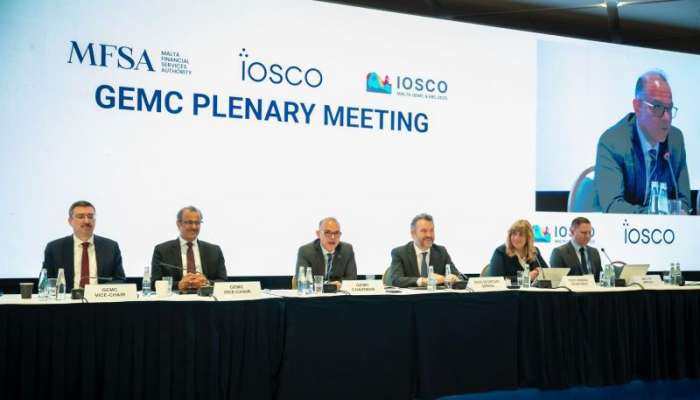

The Sultanate of Oman is actively strengthening its position in the global financial landscape, demonstrated by the recent participation of the Financial Services Authority (FSA) in the Growth and Emerging Markets Committee (GEMC) Annual Meeting held in Malta. Led by H.E. Abdullah bin Salim Al Salmi, Executive President of the FSA, the Omani delegation also engaged with key discussions at the Malta Financial Services Authority (MFSA) Public Conference. This involvement underscores Oman’s commitment to international collaboration and evolving its regulatory framework to meet the demands of a rapidly changing financial world.
Oman’s FSA Focuses on Global Financial Collaboration in Malta
The FSA’s presence at the GEMC meeting in Malta represents a significant step in the organization’s ongoing strategy to enhance its international cooperation. Attending such events allows Oman to learn from the experiences of other regulatory bodies and contribute to shaping global financial standards. This proactive approach is crucial for maintaining a stable and competitive financial sector within the Sultanate.
The meetings provided a vital platform to analyze current trends in international capital markets. Key areas of focus included evolving financial stability concerns, the impact of technological advancements, and updates to regulatory practices worldwide. By staying abreast of these developments, the FSA can refine its policies and ensure they remain aligned with international best practices.
Aligning with International Standards: Sustainability Disclosure and IFRS
A particularly important aspect of the Malta meetings centered on sustainability reporting and the implementation of International Financial Reporting Standards (IFRS) S1 and S2. The FSA is actively assessing the readiness of Oman to adopt these standards, which are designed to provide a consistent and comparable framework for disclosing sustainability-related financial information.
Phased Roadmap for IFRS Implementation
The FSA is currently developing a phased roadmap for implementing IFRS S1 and S2 within the Sultanate. Discussions in Malta highlighted the necessary legal and institutional changes required, as well as the crucial role of boards of directors in overseeing sustainability disclosures. Guidance from the IFRS Foundation and the International Organization of Securities Commissions (IOSCO) is being leveraged to create a robust national framework. This framework will not only meet international expectations but also promote transparency and accountability within the Omani financial sector.
Strengthening Oman’s Financial Sector Through Innovation and Resilience
Beyond sustainability, the FSA’s participation in the MFSA Public Conference focused on broader themes impacting the future of finance. These included navigating geopolitical and economic challenges, fostering the integration and growth of capital markets, and understanding the implications of digital finance and virtual assets.
The conference also delved into the transformative potential of artificial intelligence (AI) in financial services. The FSA is keen to explore how AI can be harnessed to improve efficiency, enhance risk management, and create new opportunities within the Omani financial market. However, this exploration is coupled with a strong emphasis on responsible innovation and the need for appropriate regulatory oversight.
Enhancing Financial Inclusion and Market Development
Discussions around financial inclusion were prominent, with several countries sharing their experiences in leveraging digital technologies to broaden access to financial services. Presentations from Thailand, Angola, Egypt, Nigeria, and Bahrain showcased effective models for expanding the investor base and improving the overall listing environment. These practical insights will be valuable for the FSA as it designs initiatives to enhance market development within Oman.
Specifically, the importance of digital identity and electronic know-your-customer (eKYC) processes was highlighted. Implementing these technologies can significantly streamline customer onboarding and reduce barriers to entry for potential investors. The FSA is evaluating how best to integrate these solutions into the Omani regulatory landscape.
Building Cyber Resilience in a Digital Age
Recognizing the escalating threat of cyberattacks, cyber resilience was another central theme at the conference. Regulators worldwide are increasingly focused on strengthening the cybersecurity of financial institutions and market infrastructures. The FSA took the opportunity to review evolving cyber risks, examine best practices in managing operational and ICT risks, and explore strategies for enhancing resilience. This is particularly important as Oman’s financial services sector increasingly embraces digital transformation.
The FSA’s commitment to aligning supervisory practices with international standards was reinforced throughout the meetings. This alignment is not simply about compliance; it’s about ensuring that Oman’s financial sector operates at the highest levels of security and stability.
In conclusion, the FSA’s active engagement at the GEMC Annual Meeting and the MFSA Public Conference in Malta demonstrates its proactive and forward-looking approach to financial regulation. By learning from international peers, embracing innovation, and prioritizing sustainability and resilience, the FSA is laying the groundwork for a more competitive, stable, and inclusive financial sector in the Sultanate of Oman. These insights will undoubtedly shape the FSA’s strategic vision for 2026-2030 and beyond, solidifying Oman’s position as a key player in the global financial community.