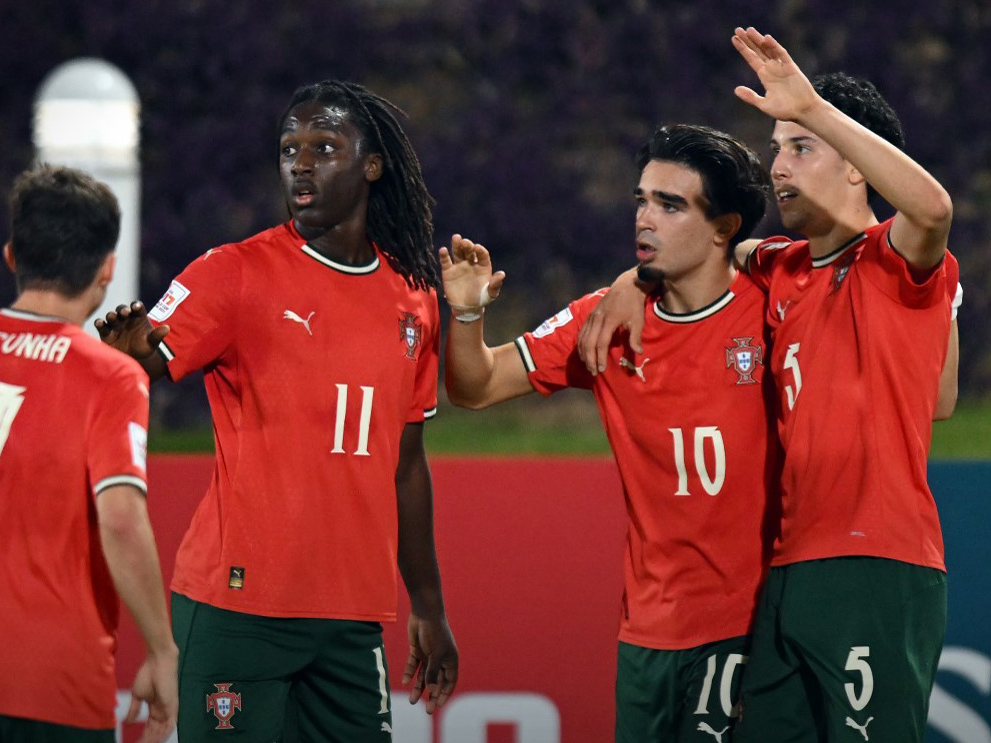

Doha, Qatar – The stage is set for the final rounds of the FIFA U-17 World Cup Qatar 2025 as the semifinalists have been determined. Italy, Austria, Portugal, and Brazil will compete for a place in the championship match, held at Aspire Zone, with the tournament concluding on November 27th. This expanded edition of the tournament, featuring 48 teams for the first time, is the first of five consecutive U-17 World Cups to be hosted by Qatar.
The quarterfinal matches concluded without any needing penalty shootouts, a contrast to the drama of the Round of 16. Africa’s representation ended with the elimination of Morocco and Burkina Faso, while Asia’s hopes were dashed with Japan’s defeat. Brazil remains the sole South American contender, securing a narrow 2-1 victory over Morocco thanks to a late goal.
European Dominance in the FIFA U-17 World Cup
Three of the four semifinalists hail from Europe, signaling a strong performance from the continent’s youth teams. Portugal convincingly defeated Switzerland 2-0 in an all-European clash, while Italy secured a hard-fought 1-0 win against Burkina Faso, with Thomas Campaniello scoring the decisive goal. Austria also advanced, demonstrating the depth of talent within European youth football.
Semifinal Matchups
The semifinals will pit Portugal against Brazil on Monday, promising a compelling contest between South American flair and European tactical prowess. Meanwhile, Italy and Austria will face off in an all-European showdown, likely to be a closely contested affair.
The tournament has seen a high level of attacking football so far, with 323 goals scored in 100 matches, averaging 3.2 goals per game. A total of 41 penalties have been awarded, with a conversion rate of 61%, alongside a significant number of disciplinary actions – 309 yellow cards and 24 red cards – indicating a physically demanding competition.
Key Players and Goalscorers
Portugal’s Anisio Cabral and Austria’s Johannes Moser currently lead the scoring charts with six goals apiece. Brazil’s Vinson Wanderley Dell has emerged as a key player, moving into third place with five goals after his winning strike against Morocco. The competition for the Golden Boot remains fierce, with eleven players tied on four goals, including Moroccan duo Ziyad Baha and Ismail El Oud.
Brazil, a four-time champion, is aiming to equal Nigeria’s record of five U-17 World Cup titles. Their last triumph came in 2019, and they will be looking to add another trophy to their cabinet. However, the strong form of the European teams suggests they will face a significant challenge.
Following the quarterfinals, teams will enjoy a period of rest before the semifinals. The final and third-place match are scheduled for November 27th, bringing the inaugural 48-team FIFA U-17 World Cup Qatar 2025 to a close. The outcome of the semifinals will determine which nations will compete for the ultimate prize in youth football, and the tournament’s success could influence future youth development strategies globally.
Looking ahead, all eyes will be on the semifinal matches to see which teams can maintain their momentum and secure a place in the final. The performance of Brazil, as the most successful nation in the tournament’s history, will be closely watched, as will the ability of the European teams to translate their quarterfinal success into a championship victory. The final match on November 27th promises to be a thrilling conclusion to this expanded and dynamic tournament.