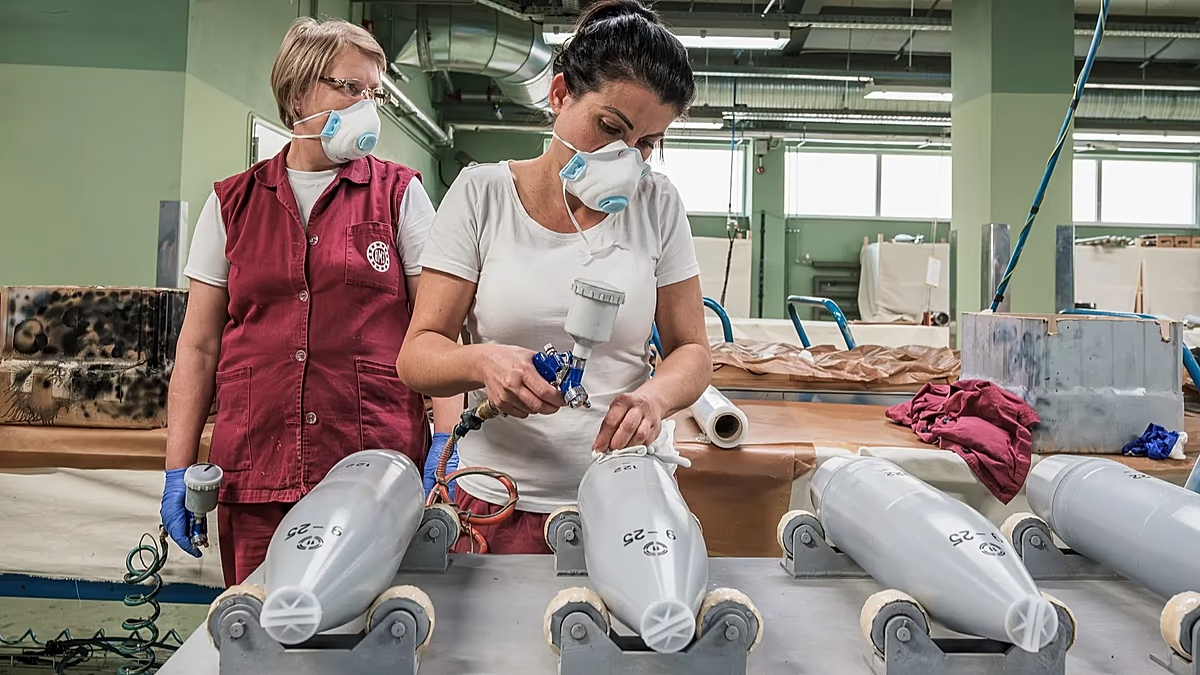

The European Union is launching a major initiative to address critical skills shortages in its defence industry, aiming to upskill or reskill 600,000 people by 2030. This plan, unveiled on Wednesday, comes as the bloc accelerates rearmament efforts in response to heightened geopolitical tensions and faces challenges in meeting production demands. The initiative seeks to bolster Europe’s defence capabilities and secure its future security.
The European Commission’s Defence Industry Transformation roadmap includes a “Talent Platform” to facilitate traineeships within small and medium-sized enterprises (SMEs) focused on defence and dual-use technologies. This move acknowledges the growing bottleneck caused by a lack of qualified personnel, impacting both innovation and the ability to rapidly deploy new systems. The urgency stems from concerns that Russia could pose a threat to another European country by the end of the decade.
Addressing the Defence Industry Skills Gap
The EU’s defence industry has experienced a resurgence in job growth since 2022, coinciding with Russia’s invasion of Ukraine and increased defence spending commitments from member states. In 2023, the sector generated approximately 581,000 jobs, with postings remaining 41% higher than 2021 levels, according to data from the European Defence Agency. However, the Commission warns that the existing labour and skills gap “threatens its operational capabilities and hence impacts EU’s security”.
The shortage isn’t limited to traditional defence roles. Demand is increasing for expertise in emerging technologies like artificial intelligence (AI) and quantum computing, which are being integrated into defence applications. Simultaneously, armed forces and procurement bodies require skilled personnel to effectively acquire and implement these advanced systems. This dual demand is exacerbating the problem.
Upskilling and Reskilling Initiatives
A key component of the plan is a Skills Guarantee pilot program designed to transition workers from the automotive sector – and its related supply chains – into defence-related positions. This is particularly relevant as the automotive industry undergoes restructuring and faces potential job losses. Commissioner for defence, Andrius Kubilius, stated the goal is to upskill around 12% of the existing workforce annually and achieve the 600,000 reskilling target by 2030.
Additionally, the Commission is establishing an EU Defence Industry Talent Platform, offering traineeships supported by a voucher system. A pilot scheme will initially provide 300 vouchers to students, aiming to attract bright minds to the defence ecosystem and foster innovation. Existing EU online learning platforms, such as the EUSPA Space Academy and Digital Skills Academies, will also be leveraged to deliver relevant training.
Long-Term Investment in Defence Education
While immediate measures are being implemented, the Commission is also considering a more substantial long-term investment. Plans are underway to establish a standalone EU Defence Industry Skills Academy, though this is contingent on the next EU budgetary period, beginning in 2028. This academy would serve as a dedicated hub for developing and delivering specialized defence skills training.
The Commission is also looking at attracting talent from other sectors, recognizing the need for a broader pool of qualified candidates. This includes exploring opportunities to recruit individuals with expertise in areas like cybersecurity and engineering. The focus is on creating a more agile and responsive workforce capable of meeting the evolving demands of the defence sector.
The EU’s ambitious plan represents a significant investment in its future security. The success of these initiatives will depend on effective collaboration between member states, industry, and educational institutions. Stakeholders should monitor the rollout of the Talent Platform and the Skills Guarantee pilot to assess their impact on addressing the critical skills shortages facing the European defence industry.