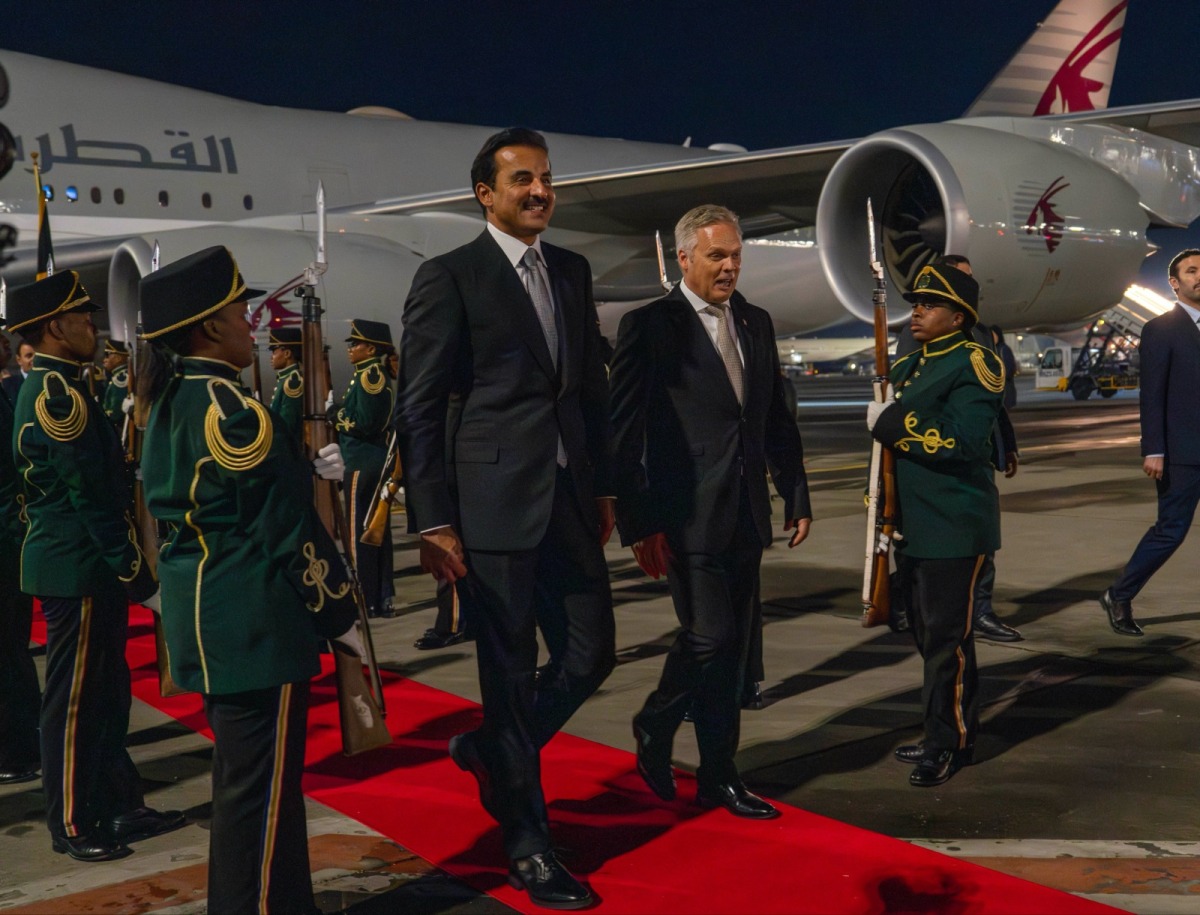

His Highness The Amir Sheikh Tamim bin Hamad Al-Thani has arrived in Johannesburg, South Africa, to participate in the G20 Summit 2025. The summit, a key forum for international economic cooperation, begins Saturday and will bring together leaders from the world’s twenty largest economies. This participation underscores Qatar’s commitment to global economic stability and collaborative problem-solving.
The Amir was welcomed at Oliver Reginald Tambo International Airport by South African Minister of Forestry, Fisheries and the Environment Willem Abraham Stephanus Aucamp, alongside Qatari Ambassador to South Africa Mubarak bin Nasser Al Khalifa and other embassy officials. He is accompanied by a high-level official delegation for the duration of the summit. This marks a significant moment for Qatari-South African relations.
Qatar at the G20 Summit 2025: Focusing on Global Economic Challenges
The G20 Summit 2025 will be hosted by South Africa, which currently holds the presidency. South Africa’s priorities for the summit include fostering a more inclusive global economy, addressing climate change, and promoting sustainable development – themes likely to resonate with Qatar’s own national vision. Qatar, as a guest nation, aims to contribute to these discussions with its expertise in energy, investment, and mediation.
The Importance of the G20
Founded in 1999 in the wake of the Asian financial crisis, the G20 serves as a vital platform for coordinating policies related to financial stability. It represents approximately 80% of global gross domestic product (GDP), 75% of international trade, and two-thirds of the world’s population, according to the G20 official website. The summit’s outcomes frequently influence international economic policy.
Expected Key Discussion Points
Analysts predict that the major topics at this year’s gathering will include global debt vulnerabilities and strategies for addressing them. Rising interest rates and geopolitical risks have increased the burden of debt, particularly for developing nations and emerging markets. Furthermore, discussions regarding food security and the impact of climate change on agricultural production are expected to be prominent.
Energy transition and the role of fossil fuels in maintaining global energy supplies will undoubtedly also feature heavily. Qatar, as a major liquefied natural gas (LNG) producer, is positioned to play a significant role in these conversations, potentially advocating for a realistic and phased approach to reducing carbon emissions. The evolving landscape of global trade, including supply chain resilience, is another area likely to receive considerable attention.
However, geopolitical tensions, particularly related to ongoing conflicts, could overshadow economic discussions. The war in Ukraine and the situation in the Middle East create volatility and uncertainty, impacting global energy markets and trade flows. Managing these risks and finding common ground amidst divisions will present a substantial challenge for summit organizers and attendees.
Meanwhile, the impact of artificial intelligence (AI) on the global economy and workforce will be explored. The G20 seeks to determine how to maximize the benefits of AI while mitigating potential negative consequences. This includes discussions around workforce adaptation, ethical considerations, and the need for international regulatory frameworks. Secondary keywords such as international finance and economic development are relevant to the summit’s overall agenda.
In contrast to some previous summits, this year’s event is expected to focus less on immediate crisis management and more on long-term structural reforms. The goal is to build a more resilient and sustainable global economy capable of withstanding future shocks. This shift in focus reflects a growing recognition that addressing underlying vulnerabilities is crucial for preventing future crises. G20 officials continue to finalize the agenda.
Following the conclusion of the G20 Summit 2025, a comprehensive communiqué outlining the agreed-upon actions and commitments will be released. The effectiveness of the summit will ultimately be measured by the implementation of these agreements and their impact on the global economy. Further details regarding bilateral meetings His Highness The Amir may hold during the summit are anticipated in the coming days.