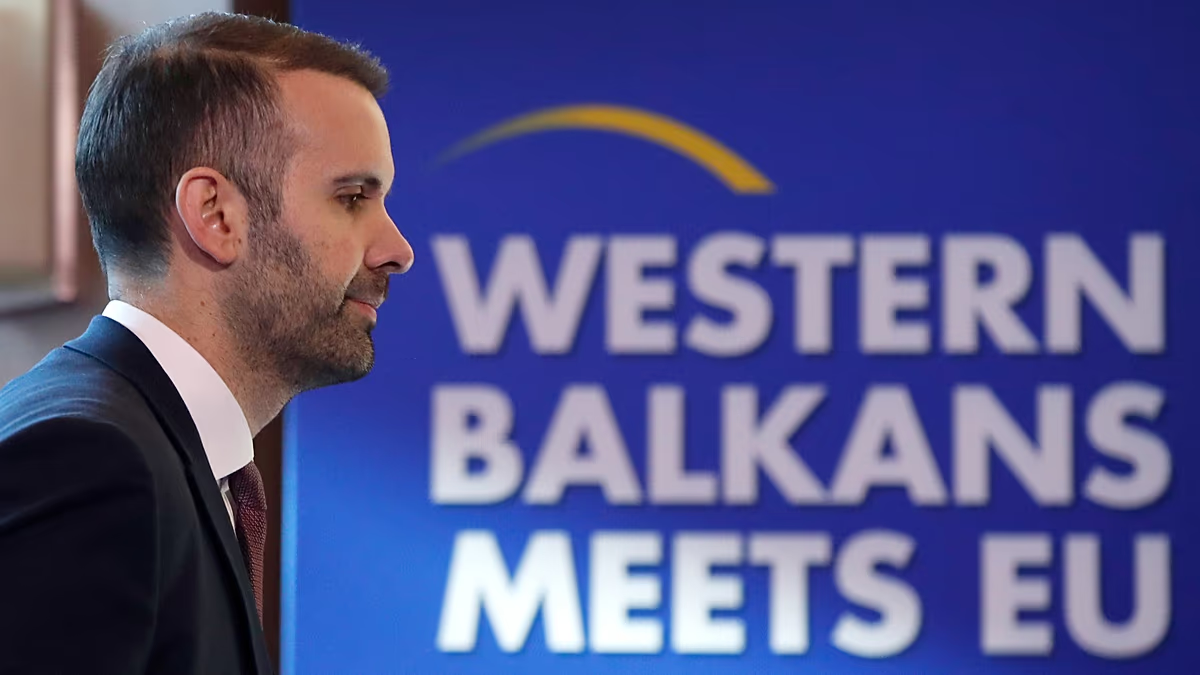

Montenegrin Prime Minister Milojko Spajić expressed strong optimism this week that his nation will complete the necessary vetting process for EU membership by 2026. The announcement, made during an interview with Euronews in Brussels, signals a renewed push for accession amidst ongoing reforms. Montenegro is currently the most advanced of the nine candidate countries seeking to join the European Union.
Spajić believes Montenegro is on track to finalize all required chapters for accession by the end of next year, potentially making it a new member state during the current European Commission’s term, which concludes in 2029. This timeline hinges on continued progress in key areas, particularly the rule of law and judicial appointments, according to statements from the Prime Minister.
Montenegro’s Path to EU Membership
Montenegro formally applied for EU membership in 2008 and was granted candidate status in 2010. The accession process involves a series of rigorous evaluations and reforms across 35 negotiating chapters, covering areas like fundamental rights, the economy, and foreign policy. While significant progress has been made, challenges remain in demonstrating consistent adherence to EU standards.
Key Reform Areas
The European Union has acknowledged Montenegro’s advancements, especially concerning the Growth Plan for the Western Balkans. This plan aims to bolster economic development and integration within the region through targeted investments and structural reforms. However, the EU emphasizes that accession is contingent upon completing crucial reforms, particularly strengthening the rule of law and ensuring the functionality of the constitutional court.
Spajić stressed that Montenegro’s goal isn’t simply to join the EU, but to contribute positively to the bloc. “Once we join, we want to add value, we don’t want to detract value,” he stated. He envisions Montenegro as a nation that enhances the EU’s overall strength and prosperity.
For Montenegro, full EU membership is the sole strategic objective. Spajić dismissed any consideration of alternative partnerships, emphasizing the country’s deep-rooted European aspirations. He argued that Montenegro’s geographic location and historical ties make its inclusion in the EU a natural and logical step. Euronews provided further details on the interview.
Recent developments demonstrate increasing integration between Montenegro and the EU. In October, Montenegro officially joined the Single Euro Payments Area (SEPA), streamlining financial transactions and reducing costs. This follows the country’s unilateral adoption of the euro in 2002, though payments previously relied on inefficient and expensive systems. Additionally, free mobile phone roaming between Montenegro and EU member states is scheduled to begin in 2026, further easing connectivity.
These advancements in economic integration are occurring alongside political alignment. Spajić highlighted the deepening ties with the EU, emphasizing a commitment to shared values and principles. The country is also focused on attracting foreign investment and fostering economic growth to meet EU standards. The European Commission provides comprehensive information on the enlargement process.
However, the path to EU accession isn’t without potential hurdles. Political instability and concerns about corruption remain significant challenges. Addressing these issues will be crucial to maintaining momentum and securing a positive assessment from EU institutions. The ongoing geopolitical landscape, including the war in Ukraine, may also influence the timeline and priorities of the enlargement process.
Looking ahead, Montenegro will continue to prioritize reforms aimed at strengthening its institutions and aligning with EU legislation. The coming months will be critical in demonstrating tangible progress on the rule of law and judicial independence. Observers will be closely watching Montenegro’s efforts to finalize negotiations and prepare for the final stages of the EU membership process. Stay informed about the latest developments in Montenegro’s journey towards European integration by following updates from the European Commission and reputable news sources.
The successful completion of these reforms will not only pave the way for Montenegro’s EU membership but also contribute to greater stability and prosperity in the Western Balkans region.