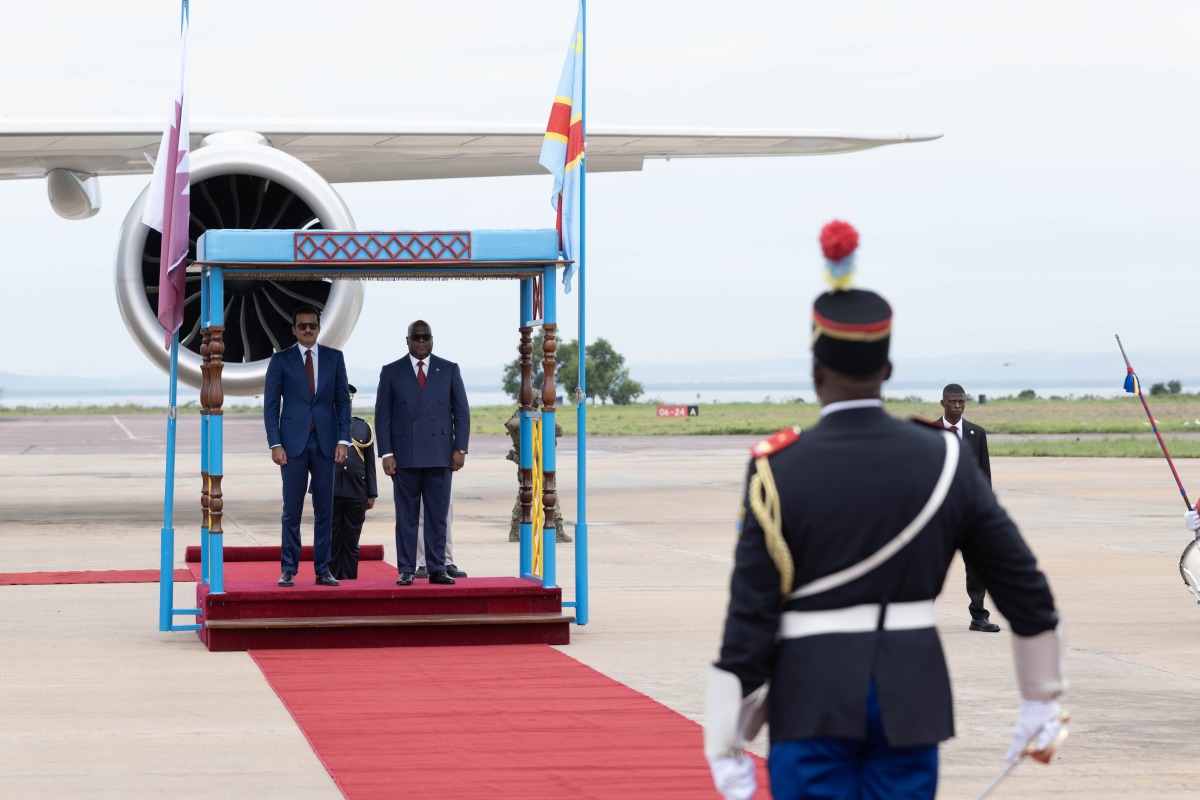

Kinshasa welcomed Sheikh Tamim bin Hamad Al-Thani, the Amir of Qatar, on a state visit this week, signaling a strengthening of diplomatic and economic ties between the two nations. The visit, which began on Wednesday, November 20, 2024, focuses on bolstering Qatar-DR Congo relations and exploring opportunities for increased investment. The Amir’s arrival at N’djili International Airport was marked by an official reception ceremony hosted by Congolese President Félix Tshisekedi.
The Qatari leader was greeted by a high-level delegation including the President of the Senate, Jean-Michel Sama Lukonde Kyenge, and the President of the National Assembly, Aime Boji Sangara. This visit underscores Qatar’s growing interest in African markets and the Democratic Republic of Congo’s potential as a key partner in various sectors. The presence of both nations’ ambassadors further highlights the importance of this diplomatic engagement.
Strengthening Qatar’s Presence in the Democratic Republic of Congo
This state visit represents a significant step in deepening Qatar-DR Congo relations, which have been steadily developing in recent years. While historically focused on energy cooperation, the relationship is now expanding to include investments in infrastructure, agriculture, and mining. According to reports from the Qatari Ministry of Foreign Affairs, the discussions will center on creating a more favorable investment climate for Qatari businesses in the DRC.
The Democratic Republic of Congo is rich in natural resources, including cobalt, copper, and diamonds, making it an attractive destination for foreign investment. However, the country also faces significant challenges related to political stability and infrastructure development. Qatar’s involvement could provide crucial financial and technical support to address these issues.
Economic Opportunities and Potential Investments
Several key areas are expected to be discussed during the Amir’s visit, including potential Qatari investment in the DRC’s vast agricultural sector. The DRC possesses substantial arable land and the potential to become a major food producer in Africa. Additionally, infrastructure projects, such as roads, railways, and ports, are likely to be on the agenda, as these are critical for unlocking the country’s economic potential.
The mining industry, particularly the extraction of critical minerals, is another area of significant interest. Qatar is increasingly looking to secure access to these resources to support its diversification efforts and its ambitions in the technology sector. The visit also comes amidst growing international focus on responsible sourcing of minerals from the DRC, a topic likely to be addressed in discussions.
Beyond direct investment, the talks are expected to cover potential partnerships in education and healthcare. Qatar has a strong track record of investing in these sectors globally, and its expertise could be valuable in improving access to quality services in the DRC. This aligns with broader development goals for the region, focusing on human capital.
Meanwhile, security cooperation is also anticipated to be a component of the discussions. The DRC faces ongoing security challenges in its eastern regions, and Qatar may offer assistance in capacity building and counter-terrorism efforts. This aspect of the relationship is less publicly discussed but is considered important by both governments.
In contrast to some other international actors in the DRC, Qatar’s approach has been characterized by a focus on long-term partnerships and sustainable development. This strategy is seen as more aligned with the Congolese government’s priorities. The visit is also viewed as a positive signal for regional stability and economic growth.
The timing of the Amir’s visit is noteworthy, occurring as the DRC prepares for upcoming elections and continues to navigate complex political and economic transitions. The strengthening of bilateral ties with Qatar could provide a much-needed boost to the Congolese economy and enhance its international standing. Further, the visit highlights the increasing importance of the Gulf region in African affairs.
Looking ahead, the success of this visit will be measured by the concrete agreements reached and the speed with which they are implemented. Follow-up meetings between Qatari and Congolese officials are expected in the coming months to finalize details and establish timelines. The long-term impact on the DRC’s economic development and political stability remains to be seen, but the initial signs are promising.