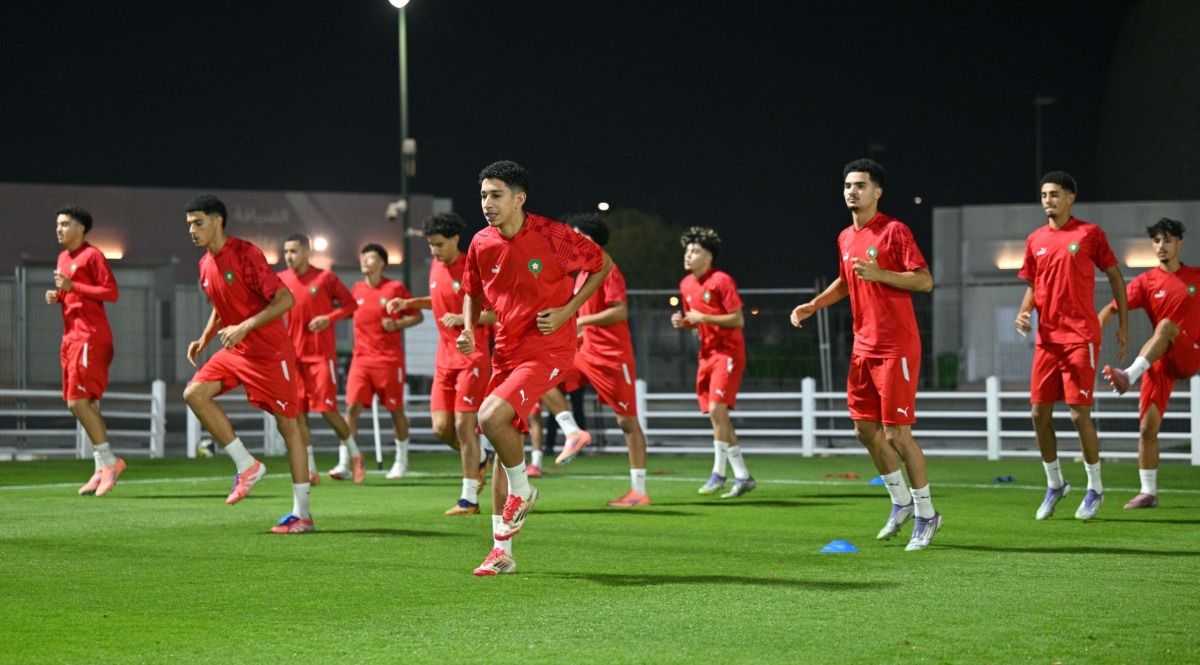

Doha, Qatar – The FIFA U-17 World Cup Qatar 2025 is entering its decisive stages, with the quarter-final matches set to be played today. Morocco, Austria, Italy, and Portugal have all advanced and will face Brazil, Japan, Burkina Faso, and Switzerland respectively, in their bids to reach the semi-finals of the U-17 World Cup. These matches represent a pivotal point for the remaining teams, and promise compelling contests as the tournament progresses.
The quarter-final round began November 17th, 2025, at different venues throughout Doha and will continue through the weekend. Each match pits a team that has consistently performed well against a contender looking to upset the established order. The victors will move within striking distance of the championship title, while the losing teams will see their tournament aspirations extinguished.
Morocco’s U-17 Team Aiming for Historic Victory in Qatar
Morocco is attempting to secure their first-ever win against a South American opponent at the U-17 level, facing the formidable challenge of five-time champions Brazil. The Atlas Cubs advanced to the quarter-finals after a hard-fought victory against Mali in the Round of 16. Their success is built on a combination of defensive strength and opportunistic attacks, and have emerged as a team to watch.
A key figure in Morocco’s run has been 16-year-old Ismail El Aoud, who scored a crucial double against Mali. El Aoud’s rising profile and mature play have become a focal point for the Moroccan squad. The team is fueled by ambition, with El Aoud stating they entered the tournament with the intent to win the whole competition — as reported by FIFA.
Brazil, while historically dominant, has surprisingly needed penalty shootouts to overcome both Paraguay and France. This reliance on late-game heroics suggests a potential vulnerability that Morocco will undoubtedly attempt to exploit, though their attacking prowess cannot be discounted.
Austria and Italy Showcase European Strength
Austria delivered a stunning performance in the Round of 16, defeating England 4-0, exceeding pre-tournament expectations. Their approach hinges on aggressive play and clinical finishing, highlighting a clear tactical identity. They now face Japan, a team known for its detailed technical proficiency and precise passing.
In contrast to Austria’s emphatic win, Japan progressed after a 1-1 draw followed by a penalty shootout against North Korea. This demonstrates a capacity for resilience and composure under pressure. The match is expected to be an interesting contrast in styles — Austria’s directness versus Japan’s measured build-up play.
Meanwhile, Italy has been a model of consistency throughout the tournament, winning all five of their matches by an impressive 13-3 aggregate scoreline. Their attack is spearheaded by Samuele Inacio, a prolific goal scorer who previously excelled in the U-17 EURO. Italy will face Burkina Faso, who also navigated a difficult path to the quarter-finals, overcoming Uganda in a penalty shootout.
Portugal and Switzerland Set for Tight Contest
Portugal continued its impressive attacking form, securing a place in the last eight with a 5-0 victory over Mexico, marking their third five-goal haul of the tournament. Anisio Cabral remains the top goalscorer, with six goals, demonstrating his crucial role for the Portuguese team.
Switzerland, an undefeated team in U-17 World Cup matches since 2023, also triumphed in the Round of 16, defeating the Republic of Ireland. Their success relies on a tightly organized defense and the creative playmaking of Jill Stiel, who has contributed two goals and four assists.
The semi-final matchups will be determined following the conclusion of these quarter-final contests. The tournament’s unpredictable nature, demonstrated by upset victories like Austria’s, means further surprises are possible. The next few days will be critical in determining which nations will compete for the ultimate prize in the U-17 World Cup. Observers will be monitoring the physical condition of key players and the tactical adjustments made by each coaching staff.