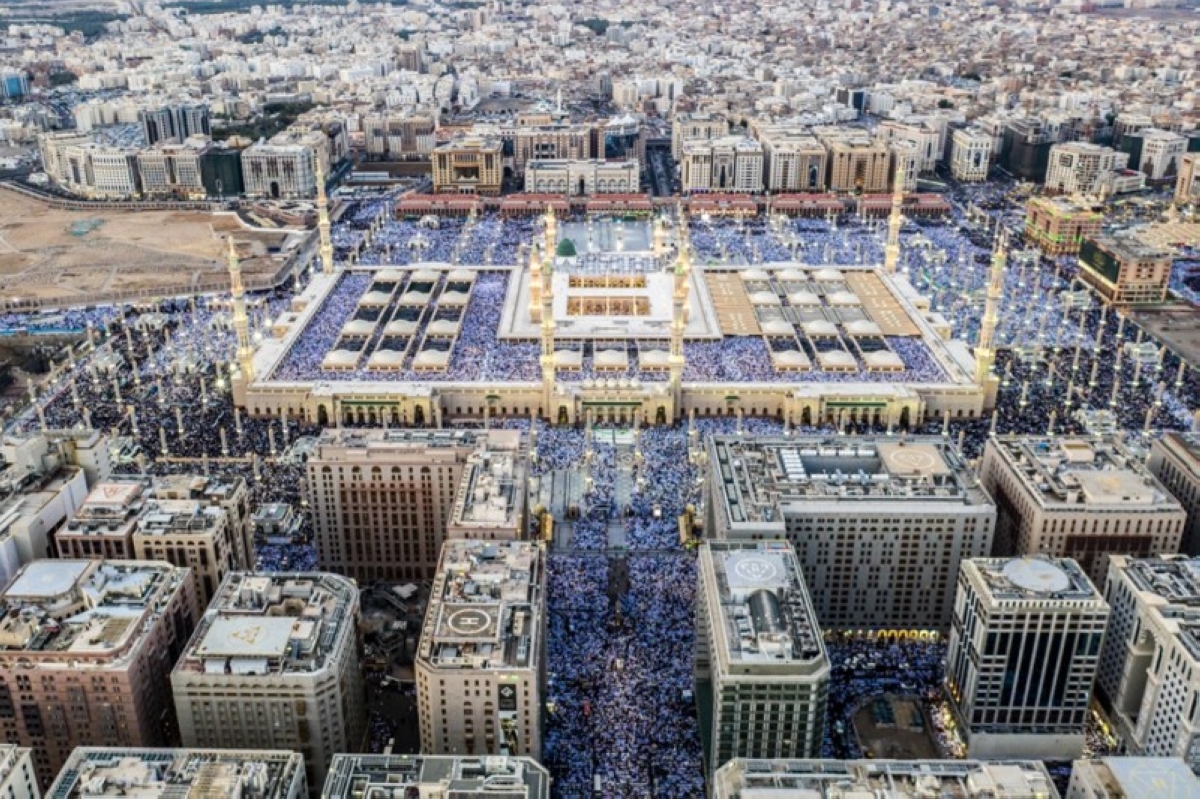

Madinah experienced a surge in religious tourism during the second quarter of 2025, welcoming 3.767 million visitors, according to data released by the General Authority for Statistics (GASTAT) on Thursday. This influx highlights the city’s continued importance as a key destination for Madinah visits and reflects the Kingdom’s ongoing investment in religious tourism infrastructure. The figures provide insight into the demographics and origins of pilgrims traveling to the holy city.
The GASTAT bulletin detailed a breakdown of incoming travelers, showing 2,102,425 international visitors alongside 1,665,341 domestic tourists. This substantial number underscores Madinah’s draw for both international pilgrims and citizens and residents within Saudi Arabia seeking to engage in religious observances. Authorities are closely monitoring these trends to refine logistical support.
The Growing Trend of Madinah Visits
The increasing number of Madinah visits represents a continuation of the recovery seen in religious tourism following the easing of pandemic-related travel restrictions. However, the latest data suggests more than just recovery; it points toward significant growth. Experts anticipate this trend will persist due to continued investment and improvements to the visitor experience.
International Visitor Demographics
The international visitor data indicates a notable gender distribution. Females constituted 53.9 percent of incoming international travelers, while males represented 46.1 percent. This breakdown provides valuable information for service providers in the city, enabling them to cater effectively to the needs of diverse visitor groups. Further analysis could reveal the primary nationalities contributing to this surge in international arrivals.
Domestic Religious Tourism
Within the Kingdom, religious tourism accounted for the majority of domestic travel to Madinah. The bulletin specified that 766,165 Saudi citizens contributed to these domestic visits, representing 46 percent of the domestic total. The remaining 54 percent, totaling 899,176 visitors, were non-Saudi residents within the Kingdom.
Interestingly, the gender dynamics differed among domestic travelers. A significant 68.5 percent of domestic visitors were male, compared to 31.5 percent who were female. This contrasts with the predominantly female composition of international visitors and could reflect cultural factors or differences in travel patterns. The increased number of domestic tourists during this period coincides with school holidays and religious observances.
The sustained growth in religious tourism to Madinah is also attributed to ongoing infrastructure projects designed to accommodate a larger volume of pilgrims. These initiatives include expansions to the Prophet’s Mosque, improved transportation networks, and enhanced accommodation options. The Saudi Vision 2030 plan prioritizes diversifying the economy, and religious tourism plays a vital role in achieving this goal.
Additionally, the Saudi government has streamlined visa processes for pilgrims, making it easier for individuals to travel to the Kingdom. These efforts align with a broader strategy to position Saudi Arabia as a leading global destination for pilgrimage travel. The quality of accommodations and services available to visitors continues to be a focus of development.
Meanwhile, the GASTAT data provides a valuable benchmark for assessing the effectiveness of various tourism initiatives. Authorities can utilize these statistics to identify areas for improvement and optimize resource allocation. Monitoring visitor spending patterns and average length of stay can also provide further insights into the economic impact of tourism in Madinah.
In contrast to some other global tourism hotspots, Madinah’s growth is largely focused on faith-based travel. This specialization presents both opportunities and challenges. On one hand, it provides a relatively stable and predictable demand base. On the other hand, it requires a deep understanding of the unique needs and expectations of religious travelers.
The report indicates that continued investment in cultural preservation is also a crucial component of attracting visitors. Protecting historical sites and promoting religious heritage are essential for maintaining Madinah’s appeal as a spiritually significant destination. Future data releases may detail investment in this area.
Looking ahead, the General Authority for Statistics is expected to release data for the third quarter of 2025 in early 2026. These figures will be closely watched to assess the continued trajectory of religious tourism and to identify any emerging trends. Potential factors influencing future numbers include global economic conditions and evolving travel regulations. Analysis of these future data points is crucial for long-term planning and sustainable tourism management.