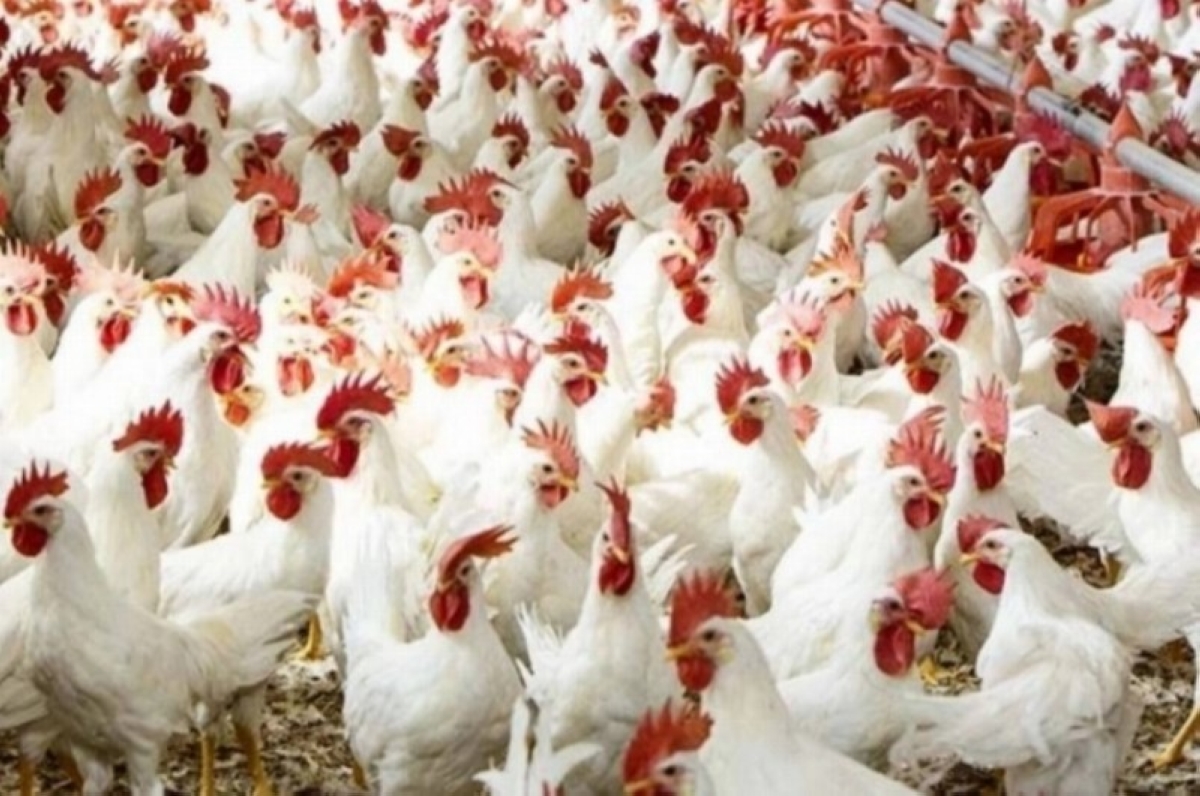

Saudi Arabia experienced significant growth in its poultry and livestock sectors in 2024, with broiler chicken production leading the way. The General Authority for Statistics (GASTAT) released figures on Thursday revealing a 12.9 percent increase in broiler chicken output compared to 2023, reaching 1.3 million tons. These gains reflect ongoing investment in the Kingdom’s food security initiatives and efforts to diversify its agricultural output.
The data covers key livestock areas including poultry, dairy, sheep, goats and camels across the country’s regions. Riyadh consistently emerges as a major center for agricultural production, contributing heavily to the overall national statistics. This latest report provides a critical overview of the Saudi Arabian agricultural landscape and its evolving dynamics.
Growth in Saudi Arabia’s Broiler Chicken Production
The substantial rise in broiler chicken production is a key indicator of success in the Kingdom’s food security goals. This increase signifies a reduced reliance on imports and a strengthening domestic supply chain. According to GASTAT, the Riyadh region accounted for the largest share of this production, totaling 359,700 tons.
Following Riyadh, the Hail region produced 295,000 tons of broiler chickens, and the Qassim region contributed 200,000 tons. These regional concentrations highlight areas of particularly strong agricultural infrastructure and investment. Further expansion is likely to be focused in these established production zones.
Egg Production Also Increases
Alongside broiler chickens, table egg production also saw a marked increase, exceeding 8.4 billion eggs in 2024 – a 6.4 percent rise over the previous year. The Riyadh region again took the lead, producing approximately 3.2 billion eggs.
The Makkah region followed with around 1.5 billion eggs, and the Eastern Province reached approximately 1.1 billion eggs. This rise in egg production suggests strong consumer demand and efficient farming practices within the Kingdom.
In comparison to the positive poultry trends, raw milk production from specialized dairy projects experienced a slight decline. The 2024 output reached approximately 2.7 billion liters, representing a 3.5 percent decrease from the 2023 figures. This decrease doesn’t necessarily signal a downturn in the dairy sector but could be attributed to factors like fluctuating feed costs or changing herd management strategies.
Despite the fall in volume, the dairy sector remains substantial with the Riyadh region leading at 1.6 billion liters, followed by the Eastern Province at 1.1 billion liters. The total number of dairy cows involved in these projects remains around 233,000, indicating a stable core of producers.
The sheep and goat populations exhibited more modest changes. The number of sheep in the Kingdom exceeded 22 million in 2024, a slight 0.25 percent increase year-on-year. Meanwhile, the number of goats saw a 1 percent decrease, reaching approximately 7.3 million. These changes likely reflect natural population fluctuations and shifts in consumer preferences within the Kingdom.
Camel numbers, however, continued their upward trend, rising to over 2.24 million – a 1 percent increase. The Riyadh region accounts for a significant portion of the camel population, representing 29.4 percent of the national total. Camels hold cultural and economic importance for many Saudis.
Financial support for these livestock projects has also been considerable. According to the report, the total value of loans issued for livestock projects surpassed SR2 billion in 2024. Layer chicken projects received the largest portion of these loans, accounting for 31 percent of the total, followed by broiler chicken projects at 22 percent. This lending activity demonstrates the government’s continued commitment to bolstering the agricultural sector.
The emphasis on poultry through loan distribution and production gains suggests a strategic focus on increasing self-sufficiency in this particular protein source. Investments in animal husbandry are clearly prioritized, reflecting the national vision for food security.
Looking ahead, GASTAT is expected to release further detailed analysis of these statistics in the coming months. This will likely include breakdowns of production costs, regional variations in farming practices, and assessments of market demand. The future trajectory of these livestock numbers will depend on sustained investment, effective resource management, and adaptability to evolving environmental conditions. Monitoring the impact of government policies and climate change on the sector will be crucial to understanding future trends in Saudi Arabia’s food production.
The performance of the dairy sector, and whether the recent decline in milk production is a temporary anomaly or a longer-term trend, also warrants continued observation. The Kingdom’s efforts to achieve greater food security are ongoing and will likely involve further diversification and technological advancements in the livestock industry.