
Doha, Qatar – November 21, 2023 – A collaborative art initiative has seen two Qatari artists create vibrant Years of Culture murals in Valdivia, Chile, strengthening cultural ties between the two nations ahead of the officially designated 2025 cultural exchange. The project, undertaken by artists Mubarak Al Malik and Aisha Al-Fadhala, represents a significant step in Qatar’s ongoing commitment to international artistic collaboration through its JEDARIART program. The murals were created at the School of Architecture of the Austral University of Chile (UACh) between November 7th and 14th.
The completion of these murals marks a continued expansion of Qatar’s cultural outreach, demonstrating its dedication to fostering dialogue and understanding through art. These initiatives build anticipation for the full Years of Culture program in 2025, aiming to highlight shared values and unique traditions between Qatar and Chile. Qatar Museums launched the JEDARIART program in 2020.
JEDARIART Fosters Cross-Cultural Dialogue Through Murals
JEDARIART, meaning “wall art” in Arabic, began as a public art project within Qatar, designed to revitalize urban spaces with compelling visual narratives. However, the program quickly evolved to incorporate international partnerships, including projects in the United States, and collaborations across South Asia. The murals are not merely aesthetic enhancements; they’re deliberate attempts to spark conversations about cultural identity, history, and shared humanity.
Blending Qatari and Chilean Identity
Al Malik’s mural incorporates the “batula,” a traditional Qatari symbol representing motherhood and the home, alongside the copihue flower, a prominent element of the Chilean landscape. He described the work as a “visual conversation between two worlds,” signifying the harmony and potential for understanding between the two cultures. This juxtaposition reflects the program’s broader goal of connecting seemingly disparate artistic traditions.
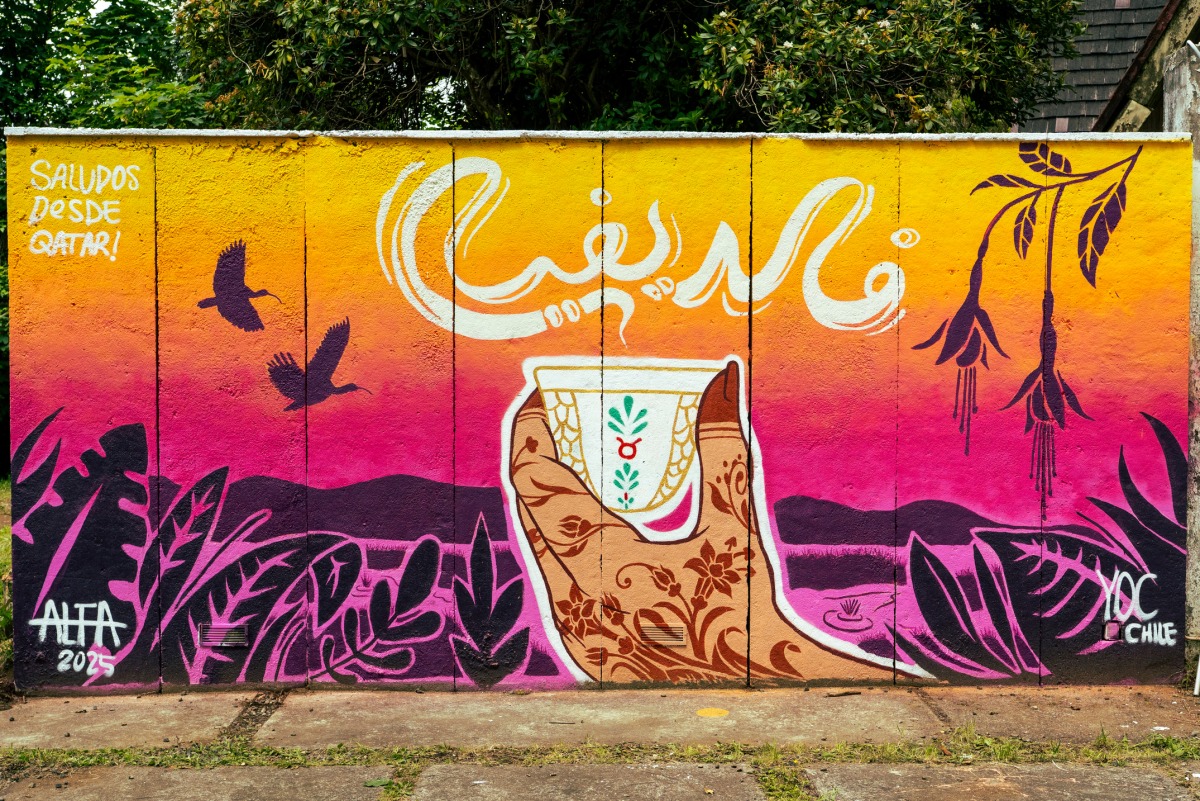
Meanwhile, Al-Fadhala’s contribution depicts a Qatari woman enjoying Arabic coffee amid the flora of southern Chile. She emphasized the welcoming atmosphere she experienced in Valdivia, which inspired her to create a piece reflecting the fusion of Qatari hospitality and Chilean natural beauty. The artist noted the positive reception from the local community.
Expanding the Reach of Qatar’s Public Art Initiatives
The initiative in Valdivia was carried out with the support of students from UACh’s Architecture and Visual Arts programs, offering a valuable learning experience for emerging Chilean artists. This collaborative approach is a key feature of JEDARIART, aiming to cultivate a sense of ownership and engagement within the host communities. According to Qatar Museums, similar workshops and interactive elements are being planned for future JEDARIART projects.
Qatar’s investment in public art, including the JEDARIART program, is part of a broader strategy to position the nation as a global cultural hub. The country has allocated significant resources to art education, museum development, and the commissioning of both local and international artists. This strategy aligns with Qatar’s National Vision 2030, which prioritizes cultural development and knowledge-based economy.
The selection of Valdivia for this artistic exchange holds particular significance. The city is renowned for its vibrant arts scene and its historical ties to European immigration, creating a uniquely cosmopolitan atmosphere within Chile. This makes it an ideal location for a Years of Culture project aimed at bridging cultural divides and promoting reciprocal understanding.
Looking ahead, Qatar Museums is expected to announce further details regarding the 2025 Years of Culture program with Chile, including exhibitions, performances, and educational initiatives. The timing and specific components of the full program will likely depend on logistical considerations and ongoing bilateral discussions. The continued success of JEDARIART will undoubtedly play a role in setting the stage for a comprehensive and impactful cultural exchange.
The precise impact of these murals on cultural perceptions remains to be seen, but they serve as a powerful symbol of Qatar’s commitment to fostering international relations through artistic diplomacy. Further evaluation of the program’s reach and effectiveness is anticipated in the coming months.