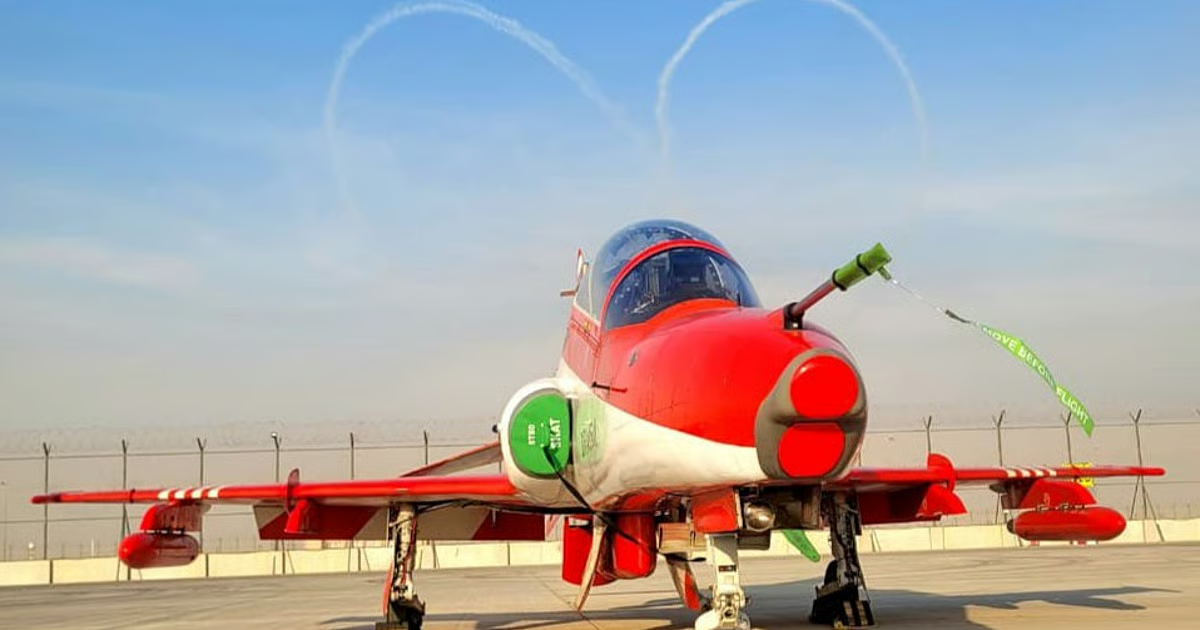

The Indian Air Force (IAF) captivated attendees at the Dubai Airshow 2023 with a stunning aerial display, culminating in the formation of a large heart in the sky. The performance, involving a formation of Tejas fighter jets, took place on November 16, 2023, at the Al Maktoum International Airport in Dubai. This demonstration of precision flying and aircraft capability served as a significant moment of national pride at the international aviation event.
The heart-shaped formation, created during the final moments of the Tejas aircraft’s flying display, instantly drew cheers from the crowd and generated extensive social media coverage. The Dubai Airshow, one of the largest and most important aerospace events globally, showcases the latest in commercial and military aircraft technology. India’s participation aims at bolstering its defense exports and strengthening its relationships with key aviation partners.
Spotlighting the Tejas: India’s Aerial Heart and Export Potential
The showmanship behind the aerial heart was significant, but secondary to the purpose of highlighting the capabilities of the indigenously developed Tejas Light Combat Aircraft. The Tejas is a single-engine, multirole fighter jet designed and manufactured by Hindustan Aeronautics Limited (HAL). It is intended to meet the Indian Air Force’s requirements for a modern, versatile combat aircraft.
The Tejas Program: A History of Domestic Development
The Tejas program began in the 1980s as an effort to reduce India’s reliance on foreign military equipment. Initial development faced numerous delays and challenges, including technical hurdles and funding constraints. However, the program persevered, and the first Tejas aircraft entered service with the IAF in 2016.
HAL has since been working on improving the Tejas platform, including the development of the Tejas Mark 2 – a more capable and heavier version of the aircraft with a larger engine and increased payload capacity. The Mark 2 is expected to significantly enhance the Tejas’ operational range and combat effectiveness. According to sources within the Ministry of Defence, the Tejas Mark 2 is currently undergoing flight testing and is anticipated to enter production within the next few years.
Beyond domestic needs, India is actively seeking to export the Tejas to other countries. Several potential customers have expressed interest in the aircraft, including Argentina, Malaysia, and South Africa. The Dubai Airshow provides a vital platform to showcase the Tejas’ features and negotiate potential deals with these nations.
The decision to perform the heart-shaped maneuver was a deliberate attempt to connect with the international audience on an emotional level. However, the primary function remained upholding the Tejas’ technical prowess through a series of tight formations and dynamic maneuvers. These included high-speed passes and simulated air-to-air combat scenarios, expertly demonstrating the aircraft’s agility and performance characteristics.
The Indian delegation at the Dubai Airshow also included representatives from other defense companies, promoting a range of products and technologies. This comprehensive approach highlights India’s ambition to establish itself as a key player in the global defense industry.
Meanwhile, the UAE’s strategic partnership with India is a key factor in the event’s importance. This includes increasing collaboration on defense production and technology transfer. The Dubai Airshow serves as a crucial venue for strengthening these ties and exploring new avenues for cooperation.
In contrast to some displays focusing solely on speed or weaponry, the IAF’s performance deliberately incorporated this emotionally resonant element. Defense analysts suggest this approach aims to make a lasting impression beyond solely technical specifications, emphasizing India’s commitment to peaceful and collaborative relations.
The response to the Tejas display has been overwhelmingly positive. Social media platforms have been flooded with images and videos of the heart formation, generating significant buzz and positive sentiment towards India and its aerospace capabilities. The Ministry of Defence confirmed the increased engagement and inquiries regarding the Tejas following the demonstration.
The success of the Tejas at the Dubai Airshow is expected to further galvanize the ‘Make in India’ initiative, the government’s program to encourage domestic manufacturing. This initiative aims to reduce dependence on imported arms and ammunition, boosting the Indian economy and fostering technological self-reliance.
Going forward, HAL and the Indian government will continue to engage with potential buyers of the Tejas. Negotiations are expected to intensify in the coming months, with a potential breakthrough on export orders anticipated in 2024. The report indicates that finalizing the terms of these agreements, encompassing pricing, maintenance, and training, will be a key focus. Continued refinement of the Tejas Mark 2 and further impressive demonstrations at future airshows will likely be crucial in securing these deals and solidifying India’s position in the global aviation market.