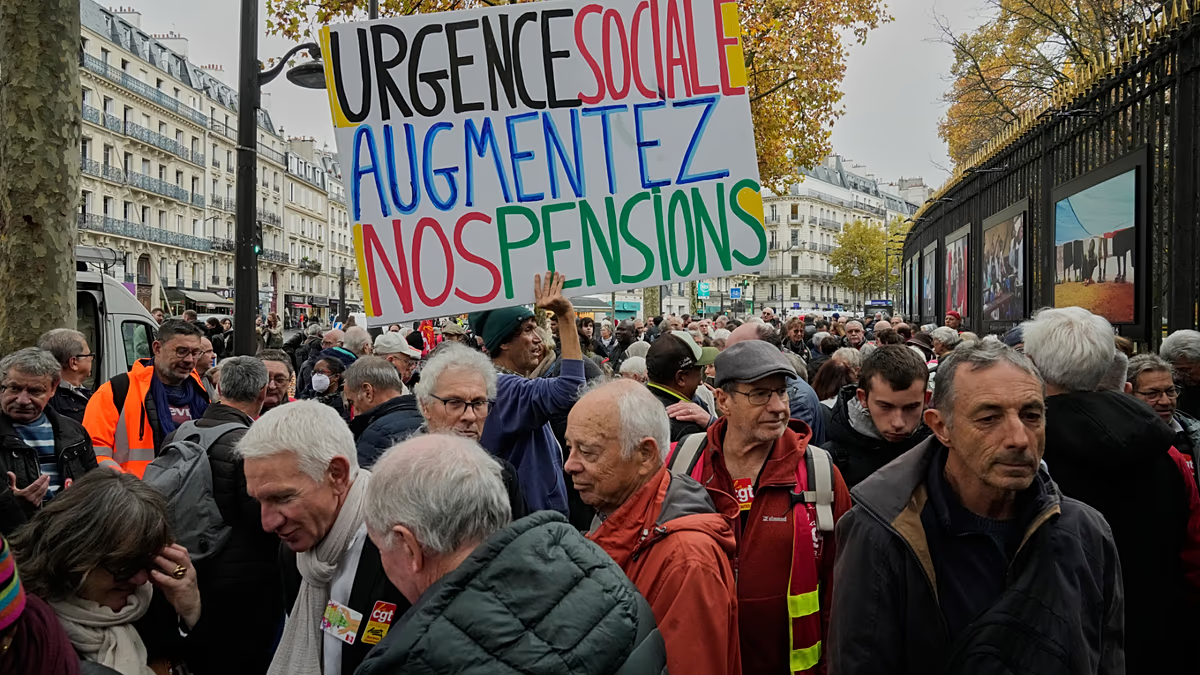

The European Union is pushing member states to strengthen private pension schemes as demographic shifts strain public pension systems. The initiative, announced November 20, 2025, aims to bolster retirement income for citizens and unlock up to €10 trillion in bank deposits for strategic EU investments, including defense, digital infrastructure, and green technologies. This comes as concerns grow about the long-term sustainability of state-funded pensions across the bloc.
The European Commission’s proposal focuses on increasing access to and participation in supplementary pension plans, while emphasizing that these will not replace existing state provisions. Commissioner for financial services Maria Luís Albuquerque highlighted the importance of these schemes in maintaining living standards and economic resilience for European citizens. The move reflects a broader effort to address the financial challenges posed by aging populations and evolving employment patterns.
The Growing Need for Private Pension Schemes
Most EU countries currently operate state pension systems on a pay-as-you-go basis, where contributions from current workers fund the benefits of current retirees. However, a shrinking working-age population and the rise of non-traditional employment arrangements are creating concerns about the future adequacy of these systems. According to the European Insurance and Occupational Pensions Authority, only 20% of Europeans participate in occupational schemes, and just 18% hold a personal pension product.
This situation is particularly acute for women, who face a significant gender pension gap of 24.5%. The Commission believes that encouraging greater participation in supplementary pension schemes is crucial to ensuring a secure retirement for all citizens. The goal is to provide individuals with more opportunities to build an “adequate” retirement income, supplementing state benefits.
Addressing Barriers to Participation
The Commission has identified several key obstacles hindering wider adoption of private pension schemes. One significant challenge is a lack of clear information about projected benefits and overall pension entitlements. Many citizens struggle to understand their future financial outlook in retirement.
Additionally, behavioral economics suggests a “procrastination effect” is at play, where individuals delay planning for retirement due to its complexity. EU officials noted that people tend to postpone tasks they find difficult to grasp, and pension planning often falls into this category. To combat this, the Commission recommends national governments provide user-friendly online tools and tracking systems to help citizens visualize their pension savings and projected income.
Another proposed solution is the introduction of auto-enrolment, where workers are automatically enrolled in supplementary pension schemes but retain the right to opt out. This approach has proven successful in member states that have already implemented it, with individuals generally remaining enrolled once included. This is seen as a way to overcome inertia and encourage consistent saving for retirement.
Mobilizing Capital for EU Priorities
The push for increased pension savings is also linked to a broader EU initiative to mobilize up to €10 trillion in bank deposits. This capital is intended to support strategic investments in areas such as defense and security, the digital transition, and the green transition. The plan, known as the Savings and Investments Union, unveiled in March, aims to channel funds towards key priorities for the bloc’s future competitiveness and resilience.
However, the Commission acknowledges that its authority in this area is limited. The recommendations regarding retirement planning are not binding, and implementation ultimately rests with individual member states. The EU official emphasized the need for a collaborative process, with member states taking ownership of the recommendations and adapting them to their specific national contexts.
Looking ahead, the success of this initiative will depend on the willingness of member states to adopt and implement the Commission’s recommendations. The EU will continue to monitor progress and provide support, but the primary responsibility for strengthening private pension schemes lies with national governments. Individuals are encouraged to explore available resources and proactively plan for their financial future, taking advantage of any new tools or programs offered by their respective countries.