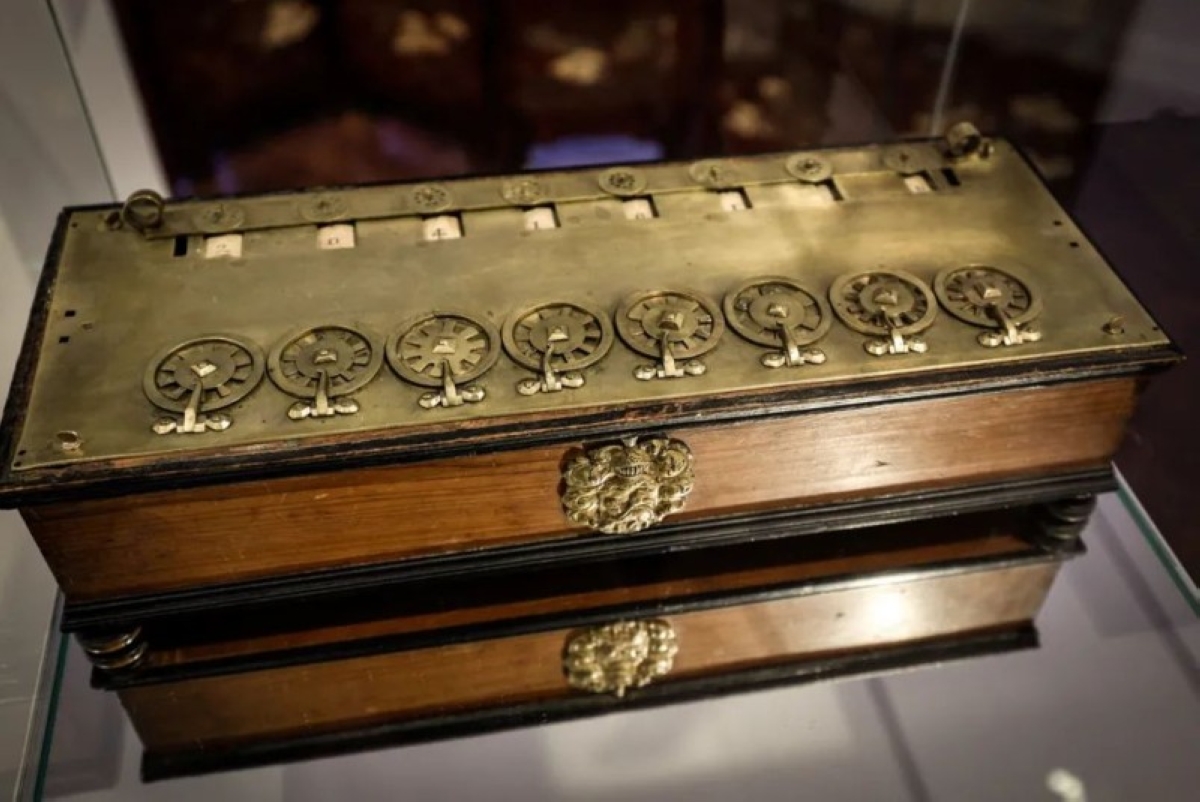

A landmark auction of La Pascaline, one of the world’s earliest mechanical calculators, has been halted by a French court. The decision provisionally blocks the export of the 17th-century calculating machine, developed by Blaise Pascal, after scientists and heritage groups argued for its preservation as a national treasure. The auction, scheduled through Christie’s in Paris, was expected to fetch between €2 to €3 million (approximately £1.7m to £2.6m).
The suspension comes after a legal appeal challenged an export authorization previously granted by France’s culture minister in May. Christie’s has confirmed it will not proceed with bidding until the legal situation is resolved, impacting the sale of the entire library of the late Catalonia collector Léon Parcé, which included other Pascal works.
The Fight to Preserve La Pascaline
The controversy centers on the historical and scientific significance of La Pascaline. Developed by Blaise Pascal beginning around 1642, the machine represents a pivotal moment in the history of computation. Pascal, a prodigious talent, conceived of the device while assisting his father, a tax collector, with laborious calculations.
Only nine of these machines are known to still exist, making each a uniquely valuable artifact. Christie’s described the device as the “most important scientific instrument ever offered at auction,” emphasizing its role as the first attempt to mechanize mathematical processes. The machine’s design utilized a series of geared wheels to perform addition and subtraction.
Legal Challenges and Heritage Status
The legal challenge was brought by groups including the Association Sites & Monuments, who argued that La Pascaline meets the criteria for classification as a “national treasure” under French heritage code. This designation would prevent the machine from being permanently exported from the country.
The Paris administrative court agreed there were “serious doubts” regarding the legality of the initial export authorization. According to the court statement, the minister’s decision was based on assessments from two experts, including one from the Louvre Museum, but the court found the justification insufficient.
However, the court’s decision is provisional. A final judgment is pending, and the culture ministry could potentially provide further justification for the export authorization. The initial authorization process reportedly followed standard procedures for cultural property, but the court’s intervention highlights the complexities of balancing private ownership with national heritage concerns.
Broader Implications for Cultural Property
This case raises broader questions about the export of significant cultural artifacts. France, like many European nations, has strict regulations designed to protect its national heritage. These regulations often involve assessing whether an object is of exceptional artistic, historical, or scientific value.
The debate surrounding La Pascaline also touches on the accessibility of historical scientific instruments. While remaining in France would ensure its preservation within its country of origin, some argue that international auctions can broaden access to these artifacts for researchers and collectors worldwide. The sale of historical calculators and other scientific instruments is a relatively rare occurrence, making each auction particularly noteworthy.
Additionally, the incident underscores the growing awareness of the importance of preserving early computing history. As technology continues to evolve at a rapid pace, there is increasing recognition of the need to safeguard the artifacts that represent the foundations of modern computation.
The court is expected to deliver a final judgment in the coming weeks. The outcome will determine whether La Pascaline remains in France or is allowed to be sold to an international buyer. Observers will be watching closely to see how the court balances the rights of the collector with the nation’s commitment to preserving its cultural and scientific legacy.