




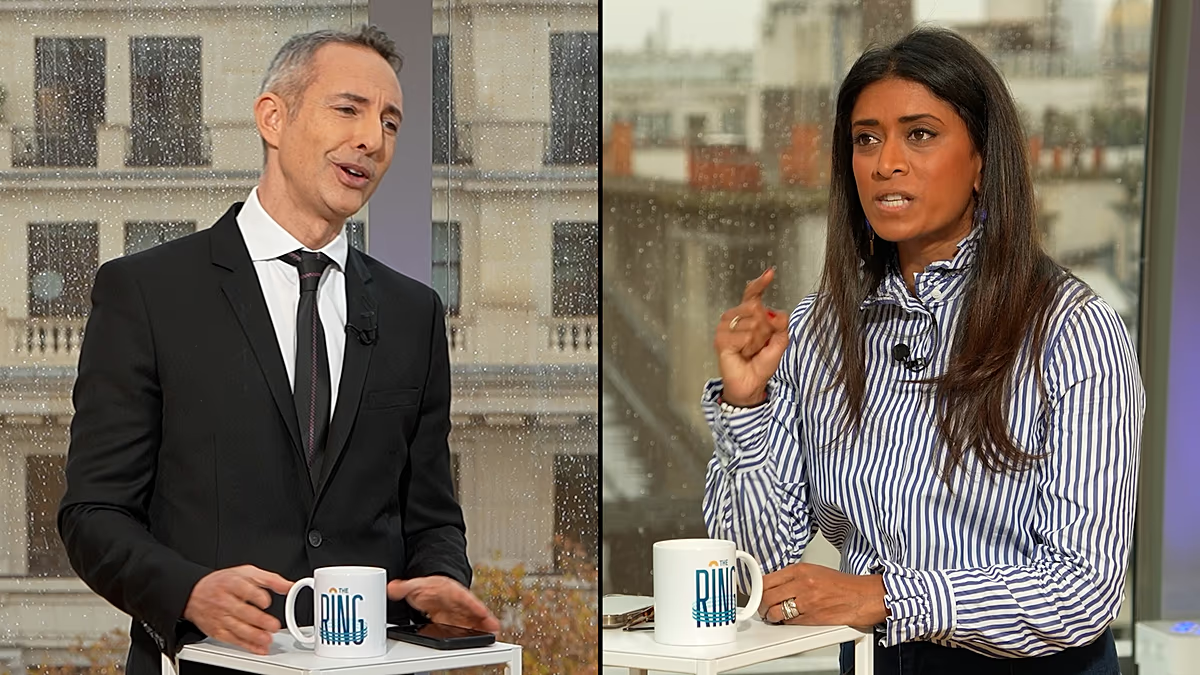

France is facing a period of significant political and economic uncertainty following the dissolution of Parliament and a surge in governmental instability. A recent debate between Prisca Thevenot, a lawmaker from President Macron’s party, and Ian Brossat, a Communist Party senator, highlighted deep divisions over how to address the country’s rising public debt and the need for a new economic model. The discussion, held on November 19, 2025, at the Maison de l’Alsace in Paris, underscores the challenges facing France as it navigates a complex financial landscape.
The televised debate, part of Euronews’ “The Ring” series, featured Thevenot and Brossat outlining their contrasting visions for France’s future. With the 2026 budget still in draft form and social spending continuing to strain public finances, the conversation centered on whether France should fundamentally alter its social welfare system. The program was anchored by Maia de la Baume and produced by a team including Luis Albertos Altarejos, Nikos Michos, and Amaia Echevarria.
The Crisis of the French Economic Model
France’s current economic difficulties stem from a combination of factors, including global economic headwinds and internal structural issues. According to reports from the French Ministry of Finance, the nation’s public debt has been steadily increasing, fueled in part by substantial social programs. This situation was exacerbated by President Macron’s decision to dissolve the National Assembly in June 2024, triggering a period of political turmoil and hindering the government’s ability to effectively address the economic challenges.
The debate between Thevenot and Brossat revealed a fundamental disagreement on the path forward. Thevenot argued for reforms aimed at streamlining the social model and promoting economic growth, while Brossat defended the existing system, emphasizing the importance of social justice and public services. He suggested alternative funding mechanisms to alleviate the pressure on the national debt.
Political Instability and Budgetary Concerns
The dissolution of Parliament has led to a rapid succession of prime ministers and ministers, as well as numerous motions of censure. This political instability has created uncertainty and hampered the government’s ability to formulate and implement a coherent economic policy. The delay in finalizing the 2026 budget further complicates the situation, leaving businesses and citizens unsure of what to expect.
Meanwhile, concerns are growing about France’s credibility within Europe. The European Commission has repeatedly urged France to reduce its deficit and adhere to the Stability and Growth Pact. Failure to do so could result in sanctions and further erode confidence in the French economy. The country’s ability to meet its commitments to the European Union is increasingly under scrutiny.
Divergent Views on Social Welfare
A core point of contention between Thevenot and Brossat was the future of France’s social welfare system. Thevenot suggested that some reforms are necessary to ensure the long-term sustainability of the system, potentially including adjustments to pension benefits or healthcare coverage. However, Brossat strongly opposed any cuts to social programs, arguing that they are essential for protecting vulnerable populations and maintaining social cohesion. He advocated for increased taxation on wealth and corporations to fund social spending.
Additionally, the discussion touched upon the broader question of France’s economic competitiveness. Thevenot emphasized the need to create a more business-friendly environment to attract investment and stimulate job creation. Brossat, in contrast, argued that prioritizing social welfare and worker rights is crucial for fostering a more equitable and sustainable economy. The debate highlighted the inherent trade-offs between economic efficiency and social justice.
The differing perspectives on the French economic model also extended to the role of the state in the economy. Thevenot generally favored a more limited role for the government, while Brossat advocated for greater state intervention to address market failures and promote social goals. This fundamental disagreement reflects a long-standing ideological divide in French politics.
The future of the French model remains uncertain. The outcome of upcoming political negotiations and the implementation of any potential reforms will have significant implications for the country’s economic stability and social well-being. Observers will be closely watching how France navigates these challenges in the coming months. For further information on France’s economic situation, you can consult the Banque de France website.
As France grapples with these complex issues, it is clear that a fundamental reassessment of its economic and social priorities is needed. The debate between Thevenot and Brossat provides valuable insights into the challenges and opportunities facing the nation. Stay informed about developments in French politics and economics by following reputable news sources.