





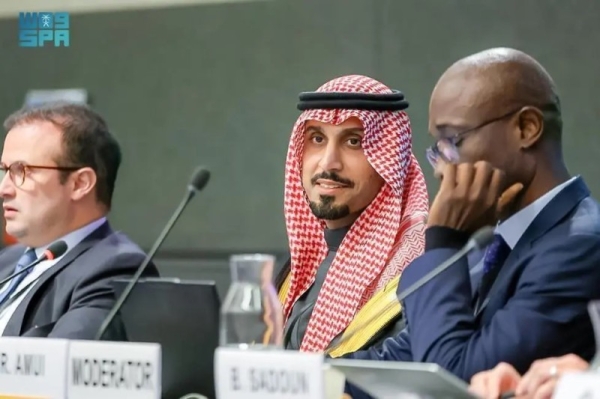

Saudi Arabia is actively positioning itself as a major global player in the mining sector, presenting a comprehensive strategy for integrated development at the 21st annual general meeting of the Intergovernmental Forum on Mining, Minerals, Metals and Sustainable Development (IGF) in Geneva, Switzerland. The Kingdom’s push focuses on attracting investment, fostering innovation, and establishing sustainable practices to bolster economic diversification. This initiative underscores a broader trend of resource-rich nations seeking to maximize the benefits from their mineral wealth.
The IGF meeting, held this month, brought together government officials, industry leaders and civil society representatives from around the world to discuss critical issues facing the mining sector. Saudi Arabia’s participation and recent advancements signify a deliberate effort to reshape its role within the international mining landscape. According to reports, the nation aims to become a key source of critical minerals required for global energy transition initiatives.
Saudi Arabia’s Vision for Mining Investment
Saudi Vision 2030 is at the core of the Kingdom’s transformation of its mining sector. The plan moves away from a traditional, purely extractive model to one emphasizing industrial diversification, job creation, and long-term economic sustainability. Deputy Minister of Mineral Resources Management, Abdulrahman AlBelushi, highlighted this shift, noting mining’s increasingly important role in driving industrial development and supporting the country’s transition to cleaner energy sources.
Historically, Saudi Arabia’s economy has been reliant on oil revenues. Diversification efforts, like the advancement of the mining sector, are intended to reduce this dependence and create new avenues for economic growth. The government recognizes the potential of untapped mineral resources to contribute significantly to the national economy.
Exploration and Data Availability
The Kingdom has undertaken substantial exploration initiatives, completing approximately 80 percent of a vast geophysical and geochemical survey program covering over 600,000 square kilometers of the Arabian Shield. According to the ministry, the resulting data is readily accessible to potential investors through the National Platform. This transparency is a key element in attracting foreign capital and expertise.
Additionally, Saudi Arabia is actively offering investment opportunities across 33,000 square kilometers of identified mineral belts via the Taadeen platform. The ministry plans to issue exploration licenses for over 50,000 square kilometers of prospective mining sites by 2025, demonstrating a commitment to rapidly expanding the sector.
Improved Global Ranking & International Collaboration
Saudi Arabia’s reforms to enhance its investment environment and regulate the mining industry appear to be yielding positive results. A recent Annual Survey of Mining Companies 2024 by the Canada’s Fraser Institute showed Saudi Arabia climbing from 104th place in 2013 to 23rd globally in the Investment Attractiveness Index. This improvement signals growing confidence among investors, although ongoing monitoring is needed to confirm the long-term trend.
AlBelushi emphasized the importance of international cooperation in stabilizing global supply chains for minerals, a concern shared by many nations. Saudi Arabia is taking a leadership role in this regard, hosting the Future Minerals Forum and an international ministerial roundtable for mining affairs. These platforms serve as crucial forums for dialogue and collaboration, particularly representing the interests of Africa, West and Central Asia, and Latin America, according to the deputy minister.
The push for a stable supply chain comes amid increasing geopolitical uncertainty and growing demand for critical minerals essential for renewable energy technologies, such as lithium and cobalt. Ensuring reliable access to these resources is a major priority for many governments and companies involved in the energy transition. Increased mineral security is a key secondary keyword related to the overall drive.
Supporting this goal, the Kingdom is not only focused on increasing its own extractive capabilities but also on building partnerships with other mineral-producing nations. This collaborative approach suggests a broader strategy to influence global mining governance and promote responsible resource development.
The recent election of Abdulrahman AlBelushi as vice-chair of the IGF’s executive council for Central Asia, Eastern Europe, and the Middle East further reinforces Saudi Arabia’s growing influence in the global mining community. This appointment reflects confidence in the Kingdom’s ability to promote sustainable development within the region and beyond. Sustainable development, alongside responsible sourcing, represents another secondary keyword important to the debate.
Looking ahead, the issuance of exploration licenses in 2025 will be a critical next step in realizing Saudi Arabia’s ambitions for the mining sector. The success of these licensing rounds will depend on continued regulatory stability and effective communication with potential investors. Monitoring the impact of the reforms on actual investment flows and the development of downstream industries will also be essential to gauge the long-term viability of this initiative.
The world will be watching how Saudi Arabia navigates the challenges and opportunities presented by its expanding role in the global minerals market, as well as its continued dedication to responsible resource management.