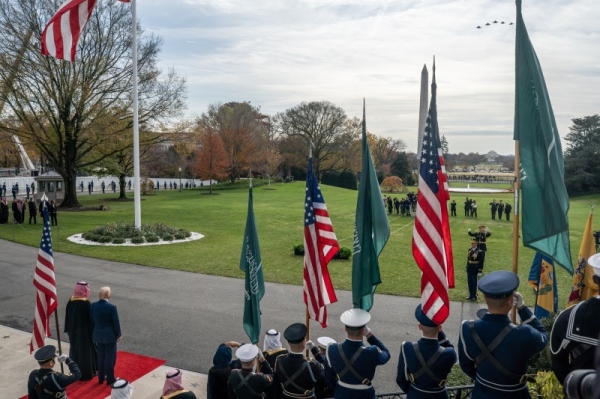

Washington D.C. – Saudi Arabia and the United States formalized a strategic alliance focused on artificial intelligence (AI) on Tuesday, marking a significant step in deepening the economic and security ties between the two nations. The agreement, signed during a meeting between Crown Prince Mohammed bin Salman and US President Donald Trump, aims to harness American technological expertise to drive economic diversification and growth within Saudi Arabia’s Vision 2030 framework. This partnership signals a concentrated effort to collaborate on the development and deployment of AI across various sectors.
The agreement was signed by Saudi Minister of Foreign Affairs Prince Faisal bin Farhan and US Secretary of State Marco Rubio. Officials from both countries described the initiative as a historic milestone, anticipating substantial benefits in areas ranging from infrastructure development to national capability building. It reflects a broad objective to secure long-term economic stability through technological innovation.
The Strategic AI Partnership: A Deep Dive
The partnership centers on leveraging Saudi Arabia’s inherent advantages – its availability of land, abundant energy resources, and strategic geographic location – to establish prominent AI and cloud computing hubs. These hubs are designed to cater to demand not only within the Kingdom but also regionally and globally. Simultaneously, the agreement aims to catalyze economic growth in the US through increased investment and collaboration.
A core component of this collaboration will be the strengthening of the semiconductor supply chain. Access to advanced semiconductors is considered critical for the advancement of AI technologies, and the partnership seeks to ensure both countries have reliable access. This move comes amid global concerns about supply chain vulnerabilities, particularly those affecting the technology sector.
Key Areas of Focus
The agreement outlines specific areas for joint development and investment. These include, but are not limited to:
Advanced AI applications: Focusing on solutions for critical industries like healthcare, education, energy, mining, and transportation. The emphasis is on building innovative and practical tools for these sectors.
AI infrastructure development: Building robust and modern infrastructure to support the burgeoning AI sector. This includes data centers, high-speed networks, and other necessary components.
National capability building: Investing in training programs and educational initiatives to develop a skilled workforce capable of supporting and driving AI innovation. This constitutes a vital long-term investment.
Expanded investment: Fostering greater high-value investment flows between Saudi Arabia and the US. The goal is to create a virtuous circle of innovation and economic development.
The initiative aligns with wider US efforts to promote responsible development and use of AI, as outlined in recent executive orders and national strategies. Simultaneously, it supports Saudi Arabia’s ambitious plans to diversify its economy away from oil dependency, propelled by increased digital transformation.
According to a statement released by the Saudi Ministry of Foreign Affairs, the partnership will facilitate stronger economic relationships between companies in both countries. This targeted support for private sector players is expected to accelerate the development of cutting-edge solutions in key industries. The Ministry anticipates that such collaborations will yield tangible economic and social benefits for both nations.
The agreement reflects a broader trend of international cooperation in the field of AI. Many countries are recognizing the strategic importance of AI and are seeking to forge partnerships to share knowledge, resources, and expertise. This collaborative approach is seen as crucial for maximizing the potential benefits of this transformative technology.
The partnership is not without its geopolitical context. It comes as the US seeks to reinforce its alliances in the Middle East and counter the influence of other global powers, specifically in the realm of advanced technology. It’s also worth noting that Saudi Arabia has been actively investing in technology ventures globally, and the US is a particularly attractive destination for these investments.
Several analysts have suggested this partnership could also include cooperation on AI safety and security protocols, considering the increasingly sensitive nature of AI technologies. However, specific details on these aspects remain undisclosed. Further clarification on the security implications is anticipated in forthcoming policy discussions.
Looking ahead, the next critical step involves the formation of joint working groups responsible for developing detailed implementation plans for each area of cooperation. These plans are expected to be finalized within the next six to twelve months, according to sources familiar with the negotiations. The success of the partnership will ultimately depend on effective coordination, sustained investment, and a willingness to address potential challenges related to data privacy, intellectual property rights, and regulatory differences. The evolution of this AI collaboration and its impact on both economies will be closely monitored in the coming years.
While the broad outlines of the partnership are established, the specific projects and initiatives that will emerge remain to be seen. The ongoing development of clear metrics for success and regular progress reviews will be crucial for ensuring accountability and maximizing the potential impact of this landmark agreement. The future of the partnership also depends on the political landscape in both countries.