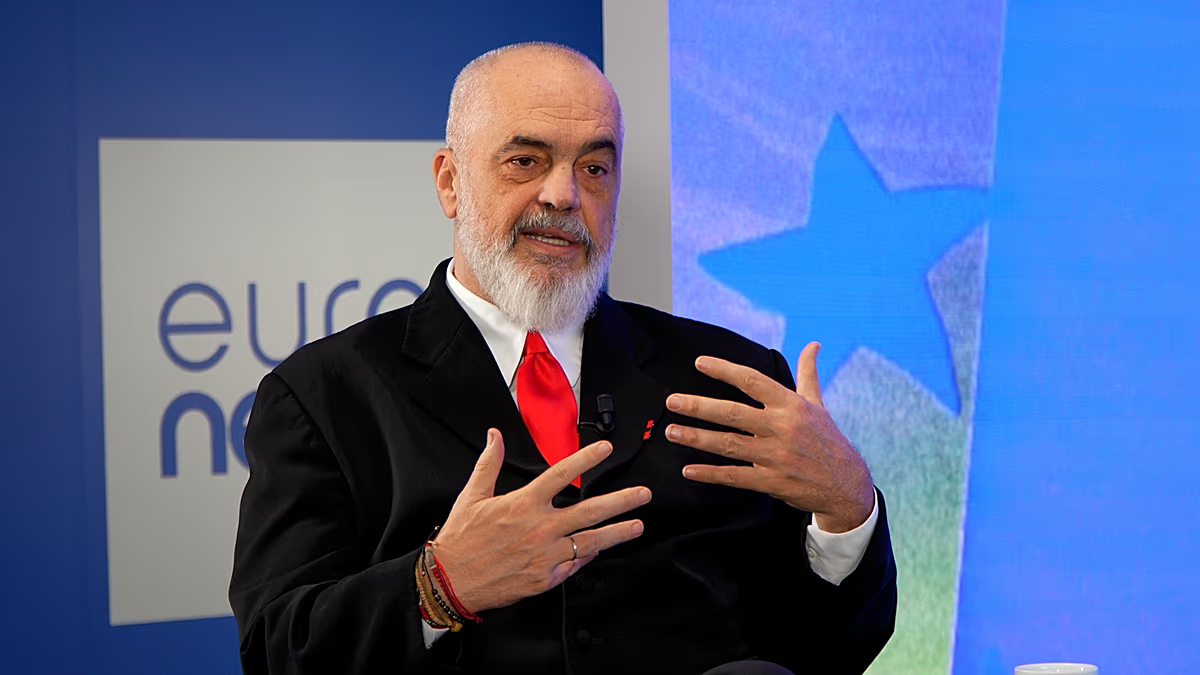

Albania is poised to accelerate its path towards EU membership, with Prime Minister Edi Rama expressing confidence in a potential entry date by 2030. Following a decade of reforms and bolstered by increased geopolitical support for EU enlargement, the Western Balkan nation is now considered a frontrunner in the accession process. The move comes amid ongoing assessments of Albania’s progress in key areas like combating organized crime and strengthening rule of law.
The European Commission acknowledged Albania’s reform efforts in a recent enlargement report, suggesting potential readiness for accession by the end of the decade if the current pace is maintained. This positive assessment follows the geopolitical shift sparked by the Russian invasion of Ukraine, which has renewed impetus for expanding the European Union to include countries in the Western Balkans. Albania initially became a candidate country over a decade ago.
The Push for Albania’s EU Membership
Prime Minister Rama argues that Albania’s history of integration within larger empires prepares it for joining the EU, framing the bloc as a modern guarantor of freedom and legal stability. He highlighted a transformation within the country, emphasizing a commitment to European values. This viewpoint resonates with some member states, notably Italy, with whom Albania enjoys close ties.
However, despite the progress, the European Commission’s report outlined areas needing further attention. Strengthening efforts to combat organized crime, improve anti-money laundering systems, and tackle human trafficking are critical for aligning with EU standards. Rama acknowledged these challenges but also asserted that such issues are not unique to Albania.
Close Relationship with Italy & Migration Agreement
A significant recent development has been the agreement between Albania and Italy, established in 2023, where Albania hosts migration centers built and managed by Italy. This deal, intended to assist Italy with migrant processing, has drawn both attention and criticism, raising questions regarding the outsourcing of European border control and adherence to asylum laws. Reuters provides further detail on this agreement.
Rama has defended the collaboration as a bilateral response to a specific Italian request, emphasizing Albania’s willingness to assist its close ally. He characterizes the relationship between the two nations with the lighthearted remark, “Italians are Albanians dressed in Versace,” signifying a strong cultural and political connection. He has ruled out replicating this “Albanian model” with other European nations, despite interest from some member states pursuing stricter migration policies.
For Albania to successfully join the EU, it must not only complete technical negotiations with the European Commission but also secure unanimous political approval from all current member states. This can be a complex process influenced by national interests and broader geopolitical considerations. The European Parliament offers a comprehensive overview of the EU enlargement policy.
With a population of 2.3 million, comparable to the size of Prague, Albania presents a manageable demographic and economic addition to the EU. The country’s relatively small size simplifies integration compared to larger potential candidates. However, addressing concerns regarding corruption and organized crime remains a high priority.
Looking ahead, Albania’s success hinges on continuing its reform momentum and fostering broad support within the European Union. The coming years will be crucial in demonstrating its commitment to EU values and its ability to meet the required standards for membership. Continued monitoring of Albania’s progress by the European Commission and ongoing engagement with member states will be essential to track the country’s path toward potential EU accession and its future role within the bloc as a member state within the Western Balkans region.