




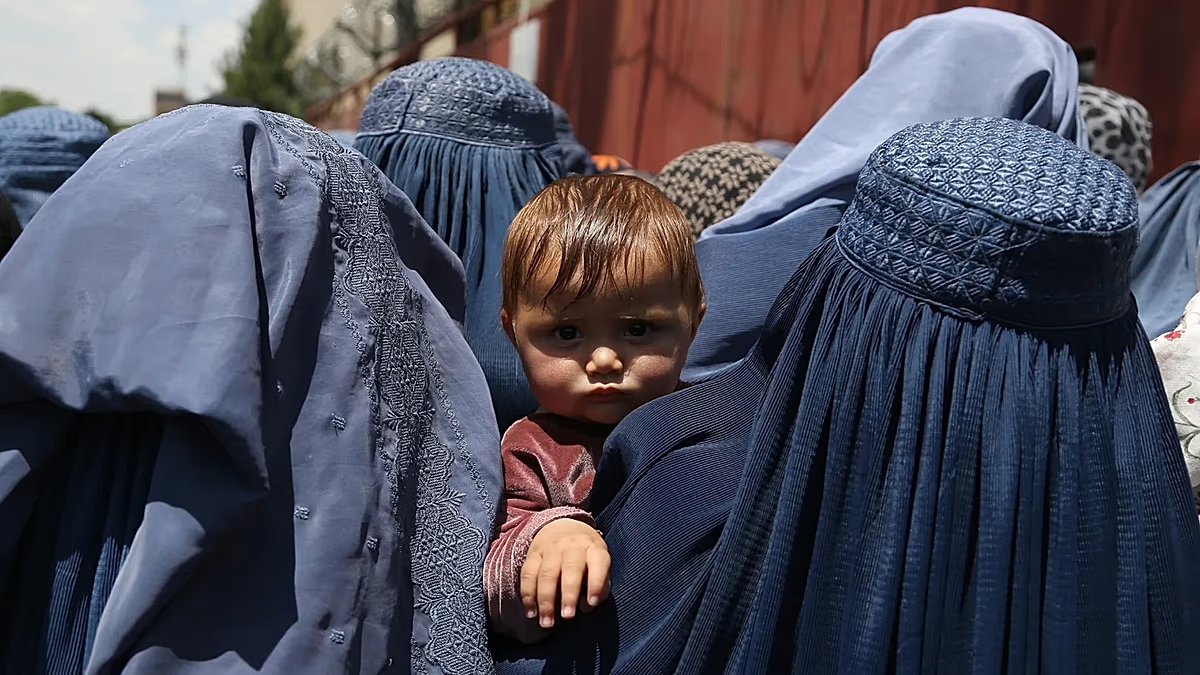

The prospect of returning Afghan refugees is increasingly complex, as a senior United Nations official warns Afghanistan lacks the capacity to sustainably reintegrate those returning from abroad. This comes as European Union member states explore options for sending back individuals whose asylum claims have been rejected. Approximately 4.5 million Afghans are reportedly returning to their homeland, yet face dire conditions hindering successful resettlement.
The growing influx exacerbates existing challenges within Afghanistan, including widespread poverty, the aftermath of recent natural disasters like earthquakes, and severe restrictions imposed by the Taliban regime. These factors are creating an untenable situation for both returning Afghans and the communities they rejoin, raising concerns about the feasibility of large-scale repatriation efforts.
The Capacity Challenge for Afghan Returnees
Kanni Wignaraja, UNDP Director for Asia and the Pacific, emphasized a significant disconnect between international discussion of returns and the practical realities on the ground. She stated to Euronews that Afghan communities simply aren’t equipped to absorb a large number of returnees, particularly given the limited availability of resources and opportunities.
According to the UNDP’s Adjusted Multidimensional Poverty Index, roughly two-thirds of Afghanistan’s population of 44 million currently live below the poverty line. The majority of those returning are arriving from Iran and Pakistan, often without financial resources and burdened by debt.
Wignaraja explained that returnees struggle to secure employment, housing, and access to essential services like healthcare and education. Critically, the Taliban’s policies severely restrict opportunities, particularly for women and girls, who are barred from attending school beyond grade six and face significant employment barriers.
Limited International Assistance
The situation is further compounded by a lack of international support reaching those who have returned. A UNDP survey indicated that approximately 76% of local communities haven’t seen any international assistance directed towards supporting returnees. This shortage contributes to the difficulties faced by both the returning populations and the host communities.
Meanwhile, Brussels has initiated exploratory talks with the Taliban, despite the EU’s formal non-recognition of the regime. This move follows a call from 20 European states to facilitate the return of Afghan nationals whose asylum applications have been denied. The EU Agency for Asylum (EASO) data reveals that between June and August 2023, 63% of Afghan asylum seekers were granted refugee status within EU and EFTA countries, although recognition rates varied considerably among different nations. However, this data excludes national forms of protection and appealed cases.
Additionally, there are concerns regarding the potential impact on existing aid programs and the risk of diverting resources away from essential services within Afghanistan.
Rights of Women as a Key Concern
Since regaining power in 2021, the Taliban has systematically curtailed the rights of Afghan women and girls. Restrictions on education and employment, combined with limitations on movement and public life, are major obstacles to reintegration and overall stability.
Wignaraja stressed that the EU should prioritize the rights of Afghan women and girls in any negotiations with the Taliban. She emphasized the fundamental need for education and employment opportunities for women as a condition of supporting returns, ensuring that all Afghans, regardless of gender, can achieve a dignified life.
The future of Afghan refugees remains uncertain. International discussions and potential repatriation efforts will need to address the underlying socioeconomic and political challenges within Afghanistan, as well as ensure the protection of human rights, particularly those of women and girls. The international community’s continued assessment of the situation, and its evolving policies regarding Afghan displacement, will be critical in the coming months.