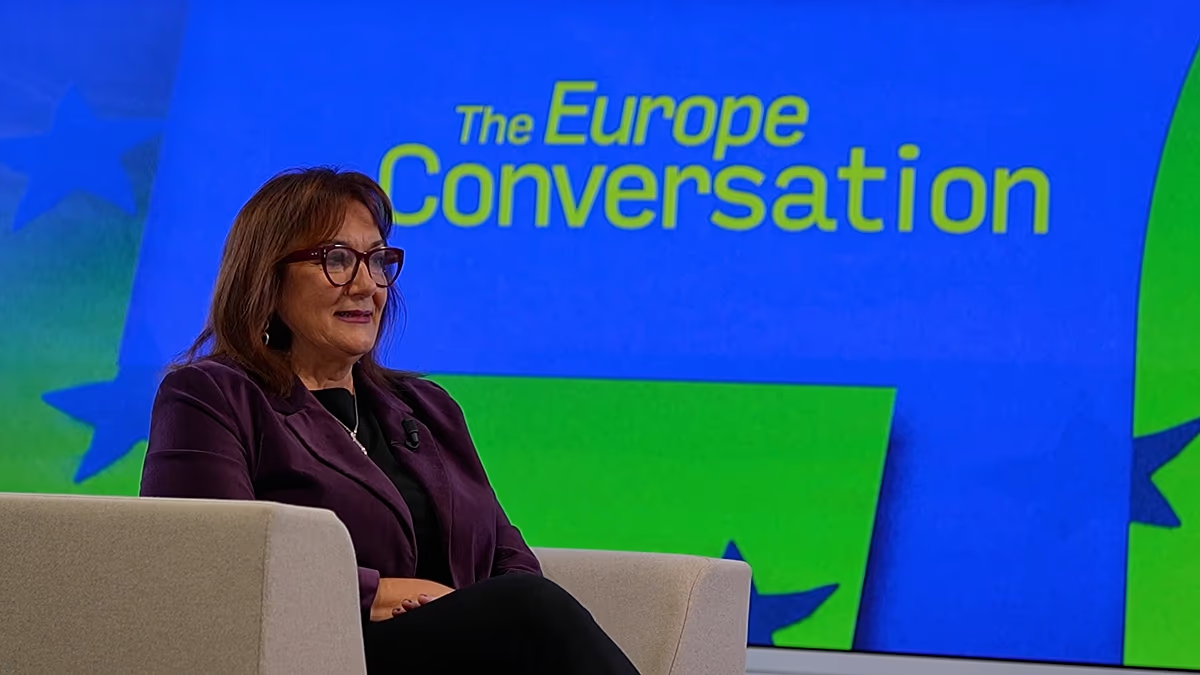

The European Union is seeking a more assertive role in the Southern Mediterranean region, moving beyond financial contributions to become a key political “player” in the area, according to EU Commissioner Helena Dalli Šuica. This push for increased influence comes as the EU unveils a new initiative focused on economic development, job creation, and addressing the root causes of migration in North Africa and the Middle East. Šuica emphasized the need for the EU to be actively involved, particularly in light of growing interests from countries like China and Russia.
Speaking in an exclusive interview with Euronews, Šuica stated the EU aims to forge “real partnerships” with southern Mediterranean nations, based on consultation with various stakeholders. This new approach signifies a departure from previous Euro-Mediterranean policies, which have often been criticized for their limited impact and unfulfilled promises. The EU currently provides significant financial aid to the region, and aims to leverage this support into greater political leverage.
EU’s New Mediterranean Strategy: Becoming a Key Player
The EU’s strategy centers on fostering economic growth and creating employment opportunities in its southern neighborhood. According to Šuica, these efforts are directly linked to managing migration flows by addressing the underlying economic pressures that drive people to leave their homes. The initiative prioritizes “brain circulation” – encouraging skilled workers to contribute to development both within their home countries and through experiences abroad.
Energy policy is another crucial area of cooperation, the Commissioner explained. The EU envisions a coordinated effort to decarbonize the Mediterranean region, recognizing that pollution from one side could negate progress on the other. Šuica described the potential outcome as a “win, win, win, win” situation, encompassing job creation, regional development, and environmental sustainability. Euro-Mediterranean cooperation has been a long-standing goal, and this new push represents a renewed commitment.
Gaza Reconstruction and the ‘Board of Peace’
Beyond the Mediterranean strategy, Šuica addressed the ongoing situation in Gaza and the proposed US-led reconstruction efforts. She revealed that the EU is seeking a seat on the ‘Board of Peace’ proposed by former US President Donald Trump as part of his 20-point plan for the territory. Šuica cited the EU’s significant financial contributions and geographical proximity as justification for its inclusion, stating the EU is both a major donor and a “player” in the region.
While no formal invitation from the Trump administration has yet been received, the issue is slated for discussion among EU foreign ministers. This conversation will occur alongside a Palestine Donor Group meeting co-chaired by Šuica and Palestinian Prime Minister Mohammad Mustafa on November 20th. The meeting, expected to involve delegations from 60 countries, will focus on empowering the Palestinian Authority (PA) in the context of Gaza’s post-war future.
However, the EU’s support for the PA remains contingent on economic and governance reforms. Furthermore, Šuica raised concerns about Israel’s withholding of tax revenues owed to the PA, which UN experts have characterized as a damaging financial constraint. She stressed the necessity for Israel to release these funds to alleviate the economic pressures on the Palestinian people. The UN Office for the Coordination of Humanitarian Affairs provides ongoing monitoring of the situation.
Looking ahead, the EU’s ability to translate its ambition into concrete results will be crucial. The success of this new Mediterranean strategy hinges on fostering genuine partnerships and addressing the complex political and economic challenges facing the region. Stakeholders will be closely watching the outcome of the EU foreign ministers’ meeting and the progress made at the Palestine Donor Group to assess the EU’s commitment to becoming a more active and influential force in the Southern Mediterranean.