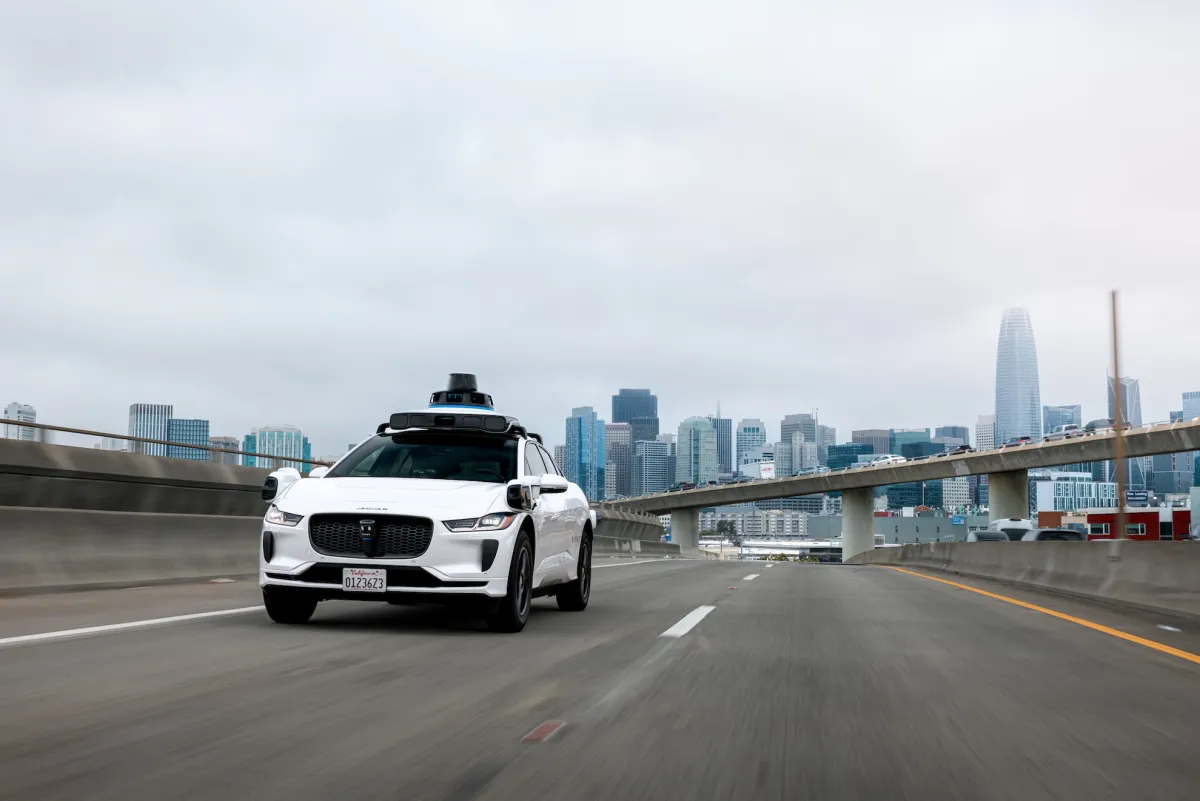

Waymo’s continued expansion is reshaping the landscape of autonomous vehicle technology, and the company is now enabling its robotaxi service to utilize freeways around San Francisco, Phoenix, and Los Angeles. This marks a significant step beyond urban driving, opening up longer routes and faster transit times for passengers. The integration of freeway access fundamentally changes the potential reach of Waymo’s service and its viability as a truly scalable transportation solution, improving ride times by up to 50%.
The move to incorporate freeways into its operational domain is crucial for Waymo, effectively connecting sprawling metropolitan areas. This expanded service area now encompasses 260 square miles across Silicon Valley and San Francisco, and it’s the essential infrastructure needed to service key destinations like the San Francisco Airport, currently in a testing phase. While city driving demonstrated the technology’s capabilities, freeway access is pivotal for real-world utility and service scalability.
The Critical Rollout of Waymo’s Robotaxi Service
For years, autonomous vehicle companies have focused on navigating city streets, but the true test lies in handling the complexities of highway driving. Freeways present unique challenges – higher speeds, merging traffic, and unpredictable driver behavior – making this expansion a key milestone in Waymo’s development. The company has spent considerable time and resources testing and refining its systems to safely and reliably navigate these environments.
However, achieving technological prowess is only half the battle. Successfully transitioning into a profitable business requires careful consideration of economic factors. While the increased efficiency and broader coverage area are attractive to riders, whether these advantages translate into financial sustainability remains to be seen. Much depends on ride demand, operational costs, and the ability to manage a fleet of autonomous vehicles effectively.
Beyond the Bay Area: Expansion and Investment
Waymo isn’t the only player making moves in the autonomous vehicle space. Several companies recently secured funding and partnerships, indicating continued investor confidence in the sector. Einride, a Swedish electric and autonomous truck startup, is set to go public via a merger with Legato Merger Corp., valued at $1.8 billion. Einride already generates revenue through SaaS offerings and a fleet of electric trucks utilized by companies such as Heineken and PepsiCo.
Other noteworthy deals include Forterra securing $238 million for defense-focused autonomous technology and Harbinger raising $160 million, bolstered by an order from FedEx. Meanwhile, Vay, a German remote piloting startup, received a $60 million investment from Grab, and Octopus Electric Vehicles secured a £2 billion lending facility. These investments showcase the diversifying applications of autonomous technology beyond simply passenger transport.
Challenges and Uncertainties in the AV Market
Despite the influx of investment, the path to profitability remains challenging for many autonomous vehicle companies. Ride-hailing firm Via recently reported a loss of $36.9 million in its latest quarter despite revenue growth, highlighting the difficulties of scaling in a competitive market. Moreover, Rad Power Bikes, a popular e-bike manufacturer, is facing potential closure due to funding challenges, demonstrating the fragility of early-stage companies even within adjacent industries.
Concerns also linger around key technological goals. A recent poll indicated skepticism about Tesla achieving ambitious targets by 2035, including 20 million vehicle deliveries and 1 million robotaxis in operation. While the tech firm continues to push boundaries in areas like electric vehicles and battery technology, the pace and certainty of developments in autonomous systems remain uncertain.
Looking ahead, the next 12-18 months will be critical for Waymo. Expanding its airport service and demonstrating consistent profitability will be key indicators of success. Simultaneously, the broader industry will be closely watching for regulatory developments, consumer adoption rates, and the emergence of new business models that can unlock the full potential of robotaxi services and autonomous vehicle technology. The continued influx of investment, coupled with the ongoing technological advancements, suggests that the future of transportation is rapidly evolving, but significant hurdles remain before widespread deployment becomes a reality.