






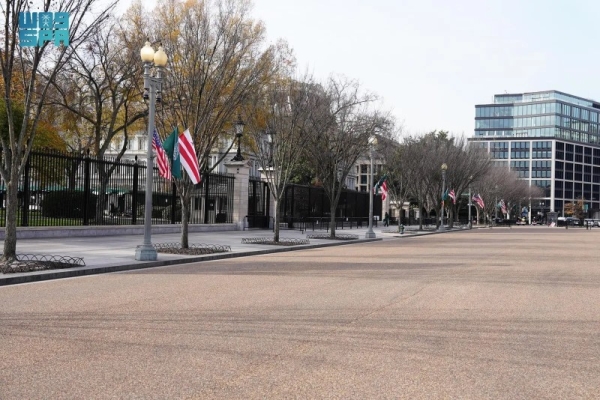

WASHINGTON — The nation’s capital was visibly adorned with both American and Saudi Arabian flags on Friday as Crown Prince and Prime Minister Mohammed bin Salman received an official welcome from the United States government. The display of national emblems along Pennsylvania Avenue and around the White House underscored the importance of the Saudi Arabia-U.S. relationship and signaled a renewed focus on diplomatic and economic ties. The visit comes amidst ongoing discussions about global energy markets, regional security, and the future of the long-standing strategic partnership.
The official reception took place as Prince Mohammed bin Salman met with President Joe Biden, marking a significant moment in bilateral relations which have faced recent strains. The visit is expected to cover a broad range of issues, including oil production levels, stability in Yemen, and potential collaborations in technology and infrastructure. White House officials have indicated a desire to “recalibrate” the relationship, balancing U.S. interests with regional realities.
The Significance of the Saudi Arabia Visit
The Crown Prince’s visit represents a notable shift in engagement after a period of somewhat cool relations. Previous criticism from the Biden administration regarding human rights concerns and the war in Yemen led to a temporary distancing. However, geopolitical factors, particularly the war in Ukraine and its impact on global energy supplies, have prompted a reassessment of the strategic value of the relationship.
Geopolitical Context and Energy Security
The ongoing conflict in Ukraine has significantly disrupted global energy markets, driving up prices and prompting the U.S. to seek stable oil supplies. Saudi Arabia, as a leading oil producer and member of OPEC+, plays a crucial role in global energy security. According to the U.S. Energy Information Administration, Saudi Arabia holds the second-largest proven crude oil reserves in the world.
Discussions centered on increasing oil production to help stabilize global prices were expected to be a key part of the summit. While Saudi Arabia has previously stated its commitment to the OPEC+ agreement, the U.S. hopes to foster greater cooperation on energy policy. The increased global demand for oil, coupled with supply chain disruptions, makes this dialogue particularly important.
Regional Stability and Yemen
Beyond energy, the visit also addressed pressing regional security concerns, most notably the ongoing conflict in Yemen. The U.S. has been urging Saudi Arabia to end its military intervention in Yemen and support a political resolution to the conflict. The Biden administration has previously expressed its support for a ceasefire and a comprehensive peace process.
Reports indicate that the discussions also covered issues related to Iran’s nuclear program and its broader regional influence. Both the U.S. and Saudi Arabia share concerns about Iran’s destabilizing activities, although their approaches to addressing these concerns may differ. Strengthening regional alliances and deterring further escalation remain key objectives for both nations.
Economic Cooperation and Investment
The visit wasn’t solely focused on geopolitical issues; economic cooperation was also a prominent topic. The U.S. is seeking to attract greater Saudi investment in American industries, while Saudi Arabia is looking to diversify its economy away from oil through projects like NEOM, a planned smart city. US-Saudi relations have historically centered on arms sales, but both sides are exploring opportunities in other sectors.
Additionally, discussions likely touched upon potential collaboration in emerging technologies, including renewable energy, artificial intelligence, and cybersecurity. Saudi Arabia’s Vision 2030, a comprehensive plan for economic diversification, seeks to leverage technology to drive growth and create new job opportunities.
However, there have been voices expressing caution regarding the U.S. engagement with Saudi Arabia amidst ongoing human rights concerns. Critics argue the administration is prioritizing geopolitical interests over its commitment to human rights principles. These concerns were publicly stated by several human rights organizations in the lead up to the meeting.
Meanwhile, Saudi officials have emphasized their commitment to economic reforms and social development. The country has undertaken some steps towards liberalization, but significant challenges remain in areas such as freedom of expression and political participation. The White House has indicated it would continue to raise these issues during the discussions regarding Saudi Arabian policy.
The Crown Prince and President Biden also addressed the need to deepen collaboration in counterterrorism efforts. Both countries face threats from extremist groups and share a commitment to combating terrorism in all its forms. Security cooperation between the two nations has been a long-standing feature of their relationship.
In contrast to some earlier expectations, no major announcements regarding specific oil production increases were made immediately following the meeting. Both sides emphasized the need for continued dialogue and a long-term approach to energy security. The core of the Saudi visit, therefore, revolved around establishing a framework for sustained cooperation.
Looking ahead, the true test of the revitalized relationship will be in the implementation of the agreements reached and the sustained engagement on shared challenges. A follow-up meeting between senior officials is anticipated within the next three months to assess progress on key issues. The trajectory of global oil prices and the evolving political landscape in the Middle East will remain critical factors influencing the future of diplomacy between Washington and Riyadh.