





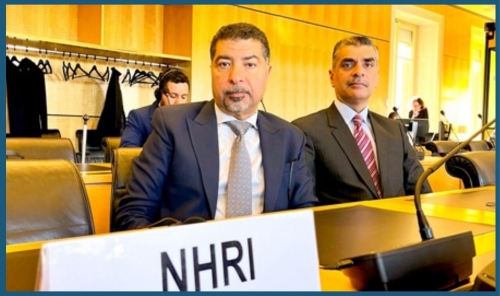

The Bahrain National Institution for Human Rights (NIHR) recently engaged in critical discussions with the United Nations Committee Against Torture in Geneva, underscoring the nation’s commitment to upholding international human rights standards. Led by President Engineer Ali Ahmed Al-Darazi and Secretary-General Yasser Ghanem Shaheen, the NIHR presented a comprehensive parallel report, contributing to the ongoing scrutiny of Bahrain’s adherence to the Convention Against Torture. This meeting signifies a crucial step in strengthening human rights protections and addressing concerns regarding the prevention of torture and ill-treatment within the Kingdom.
NIHR Engagement with the UN Committee Against Torture
The dialogue between the NIHR and the UN Committee Against Torture, comprised of ten independent international experts, took place at the historic Wilson Palace in Geneva. The committee’s primary function is to monitor how state parties are implementing the Convention Against Torture and Other Cruel, Inhuman or Degrading Treatment or Punishment. Bahrain, as a signatory to this convention, regularly submits national reports detailing its progress, and is also subject to review by bodies like the NIHR, which provide parallel reports offering independent perspectives.
This latest engagement focused on Bahrain’s Fourth National Report, with the NIHR’s findings offering a valuable complement to the government’s own assessment. The presence of both the President and Secretary-General demonstrates the NIHR’s dedication to transparency and collaboration with international bodies. Furthermore, this proactive approach in presenting a parallel report highlights Bahrain’s willingness to address potential shortcomings and proactively improve its human rights record.
Key Areas of Focus in the NIHR’s Parallel Report
The NIHR’s parallel report wasn’t a broad overview of human rights; it was keenly focused on the specifics of torture prevention and remediation. The report was structured around three core areas, providing a detailed analysis of the improvements made, challenges remaining, and actionable suggestions.
National Legislation Review
The first section meticulously reviewed Bahrain’s existing legal framework concerning the prohibition of torture. This included an examination of laws defining torture, establishing criminal penalties for perpetrators, and safeguarding the rights of individuals who may be vulnerable to such treatment. The NIHR analyzed whether these laws adequately align with the requirements of the Convention Against Torture, identifying any gaps or areas needing strengthening. This assessment is vital for ensuring that legal recourse is available to victims and that a clear deterrent exists against the practice of torture.
Institutional Oversight and Monitoring
A significant portion of the report focused on the NIHR’s own work in monitoring compliance with the Convention. This included a detailed account of the number and nature of complaints received alleging torture or ill-treatment. Importantly, the report didn’t just record the complaints; it outlined the precise follow-up actions taken by the NIHR in each case, demonstrating its commitment to investigating allegations thoroughly and impartially.
Beyond individual complaints, the NIHR’s efforts in promoting awareness were also highlighted. They regularly conduct training and awareness programs geared toward law enforcement officials, civil society organizations, and human rights defenders. These initiatives aim to enhance understanding of torture prevention strategies and best practices, fostering a culture of respect for human dignity. The topic of human rights training is especially prevalent in the discussions around Bahrain’s progress.
Recommendations for Enhanced Protections
The final, and arguably most impactful, section of the report provided concrete recommendations for improvement. These weren’t vague suggestions but targeted proposals aimed at strengthening national legislation, ensuring access to fair remedies for victims of torture, and generally enhancing the protection of civil liberties within Bahrain. The recommendations addressed issues such as improved investigation procedures, enhanced legal safeguards during detention, and increased support for victims seeking rehabilitation and redress. This proactive stance shows a desire to build upon existing structures and move towards a more robust human rights environment.
Constructive Dialogue and Future Collaboration
The UN Committee Against Torture responded positively to the NIHR’s detailed report and engagement. They expressed appreciation for the institution’s work and acknowledged the progress made by Bahrain in addressing concerns related to torture and ill-treatment. The committee and the NIHR representatives then engaged in a constructive dialogue, discussing the report’s findings and exploring opportunities for further collaboration.
This meeting wasn’t simply a reporting exercise; it was a platform for collaborative problem-solving. The committee offered its support for future human rights initiatives in Bahrain, and both parties reiterated their commitment to the full implementation of the Convention’s provisions. This partnership will be key in ensuring that rule of law principles are upheld and that Bahrain continues to strengthen its human rights safeguards.
In conclusion, the recent engagement between the NIHR and the UN Committee Against Torture represents a significant development in Bahrain’s ongoing efforts to prevent and address torture. The NIHR’s detailed parallel report, focused on national legislation, institutional oversight, and targeted recommendations, provided a valuable contribution to the committee’s assessment. The constructive dialogue and commitment to future collaboration demonstrate a shared dedication to upholding international human rights standards and ensuring a more just and equitable future for all in Bahrain. Readers are encouraged to explore the NIHR’s official website for the full report and further information about their ongoing initiatives.