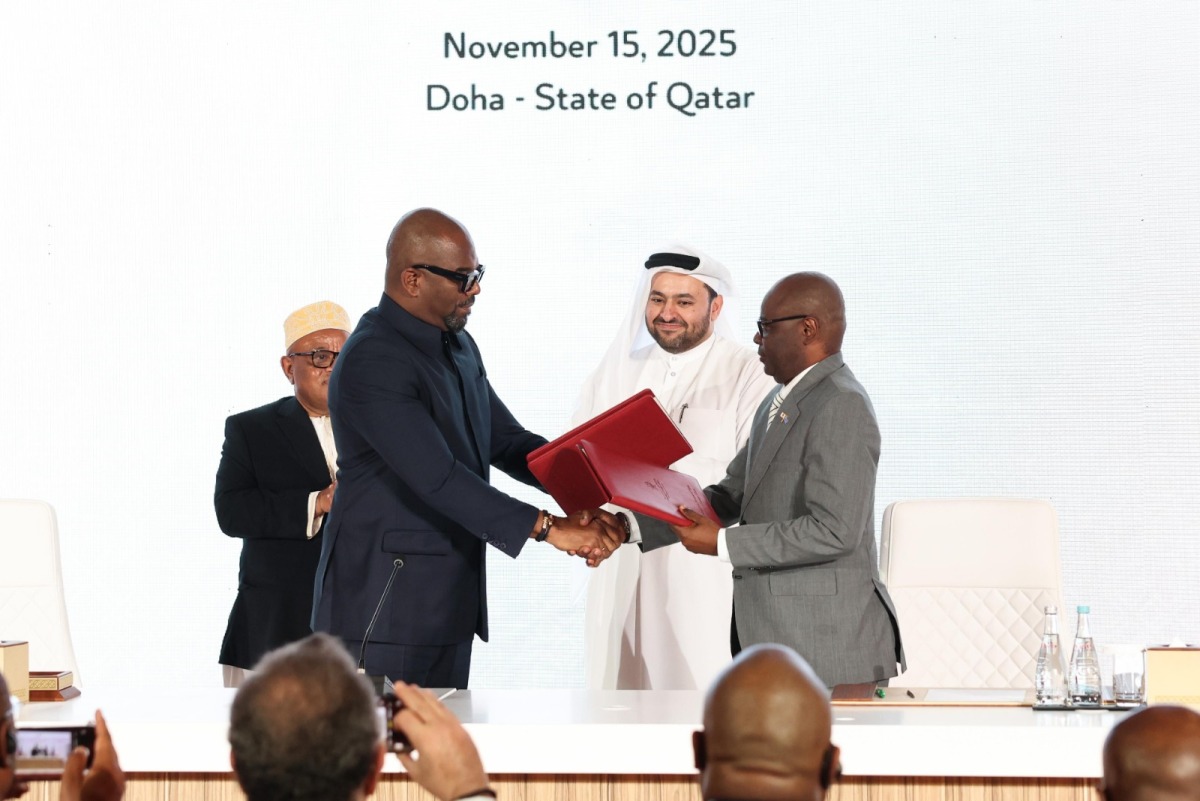

The State of Qatar has signed the Doha Framework for the Peace Agreement between the Government of the Democratic Republic of the Congo and the M23 Movement, also known as the Congo River Alliance, on Saturday. This significant development in the peace process was facilitated by Qatar, according to the Ministry of Foreign Affairs.
The agreement builds on the momentum of the Doha Declaration of Principles signed on July 19 in Doha, marking a crucial step towards resolving the conflict in the Democratic Republic of the Congo through a structured dialogue and phased approach to de-escalation and stabilization. The peace agreement aims to address the root causes of the conflict.
Key Provisions of the Doha Framework
The Doha Framework reaffirms the commitment of both parties to protecting civilians, respecting human rights, and facilitating the safe return of displaced persons. It also prioritizes national reconciliation and unity, serving as a foundational document for the broader peace process. The framework outlines a comprehensive approach to conflict resolution, emphasizing the need for confidence-building measures and a phased implementation.
To ensure effective implementation, the parties have agreed to develop subsequent protocols, annexes, and technical arrangements. These will address specific operational aspects, including ceasefire consolidation, troop disengagement, humanitarian access, and reintegration pathways. The Ministry of Foreign Affairs stated that these protocols will form an integral part of the Doha Framework, ensuring coherence and clarity in the implementation process.
International Support and Cooperation
The State of Qatar has commended the constructive engagement of both parties and acknowledged the cooperation of regional and international partners. The government expressed appreciation to the Government of the United States of America, the Republic of Togo, and the African Union Commission for their support throughout the facilitation process. The international community’s involvement has been crucial in advancing the peace process, according to the ministry.
Qatar remains committed to supporting the parties in the implementation phase, providing a neutral platform for dialogue in coordination with regional organizations and the United Nations system. The country’s continued involvement is expected to play a vital role in ensuring the success of the peace agreement. The peace process is also supported by other international organizations and countries, fostering a collaborative environment for conflict resolution.
Next Steps and Expectations
As the parties move forward with the implementation of the Doha Framework, the development of subsequent protocols and annexes will be critical. The success of the peace agreement will depend on the effective implementation of these measures, as well as the continued support of the international community. The report indicates that the parties are committed to a phased approach, with a focus on confidence-building measures and humanitarian access.
The international community will be watching closely as the parties work to consolidate the ceasefire, facilitate troop disengagement, and support the reintegration of former combatants. While challenges are likely to arise, the signing of the Doha Framework represents a significant step towards peace in the Democratic Republic of the Congo. For more information on the peace process, visit the United Nations website.
The implementation of the peace agreement is expected to be a complex and challenging process. However, with the commitment of the parties and the support of the international community, there is optimism that the agreement will lead to a lasting peace in the region. The next steps in the process will be critical in determining the success of the agreement, and the international community will be closely monitoring the developments.