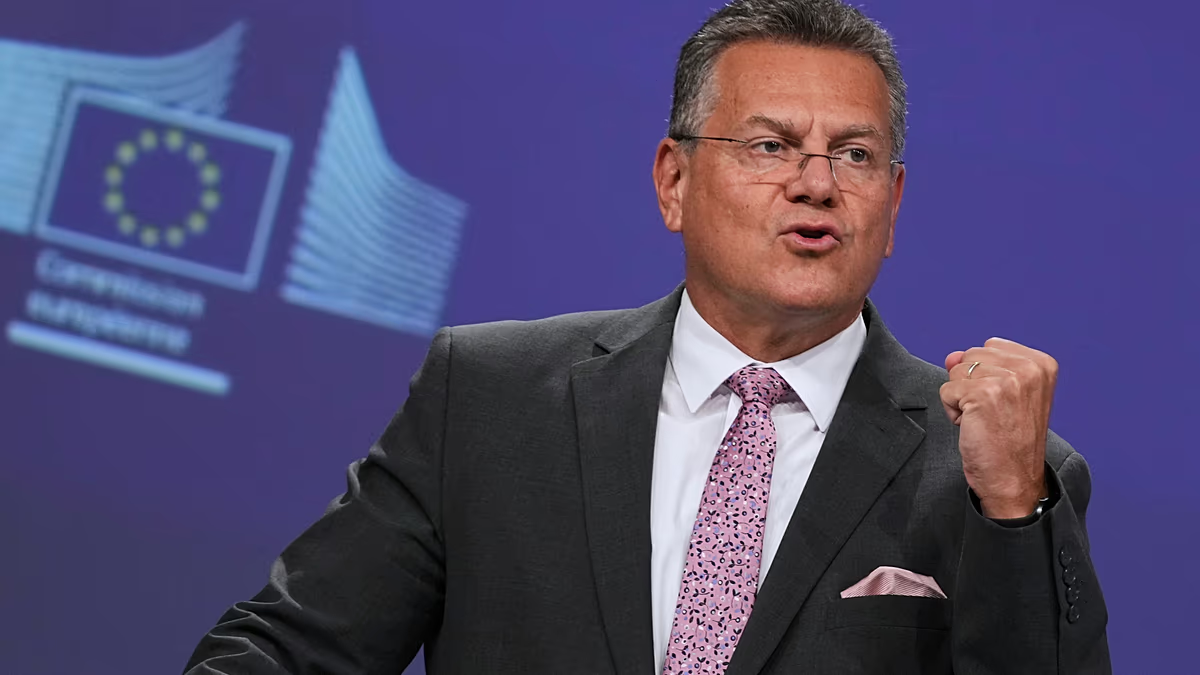

The European Union is grappling with a complex issue surrounding strategic supplies, with EU Trade Commissioner Maroš Šefčovič warning that all critical supplies can be used as a weapon against the bloc. The recent saga involving Nexperia, a chipmaker, has highlighted the EU’s vulnerabilities in the global supply chain.
The Dutch government’s takeover of Nexperia on September 30, citing national security concerns, sparked a clash between Europe and China over control of the company and its products, resulting in Chinese restrictions on chip exports. According to Šefčovič, this episode underscores the risks associated with critical dependencies on third countries outside the EU.
Economic Security at Risk
Šefčovič emphasized that the Nexperia incident is not an isolated case, pointing out that “everything can be weaponized” – from Russian gas to critical raw materials and high and low-end chips. The EU is now working to diversify its supply chain and reduce its reliance on third countries.
The Commission is developing a new doctrine on economic security, which is expected to be presented next month. Šefčovič suggested that the EU should adopt a unified approach to securing rare earths and critical components, similar to Japan’s strategy of stockpiling critical raw materials and technologies.
“Economic security and effective export controls would work only if they’re applied in harmony across the EU,” Šefčovič said, highlighting the need for a coordinated approach to prevent loopholes in the single market. The EU’s policy of de-risking, rather than de-coupling, from China aims to maintain trade while applying safeguards in key strategic areas.
Building a Resilient Supply Chain
The Nexperia saga has demonstrated the interconnectedness of the global supply chain and the potential risks associated with critical dependencies. As Šefčovič noted, the EU is “only at the beginning of resolving this problem” and will continue to engage with Dutch and Chinese authorities to find a solution.
In the meantime, the EU is taking steps to build a more resilient supply chain. According to Šefčovič, the Commission is working to ensure that car manufacturers and spare parts producers receive the necessary chips. For more information on the EU’s trade policies, visit the European Commission’s trade website.
The EU’s efforts to strengthen its economic security and diversify its supply chain are crucial in mitigating the risks associated with strategic supplies. As the situation continues to evolve, the EU will need to remain vigilant and adapt to the changing landscape. The European Union’s approach to trade disputes will be closely watched.
As the EU moves forward, it is clear that a coordinated approach to economic security will be essential in ensuring the bloc’s resilience in the face of global challenges.