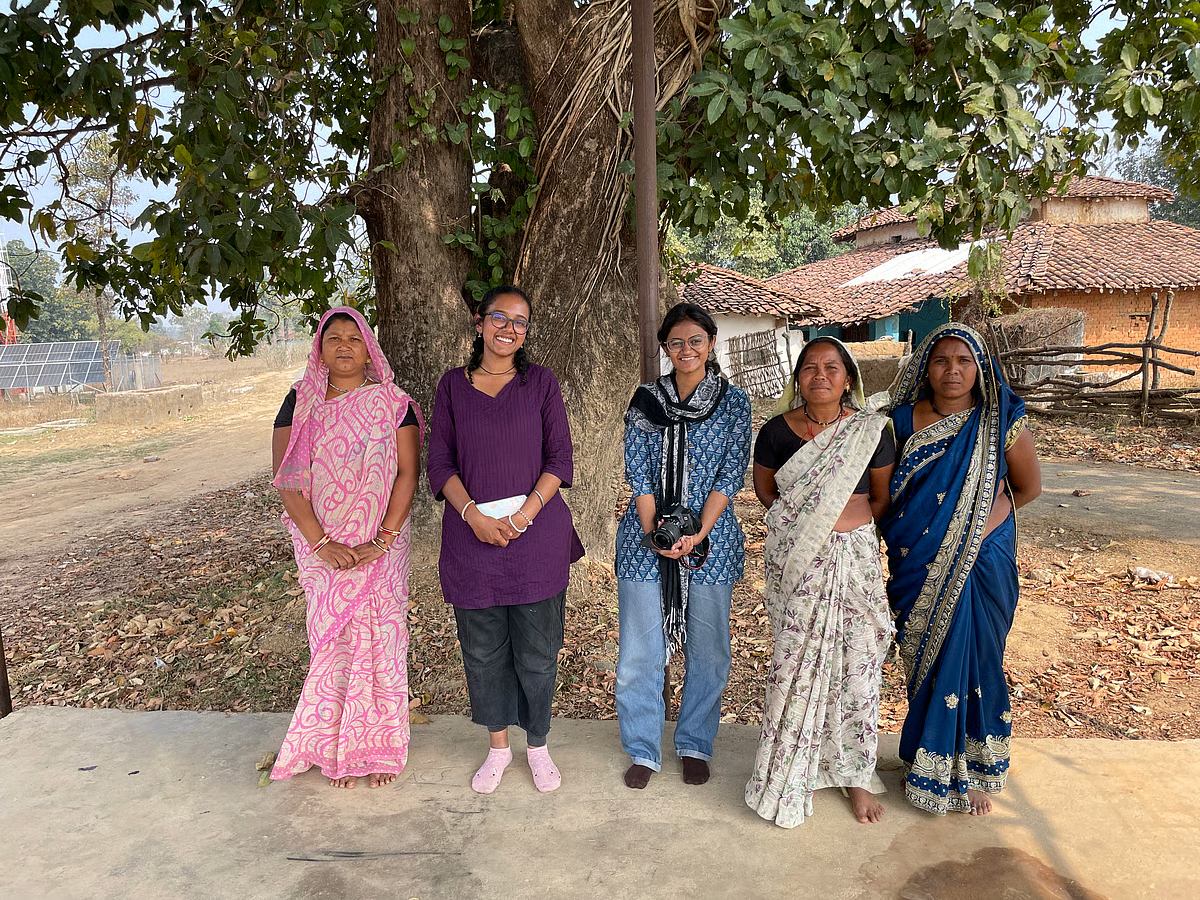

Two young women, Niranjana Sunil and Arya Kulkarni, have published a remarkable book about their year-long journey across India, documenting their experiences with three indigenous tribal communities. The travelogue, which combines poetry, prose, sketches, illustrations, and photographs, is a testament to their dedication and skill.
Niranjana, a UAE resident, and Arya, who are both students in India, traveled to Wayanad in Kerala, Kanha in Madhya Pradesh, and North Sikkim, immersing themselves in the cultures of the Paniyar, Baiga, and Lepcha communities. Their journey, which began as a university graduation project, took them out of their comfort zones and into the heart of rural India, where they faced numerous challenges, including harsh weather conditions and cultural barriers.
The Power of Cultural Immersion
The duo’s initial enthusiasm to learn from the communities was met with resistance, as the locals seemed hesitant to open up to them. However, by adopting a more relaxed approach, they were able to build trust and gain a deeper understanding of the communities’ way of life. “Eventually, we just started sitting around them, being around them, and let conversations flow naturally,” Niranjana explained, highlighting the importance of cultural immersion in their journey.
As they spent more time with the communities, they were invited to share tea, lunch, and afternoons spent watching children play, observing daily life unfold naturally. This participant observation allowed them to gain a richer understanding of the communities’ cultural practices and traditions.
Lessons Learned
The experience had a profound impact on the two young women, teaching them valuable lessons about the importance of living in harmony with nature. They observed that the tribal communities cared for the environment in a way that was “raw and grounded,” a stark contrast to the sustainability initiatives they were familiar with in urban areas. According to their account, the communities’ relationship with nature was akin to “caring for a little sibling.”
Their journey also highlighted the challenges of documenting cultural experiences. The pair had to juggle multiple roles, including interviewing, photography, and note-taking, often in languages they weren’t fully fluent in. Despite the difficulties, they found that the writing process was relatively smooth, as their experiences poured out of them naturally.
Recognition and Future Plans
The book has already garnered attention, with Matt Witten, a writer for acclaimed series such as House and Law & Order, praising it as “lovely.” As the duo looks to the future, they are likely to continue exploring the intersection of culture and environment, potentially leading to further publications or projects. While their next steps are uncertain, their dedication to documenting and preserving cultural heritage is clear, and their work is expected to have a lasting impact on the communities they have worked with and the wider cultural landscape.
As their work gains recognition, it will be worth watching for any future developments, including potential collaborations or new projects. The impact of their book on the cultural and environmental communities is also likely to be significant, and may lead to further discussions and initiatives in these areas.