
A viral social media claim alleging that Portugal is banning all Islamic laws and practices has been disputed by the Portuguese government. The false claim, which has been viewed over 800,000 times on X, also states that France, Italy, Sweden, Austria, and Belgium will follow suit, with fines of up to €4,000 for non-compliance.
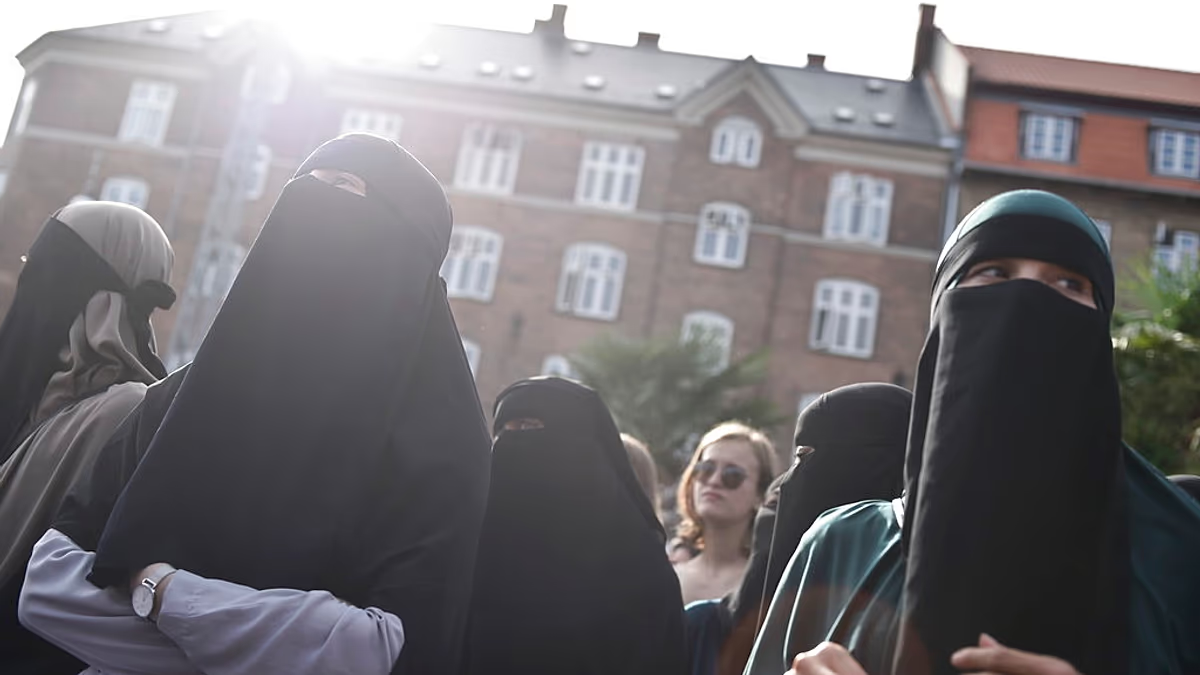
However, the actual bill approved by the Portuguese parliament in mid-October focuses on banning face veils in public places for “gender or religious” reasons. The proposed legislation, backed by the far-right Chega party and the ruling centre-right PSD, aims to prevent individuals from hiding their faces, citing concerns about “situations of exclusion and inferiority,” particularly for women.
Understanding the Face Veil Ban
The bill, which is still under discussion, proposes fines ranging from €200 to €4,000 for those who fail to comply. The Portuguese government has clarified that the ban is not targeting Islamic practices specifically but rather aims to prohibit clothing that conceals the face in public spaces, regardless of the reason.
A spokesperson for the government emphasized that Portugal is a democratic state that guarantees religious freedom, as enshrined in its Constitution. The government’s stance is consistent with other European countries that have implemented similar bans, including Austria, France, Belgium, and Denmark, which have banned the burqa in public places.
European Context and Human Rights
These countries, along with others like Italy, the Netherlands, and Spain, which have partial bans in specific regions or public spaces, are all signatories to the European Convention on Human Rights. Article 9 of the Convention guarantees the right to freedom of thought, conscience, and religion. Similarly, the EU Charter of Fundamental Rights, under Article 10, protects the right to freedom of belief and religion.
The enforcement of these laws varies across countries, depending on police resources. While some countries have stricter implementation, others may have more relaxed enforcement. Nonetheless, the bans are not a blanket prohibition on Islam or any other religion.
What’s Next for Portugal?
The bill will be debated in a parliamentary committee, where it may be amended before returning to the plenary for a final vote. President Marcelo Rebelo de Sousa will also need to approve the law, and he has the option to veto it or send it to the Constitutional Court for review. As the bill progresses, it’s essential to watch for any developments that may impact the rights of individuals in Portugal.
For now, the Portuguese government’s clarification should alleviate concerns about a widespread ban on Islamic practices. As the situation unfolds, it’s crucial to rely on credible sources of information to understand the implications of the proposed legislation.