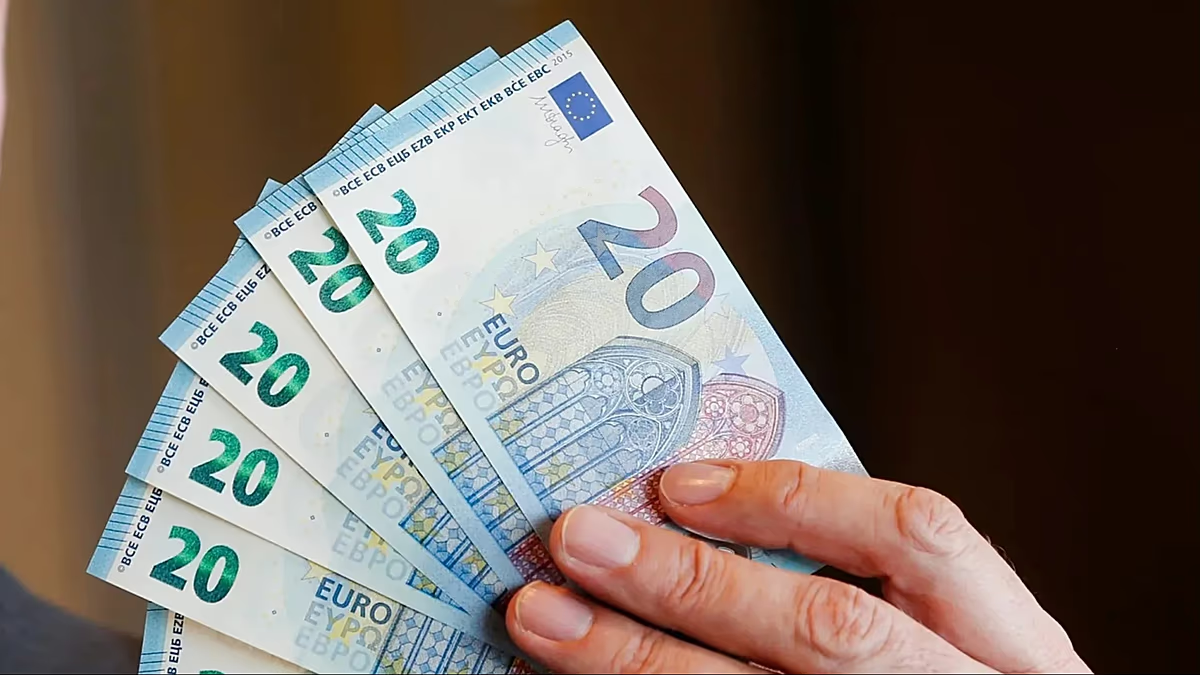

The European Union is introducing a bloc-wide limit on cash payments to businesses as part of its Anti-Money Laundering package, set to come into force in 2027. The regulation will cap cash transactions at €10,000, aiming to reduce money laundering and financial crime.
The new rule will apply to business transactions, meaning companies will no longer be able to accept cash payments above the €10,000 threshold. However, private individuals will still be able to buy and sell goods and services using cash, unless a member state has stricter national limits.
Understanding the Cash Limit
The €10,000 cap on cash payments is part of a broader effort to harmonize anti-money laundering rules across the EU. Currently, member states have different national limits, ranging from €5,000 in Italy to no limit in Austria. The new regulation aims to close loopholes and reduce opportunities for money laundering.
According to the United Nations Office on Drugs and Crime, between 2 and 5% of global GDP is laundered annually, amounting to up to €1.87 trillion. The EU’s Anti-Money Laundering package seeks to address this issue by forcing more payments into traceable channels.
Impact on Cash Transactions
The new regulation will primarily affect large cash transactions involving businesses. Daily transactions, such as buying coffee or groceries, will remain unaffected. Europeans will still be able to save, hold, and withdraw any amount of cash they like.
However, some experts have questioned the effectiveness of the cash limit, suggesting that criminals may simply shift to other methods, such as crypto or cross-border transactions. The success of the policy will depend on its smooth implementation across all member states.
What’s Next
The Anti-Money Laundering package is set to take effect in July 2027, with a three-year transition period for banks, businesses, and regulators to adapt their systems. The EU will also establish an Anti-Money Laundering Authority in Frankfurt to oversee the implementation of the new rules.
As the EU continues to crack down on money laundering, it’s essential to stay informed about the changing regulatory landscape. With the new cash limit set to come into force in 2027, businesses and individuals should be prepared to adapt to the new rules and explore alternative payment methods.