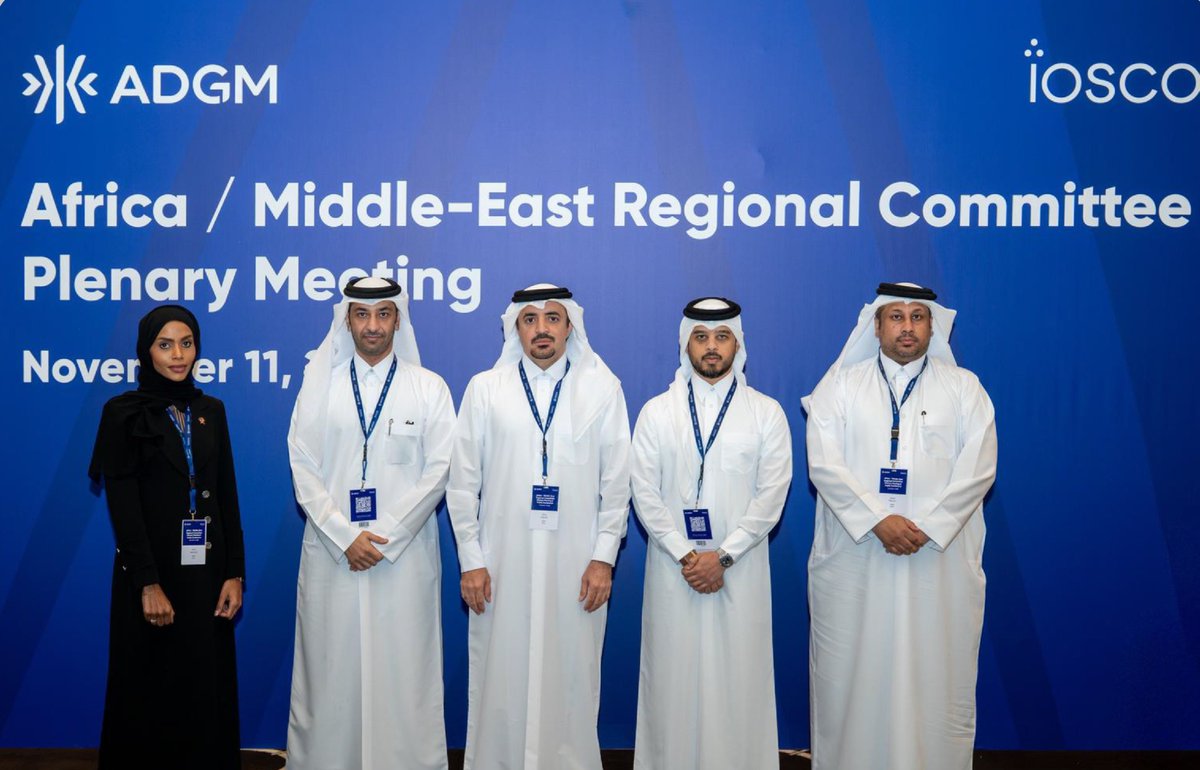

The State of Qatar participated in the annual meeting of the Africa and Middle East Regional Committee (AMERC) of the International Organization of Securities Commissions (IOSCO), held in Abu Dhabi, United Arab Emirates. The Qatar Financial Markets Authority’s CEO, Dr. Tamy bin Ahmad Al Binali, represented Qatar at the event, where key issues related to securities markets were discussed, including the challenges of cybersecurity in the digital age.
The meeting addressed several critical topics, including regional integration of capital markets and the experiences of member states in navigating these complex issues. Discussions also focused on emerging trends in sustainable finance and how environmental, social, and governance (ESG) considerations have become integral to the global financial system.
Cybersecurity Challenges in Securities Markets
A major concern raised during the meeting was the increasing threat of cybersecurity breaches in securities markets. As financial markets become more digitized, the risk of cyberattacks grows, posing significant challenges to regulatory bodies and financial institutions. The workshop held alongside the meeting explored the transition toward the use of tokenized digital assets, or tokenization, in financial markets, examining whether this technology represents a natural step in market development or poses challenges to traditional regulatory systems.
According to the Qatar Financial Markets Authority, the discussions highlighted the need for robust cybersecurity measures to protect the integrity of financial markets. The Authority emphasized the importance of cooperation among member states to address these challenges effectively.
Regional Integration and Sustainable Finance
The meeting also discussed regional integration of capital markets, a key area of focus for IOSCO’s AMERC. The integration of capital markets can enhance economic cooperation among member states and promote financial stability. However, it requires careful coordination and regulatory alignment among participating countries. In this context, Dr. Al Binali met with Emmanuel Givanakis, CEO of the Financial Services Regulatory Authority (FSRA) of Abu Dhabi Global Market (ADGM), to discuss ways to strengthen bilateral cooperation, particularly in capital markets and financial services.
The discussions touched on emerging trends in sustainable finance, with a focus on how ESG considerations are reshaping financial markets. As the global financial system becomes increasingly complex, regulatory bodies must adapt to these changes to ensure the stability and integrity of financial markets.
Tokenization and Digital Assets
The workshop on tokenization explored the potential benefits and challenges of this emerging technology. Tokenization involves the representation of assets as digital tokens on a blockchain, which can enhance the efficiency and transparency of financial transactions. However, it also raises regulatory concerns, such as the need for clear guidelines on the issuance and trading of tokenized assets.
As financial markets continue to evolve, regulatory bodies must stay ahead of the curve to address the challenges and opportunities presented by emerging technologies like tokenization. The discussions at the AMERC meeting highlighted the importance of cooperation and knowledge-sharing among member states to navigate these complex issues effectively.
Dr. Al Binali and Mr. Givanakis reviewed key global developments in the sector and explored prospects for future collaboration. Their meeting underscored the importance of bilateral cooperation in addressing the challenges facing the global financial system.
As the financial landscape continues to evolve, further discussions and developments are expected in the coming months. Regulatory bodies and financial institutions will need to work together to address the challenges and opportunities presented by emerging trends and technologies, such as tokenization and sustainable finance. The next steps will likely be shaped by the outcomes of meetings like AMERC and the ongoing collaboration among its member states.