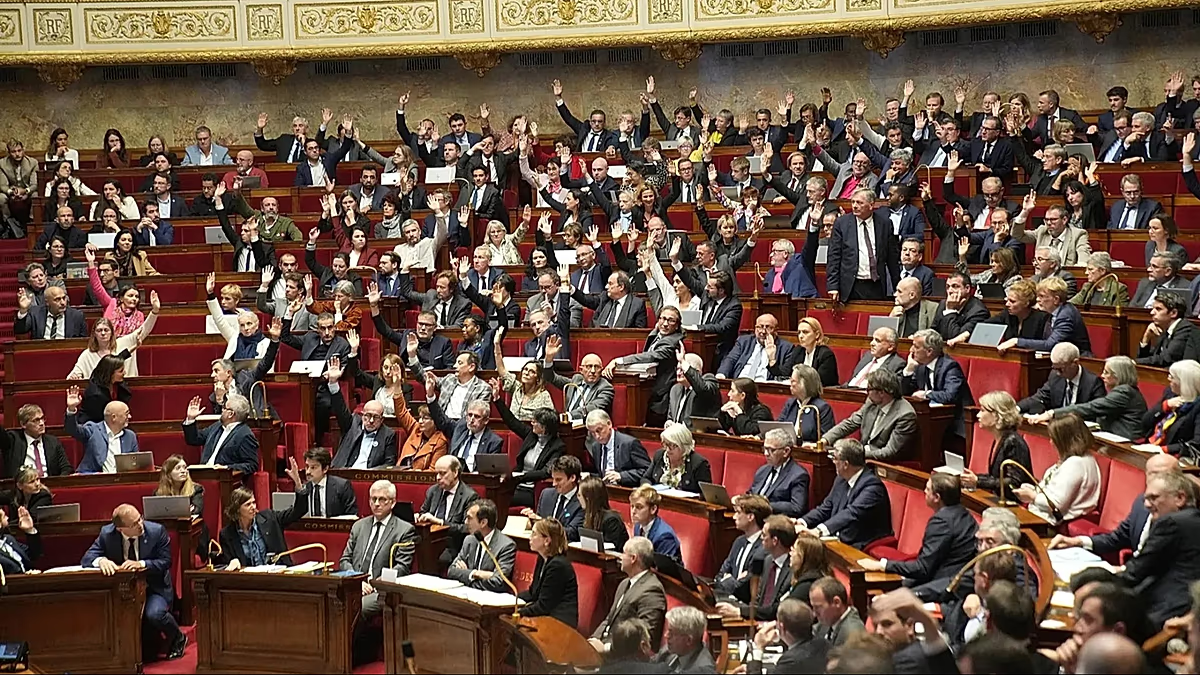

France’s lower house of parliament, the National Assembly, has approved a measure to suspend a contentious pension reform, a key aspect of the government’s fiscal consolidation efforts. The vote, which passed by 255 to 146 on Wednesday, follows a significant concession by Prime Minister Sébastien Lecornu to the Socialist Party.
This development comes as France struggles to rein in its budget deficit, which has become the largest in the euro zone. The country’s public deficit hit 5.8% of GDP in 2024, totalling €168.6 billion, a figure well above the maximum allowed by EU rules.
Pension Reform and Budget Deficit
The suspension of the pension reform is a major concession to the Socialist Party, which had been pushing for the retirement age to remain at 62 years and nine months. The original plan, introduced by President Emmanuel Macron, aimed to raise the pension age to 64. However, this move was met with significant opposition, leading to the current compromise.
According to the agreement, three and a half million French people will be able to retire earlier. Socialist MP Melanie Thomin hailed the decision, stating that it demonstrates the effectiveness of consensus-building. However, this concession is likely to undermine the government’s target of trimming the deficit by €30 billion.
Implications for France’s Budget
The final shape of the budget remains unclear, with no revised estimate published yet. The costly concessions made by the government, including the suspension of the pension reform, are expected to have a significant impact on France’s fiscal trajectory. Investors and some of France’s European partners are watching the situation closely, as the country’s political turmoil continues to affect its economic stability.
Meanwhile, the government faces pressure to meet EU fiscal rules. The European Commission has been monitoring France’s budget deficit closely, and further action may be taken if the country fails to comply with EU regulations. In this context, the government’s ability to balance its budget while addressing social concerns will be crucial.
Next Steps
Lawmakers will need to back the whole social security bill in a final vote at a later stage for the suspension of the pension reform to take effect. The outcome of this vote remains uncertain, and the government’s efforts to navigate the complex budget debates will be closely watched. As France continues to grapple with its fiscal challenges, the path forward will depend on the government’s ability to strike a balance between fiscal consolidation and social welfare.
For now, the focus remains on the upcoming vote and the government’s efforts to stabilize France’s economy. As the situation unfolds, observers will be watching closely to see how the government addresses the country’s fiscal challenges while meeting the needs of its citizens.