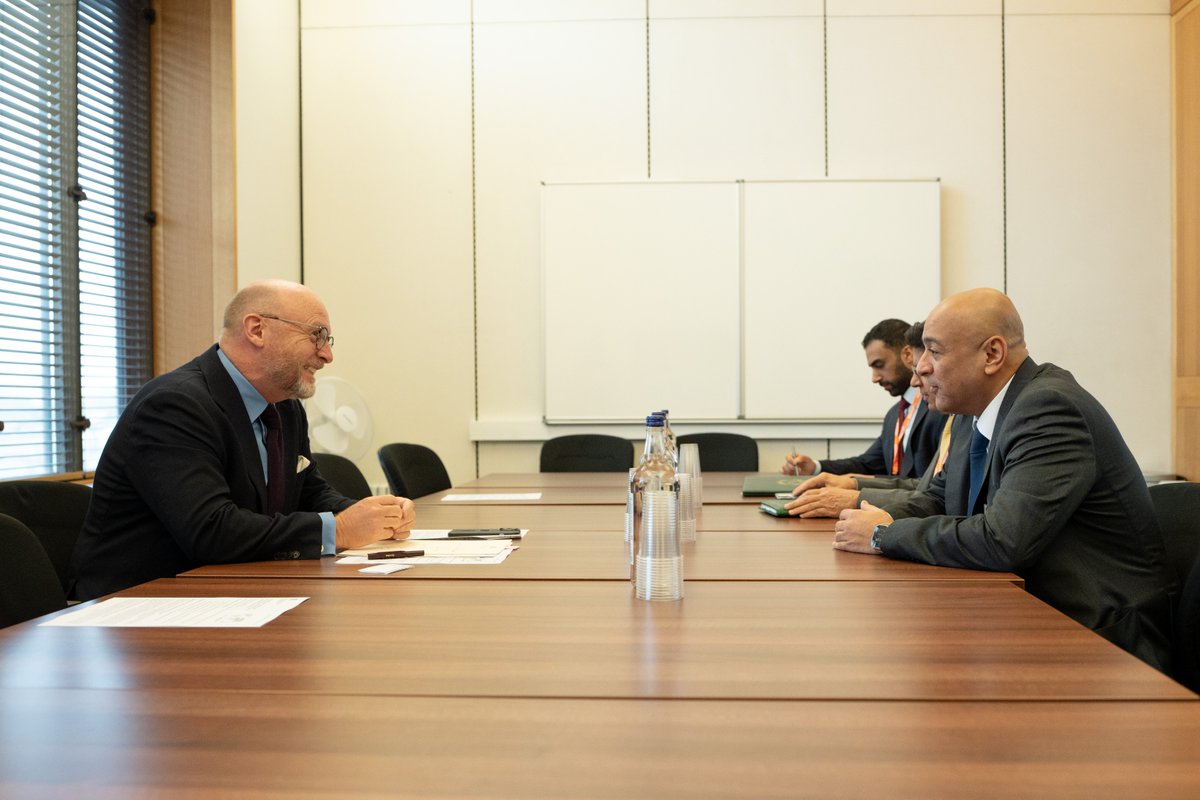

The Gulf Cooperation Council (GCC) is making significant strides in its free trade agreement (FTA) negotiations with the United Kingdom (UK). In a recent meeting in London, GCC Secretary-General Jasem Mohamed Albudaiwi met with Liam Byrne, Chair of the International Trade Committee in the UK Parliament, to discuss the progress of these negotiations and the future of economic cooperation between the two regions.
The meeting, which took place in London, highlighted the growing importance of strengthening economic ties between the GCC and the UK. Albudaiwi emphasized the crucial role that legislative institutions play in supporting economic and trade cooperation between nations, praising the historical relations between the GCC and the UK and their continuous growth at various levels.
GCC-UK Free Trade Agreement Negotiations
The GCC-UK FTA negotiations have been ongoing, with both parties aiming to reach a comprehensive agreement that serves mutual interests and allows for broader horizons of economic and investment integration. The agreement is expected to enhance the strategic partnership between the GCC and the UK, fostering greater economic cooperation and trade between the two regions.
According to Albudaiwi, the FTA negotiations are progressing positively, with a focus on achieving a mutually beneficial agreement. The GCC Secretary-General highlighted the importance of the UK Parliament’s role in supporting the FTA negotiations, ensuring that the agreement is ratified and implemented effectively.
Economic Cooperation and Investment
The meeting between Albudaiwi and Byrne also touched on the broader context of economic cooperation between the GCC and the UK. The GCC is a significant trading partner for the UK, with bilateral trade valued at billions of dollars annually. A successful FTA is expected to further boost trade and investment between the two regions, creating new opportunities for businesses and investors.
Additionally, the GCC and the UK have a long history of cooperation in various sectors, including energy, finance, and defense. The FTA negotiations are seen as a key step in deepening this cooperation and fostering greater economic integration between the two regions.
Implications of a GCC-UK FTA
A successful FTA between the GCC and the UK is expected to have significant implications for both regions. For the GCC, the agreement is likely to provide greater access to the UK market, enhancing trade and investment opportunities for GCC businesses. For the UK, the FTA is expected to strengthen its economic ties with the GCC, a key region for UK trade and investment.
However, the FTA negotiations are not without challenges. One of the key issues is the need to address concerns around tariffs, quotas, and regulatory barriers. Additionally, the GCC and the UK will need to work together to ensure that the agreement is implemented effectively, with clear mechanisms for dispute resolution and cooperation.
As the FTA negotiations continue, the next steps are expected to be crucial in determining the outcome of the agreement. The GCC and the UK are likely to engage in further rounds of negotiations, with a focus on resolving outstanding issues and finalizing the agreement. According to recent reports, the negotiations are expected to conclude by 2025, although the exact timeline remains uncertain.
In conclusion, the meeting between Albudaiwi and Byrne highlights the ongoing efforts to strengthen economic cooperation between the GCC and the UK through the FTA negotiations. While challenges remain, a successful agreement is expected to have significant benefits for both regions, enhancing trade and investment opportunities and deepening economic ties.