
India’s Space Programme: A Journey of Innovation and Self-Reliance
India’s space programme has made remarkable progress over the years, achieving a series of impressive satellite launches and establishing the country as a major player in the global space industry. The Indian Space Research Organisation (ISRO) has been at the forefront of this progress, with a focus on self-reliance and the development of advanced, independent capabilities in designing, launching, and operating complex space missions. With the launch of its first satellite, Aryabhata, in 1975, India entered the space age using indigenous technology, marking the beginning of a new era in the country’s space exploration journey.
A Legacy of Achievements
ISRO has proved its mettle with the completion of technically intricate and formidable missions, such as the lunar mission Chandrayaan-3, Mars mission Mangalyaan, and solar observatory mission Aditya-L1. These missions have not only showcased India’s capabilities but also demonstrated its ability to execute cost-effective yet high-value space science missions. The success of these missions has been recognized globally, with international leaders and space agencies congratulating India on its achievements. For instance, the Chandrayaan-3 mission made India the first country to land on the Moon’s south pole, a feat that has garnered widespread acclaim.
Breakthroughs in Space Technology
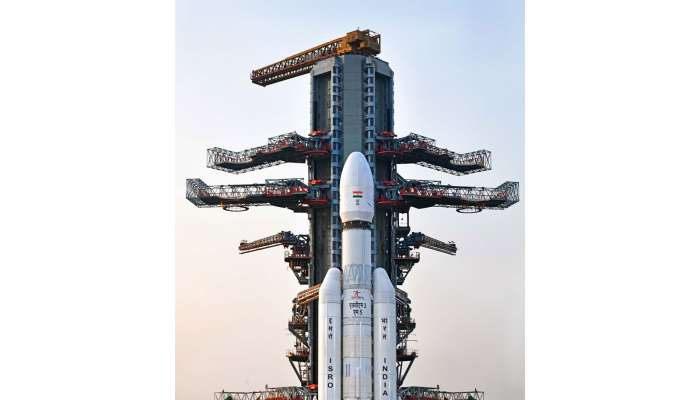
India’s space programme has been characterized by a series of breakthroughs in space technology. The country has developed its own rockets, including the Polar Satellite Launch Vehicle (PSLV), Geosynchronous Satellite Launch Vehicle (GSLV), and Geosynchronous Satellite Launch Vehicle Mk-III (LVM3). Moreover, ISRO is developing the Small Satellite Launch Vehicle (SSLV) that will cater to the small satellite launch market. The successful launch of a record 104 satellites in one go in 2017 was a testament to India’s capabilities in space technology. India’s advancements in space technology are not limited to launch vehicles alone; the country has also made significant progress in satellite development, with a range of satellites designed to serve various purposes, from communication to Earth observation.
Cost-Effective Space Exploration
One of the key factors that have contributed to India’s success in space exploration is its ability to execute missions at a relatively low cost. The Chandrayaan-3 mission, for example, was accomplished at a cost of just USD 75 million, much lower than the budget of many Hollywood movies. Similarly, the Mars Orbiter Mission, nicknamed Mangalyaan, was completed at a cost of USD 74 million, making it one of the cheapest interplanetary missions ever. The Aditya-L1 mission, which was launched to study the Sun, was developed at a cost of USD 46 million, further showcasing India’s ability to execute cost-effective space science missions.
Future Plans: Gaganyaan and Beyond
India is now inching closer to the reality of sending its astronauts into low Earth orbit with the Gaganyaan mission, scheduled for 2025-end. ISRO chief V Narayanan has stated that work is ongoing, with plans to send an unmanned spacecraft by the end of the year. The Gaganyaan mission has been recognized globally, with French astronaut Thomas Pesquet calling it an “extremely impressive and noticed” achievement. As India continues to push the boundaries of space exploration, its achievements are likely to inspire other low- and middle-income countries to pursue their own space programmes.
In conclusion, India’s space programme has come a long way since its inception in 1975. With a focus on self-reliance and innovation, ISRO has achieved a series of impressive milestones, from launching a record number of satellites to successfully executing complex space missions. As the country looks to the future, with plans to send astronauts into low Earth orbit, its achievements are likely to continue to inspire and influence the global space industry. The success of India’s space programme is a testament to the country’s capabilities and its commitment to advancing the field of space exploration. With its cost-effective approach and innovative spirit, India is poised to remain a major player in the global space industry for years to come.