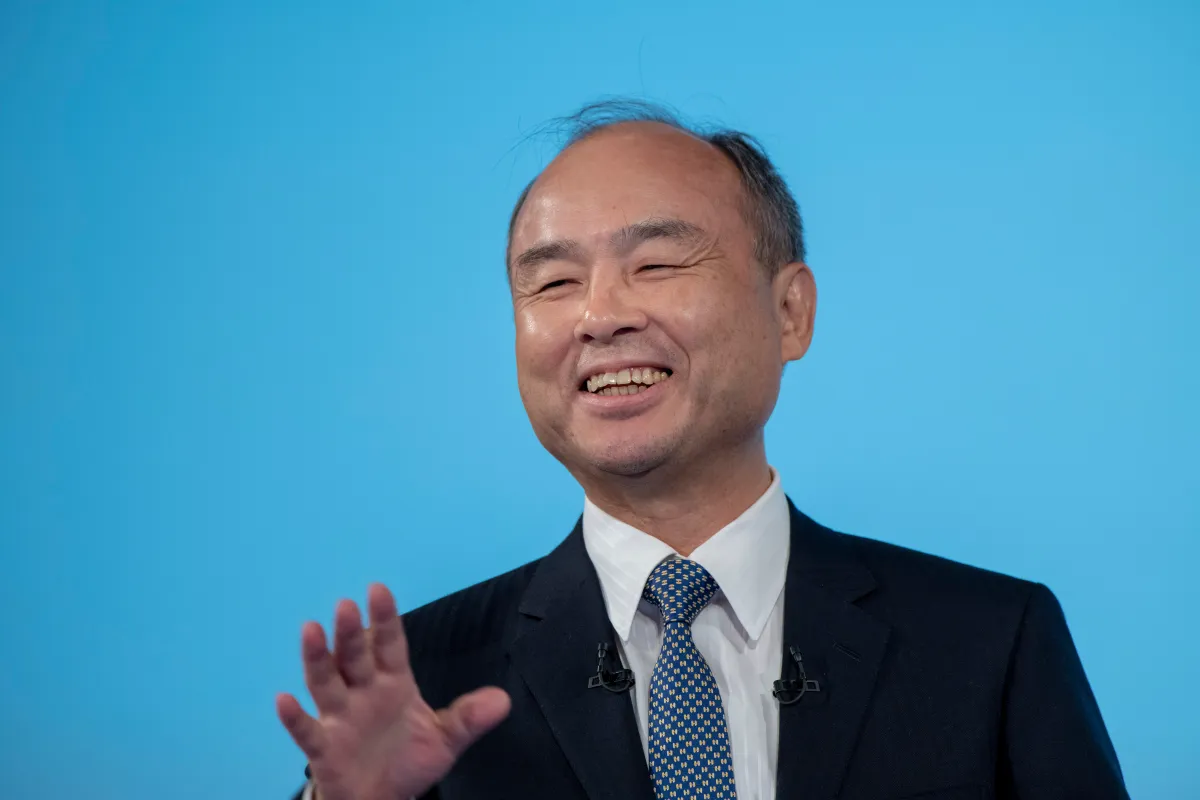

Masayoshi Son, the founder of SoftBank, has made a bold move by selling the company’s entire $5.8 billion stake in Nvidia to focus on artificial intelligence (AI) investments. This unexpected decision has sent shockwaves through the business world, with Nvidia shares dropping nearly 3% following the disclosure.
Son’s history of making high-stakes bets is well-documented, with his career marked by both spectacular successes and failures. In the late 1990s, his net worth soared to around $78 billion, making him the world’s richest person, before plummeting by $70 billion during the dot-com bubble burst. However, he bounced back with a $20 million investment in Alibaba in 2000, which eventually grew to be worth $150 billion.
SoftBank’s AI Ambitions
Son’s latest move is seen as a strategic decision to double down on AI investments, including a planned $30 billion commitment to OpenAI and participation in a potential $1 trillion AI manufacturing hub in Arizona. According to analysts, the sale of Nvidia shares “should not be seen as a cautious or negative stance on Nvidia” but rather reflects SoftBank’s need for capital to fund its AI ambitions.
SoftBank’s decision to exit its Nvidia stake comes after a previous sale in 2019, which proved costly. The company sold a $4 billion stake for $3.6 billion, shares that would now be worth over $150 billion. However, this time, SoftBank managed to sell its 32.1 million shares at around $181.58 per share, just 14% below Nvidia’s all-time high.
Implications and Future Plans
The market reaction to SoftBank’s decision has been mixed, with some analysts questioning whether Son sees something that others do not. With a track record of making bold bets, Son’s next moves will be closely watched. As the AI landscape continues to evolve, SoftBank’s commitment to this sector is expected to drive further investment and innovation.
Potential Opportunities and Challenges
While Son’s decision to focus on AI may yield significant returns, it also poses risks. The AI manufacturing hub in Arizona, for instance, is still in the planning stages, and its success is uncertain. Additionally, SoftBank’s history of investments has been marked by both successes and failures, including the costly WeWork debacle. The report indicates that investors will be watching SoftBank’s next steps closely, as the company navigates the complex and rapidly evolving AI landscape.
As the situation unfolds, investors and industry observers will be looking out for further announcements on SoftBank’s AI investments and the progress of the Arizona manufacturing hub. The outcome of these developments is expected to have significant implications for the AI sector and SoftBank’s position within it.