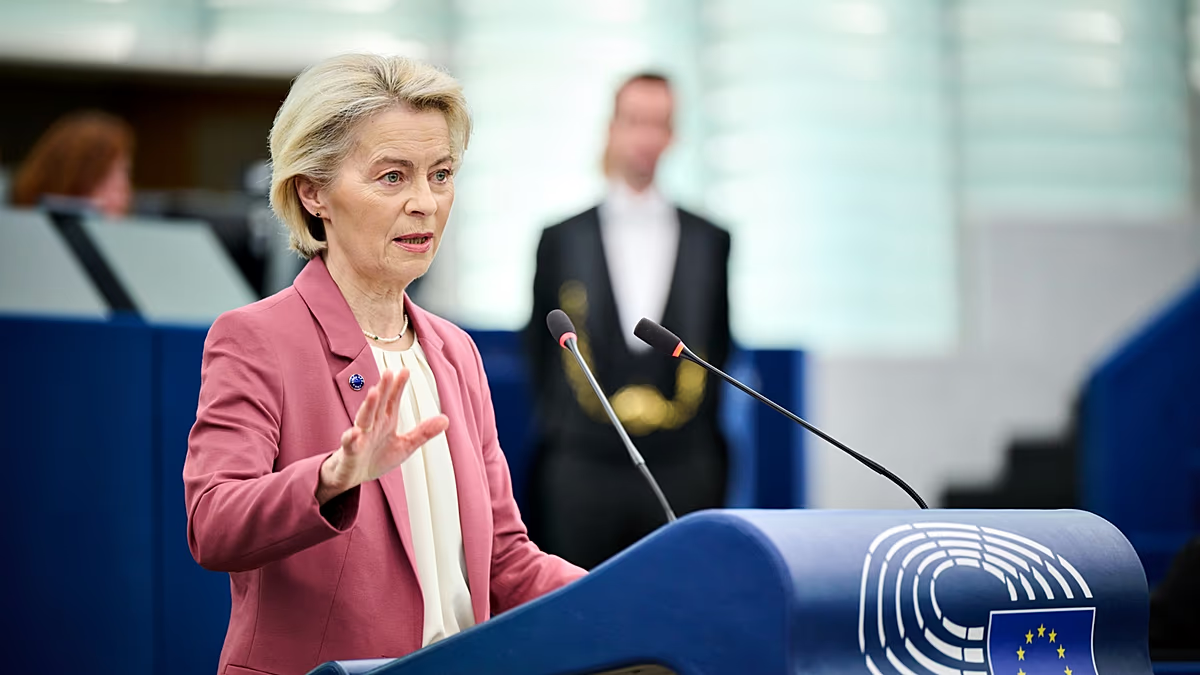

The European Commission has made minor adjustments to its proposed €2 trillion EU budget for 2028-2034, aiming to placate the four centrist parties backing Commission President Ursula von der Leyen. The changes were discussed during a virtual meeting on Monday among von der Leyen, European Parliament President Roberta Metsola, and Danish Prime Minister Mette Frederiksen, who holds the rotating presidency of the European Council.
According to von der Leyen, the meeting resulted in a “solid understanding of the proposals and a clear path forward.” The proposed tweaks include a stronger role for regional authorities, a new target to ensure a minimum of funds flows into rural areas, and expanded oversight powers for the European Parliament.
EU Budget Negotiations: A Delicate Balance
The Commission’s original draft budget has faced intense resistance from the EU Parliament, with the European People’s Party (EPP), the Socialists & Democrats (S&D), the liberals of Renew Europe, and the Greens expressing concerns over the National and Regional Partnership Plans (NRPP). These plans would consolidate the two largest financial envelopes – the Common Agricultural Policy (CAP) and cohesion funds – alongside other policy areas.
The four parties argued that the NRPP would lead to fragmentation, undercut solidarity, and empower central authorities at the expense of regional and local institutions. In response, von der Leyen’s team has retained the contentious national plans but added a “rural target” to dedicate 10% of unallocated funds to the development of agrarian territories. Regional authorities will also be given greater responsibility in the adoption and implementation of the national plans.
Parliament’s Growing Influence
The Commission’s decision to make changes to its proposal after presenting it is seen as a significant political win for the European Parliament. Siegfried Mureșan, a centre-right MEP and co-rapporteur on the file, hailed the changes as “an important victory” for defending farmers and regions in the next long-term EU budget.
However, the core elements of the negotiations are expected to remain in the hands of member states, which finance the budget through proportional contributions. A senior diplomat noted that von der Leyen’s concessions are “sensible” and overlap with some of the concerns member states are privately discussing. For more information on the EU budget process, you can visit the European Commission’s website or the European Parliament’s factsheet on the topic.
As the negotiations continue, the EU budget is expected to be a key topic of discussion among member states, with a unanimous agreement required by December next year. The outcome will have significant implications for the EU’s policies and priorities in the years to come. With the European Parliament having secured some key concessions, the next steps in the negotiations will be closely watched by stakeholders across the EU.