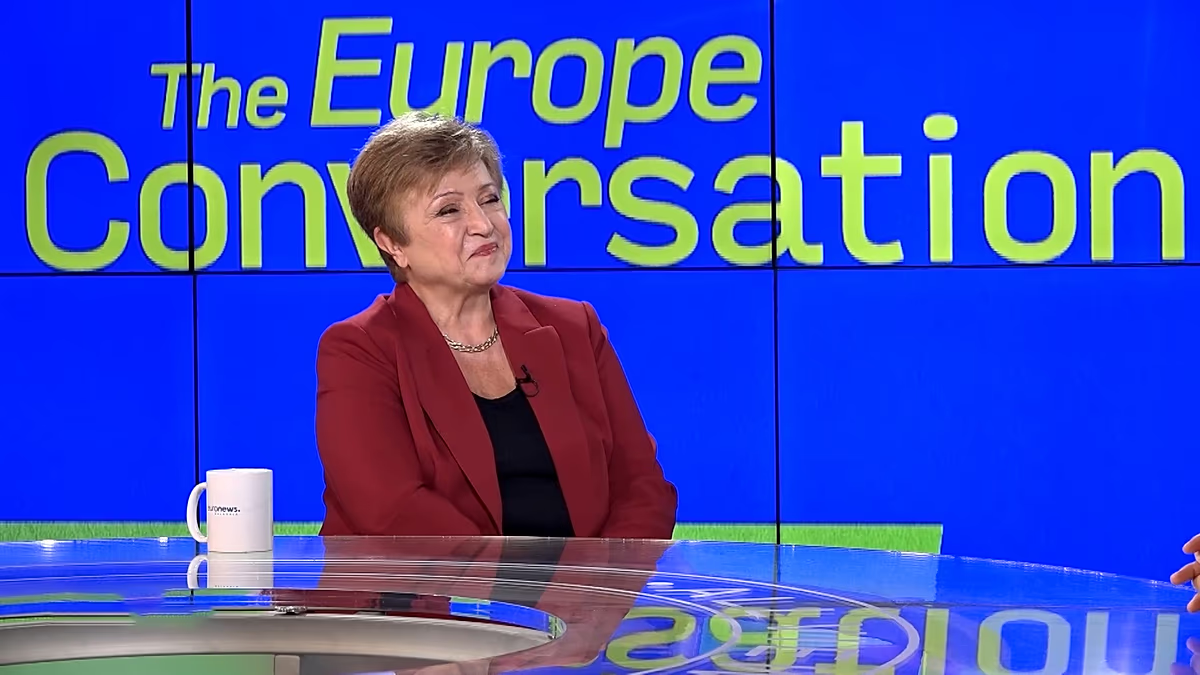

The European Union’s single market needs stronger leadership to implement reforms outlined in the Draghi report, according to International Monetary Fund Managing Director Kristalina Georgieva. The report, published last year, presents a comprehensive agenda for EU reform.
Georgieva praised the report but emphasized the need for faster implementation, citing the complexities of Brussels and the broad range of issues addressed. A single voice with authority across the EU 27 member states and sectors is required to complete the single market.
Implementing the Draghi Report
Georgieva stressed that agreeing on who has the delegated authority is crucial, as the current setup is “too complex” and “not moving fast enough.” She drew parallels with her experience as a European Commissioner from 2010 to 2016, where she found that without full authority, it was difficult to make significant progress.
The Draghi report touches on key areas like competition, energy, and innovation, aiming to address the EU’s “moment of radical change or slow agony.” Georgieva suggested that a single market czar could help drive these efforts forward.
Effective Decision-Making Models
Georgieva pointed to the Barnier model during the Brexit negotiations as an effective decision-making approach. Michel Barnier, the EU’s chief Brexit negotiator, centralized decision-making and negotiated directly with British officials, producing results that benefited all member states.
A similar approach could be applied to implementing the Draghi report, with a single leader having full access to heads of state and Commission resources. This would help to overcome the current fragmentation among the Council and different Commissioners.
Beyond the Single Market
Georgieva also discussed the EU’s role in international trade, praising the bloc’s leadership for rejecting an escalation in the trade war initiated by the US government. The EU accepted a deal that raised tariffs to 15% on European exports, arguing that a single, fixed rate would provide certainty to business and consumers.
According to Georgieva, this decision prevented a “spiral of tit-for-tat” and saved the world economy. She suggested that Europe should now focus on removing internal barriers within the single market and broadening its network of trading partners beyond the US, as discussed in a recent European publication.
As the EU moves forward, the need for stronger leadership and a unified approach will be crucial in implementing the Draghi report and addressing the bloc’s challenges. The next steps will likely involve finding a suitable candidate for the single market czar role and defining their authority and mandate.