





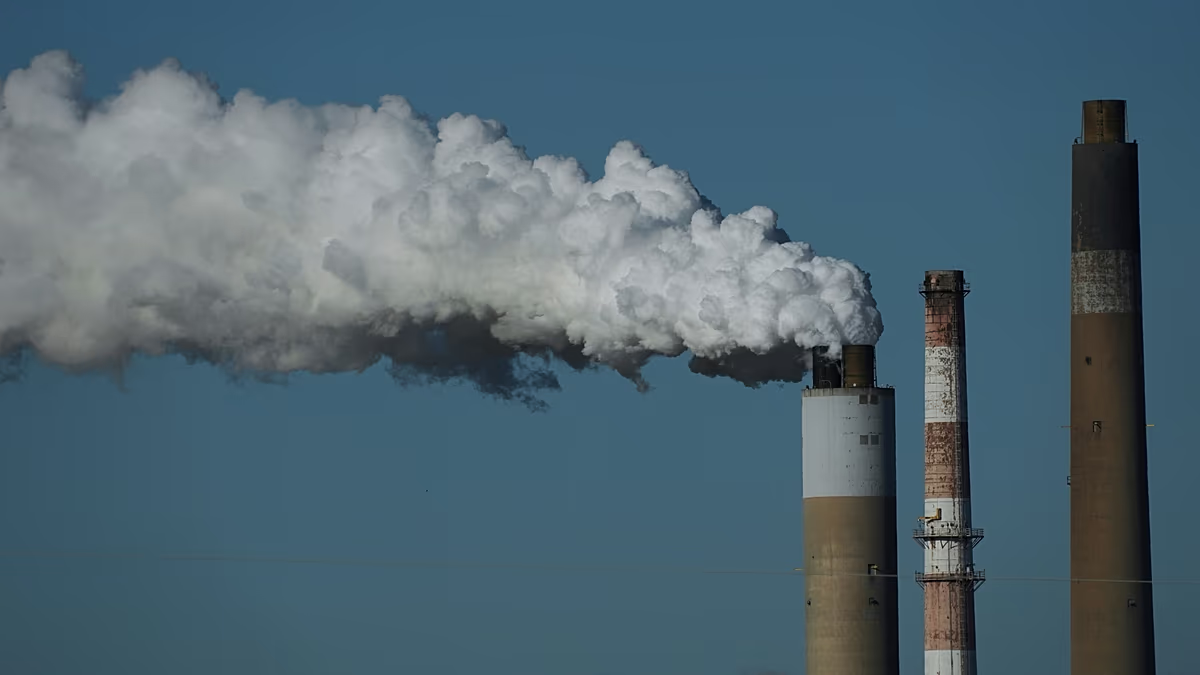

The European Parliament’s environment committee has backed the revision of the EU’s climate law, setting a target to cut greenhouse gas emissions by 90% by 2040. This move paves the way for the full house to adopt the revision, following lengthy political talks that secured policy flexibilities to help EU nations reach the target without jeopardising the competitiveness of their industries.
## Strengthening EU Climate Ambition
The vote, with 55 in favour and 32 against, aligns with the text agreed by EU member states on November 5. The target of a 90% reduction by 2040, compared to 1990 levels, remains a key point. Additionally, the possibility of using up to 5% of carbon credits to offset underperforming sectors has been retained. The use of carbon credits is seen as a crucial flexibility mechanism to help EU countries achieve their emission reduction targets.
### Ensuring High-Quality Carbon Credits
The Parliament has strengthened the wording on international carbon credits, requiring them to be “high-quality” and “high-integrity.” This move ensures that the credits effectively result in emission reductions in non-EU countries. The purchase and use of such credits will be regulated, with robust safeguards in place to prevent double counting and ensure transparent governance.
## Key Players React to the Deal
Lawmakers reacted to the deal with a mix of optimism and concern. Spanish lawmaker Javi Lopez hailed the vote as a “clear signal” reaffirming the EU’s commitment to climate leadership. He emphasized the need to deliver the tools, funding, and industrial strategy needed to make the transition a success. However, Austrian lawmaker Lena Schilling regretted the decision to use international credits, describing it as a “loophole” that “weakens our climate ambition.” She stressed the need to ensure that these credits deliver real, verifiable climate impact.
## Balancing Ambition and Flexibility
The deal was negotiated by the European People’s Party, Socialists and Democrats, and Renew Europe, which form the centrist majority supporting the Commission, plus the Greens/EFA group. The agreement represents a balance between ambition and flexibility, with a strong focus on ensuring that the transition to a low-carbon economy is fair and equitable. The European Commission will play a crucial role in implementing the revised climate law, and lawmakers are urging the Commission to consider stricter criteria for carbon credits than those set out in the Paris Agreement.
Tiemo Wölken recognized that the outcome was not as ambitious as the Socialists intended, but said the forged deal was “better than no deal.” The Parliament has shown responsibility and unity in the face of climate scepticism and populism, and lawmakers will continue to push for stronger measures, more investment in green jobs, and a fair deal for workers and communities most affected by the transition.
In conclusion, the European Parliament’s environment committee has taken a significant step towards strengthening the EU’s climate ambition by backing the revision of the bloc’s climate law. While there are concerns about the use of international carbon credits, the deal represents a crucial step towards achieving the EU’s emission reduction targets. As the EU moves forward with its climate agenda, it is essential to ensure that the transition is fair, equitable, and effective in reducing greenhouse gas emissions. The EU’s climate law is a critical component of this effort, and its successful implementation will be crucial in achieving the bloc’s climate goals. The European Commission and EU member states must work together to deliver the necessary tools, funding, and industrial strategy to support this transition.