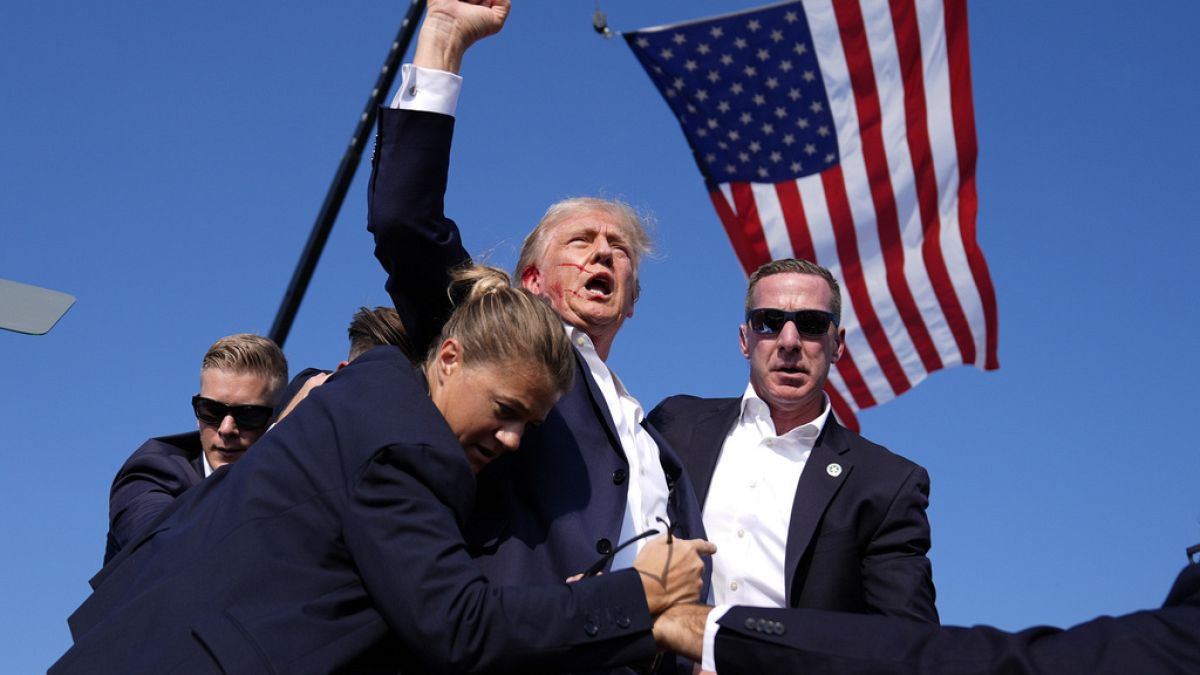

The recent assassination attempt on former US President Donald Trump has sparked concern among analysts about the potential impact on undecided voters in the upcoming presidential election. Jackson Janes, a senior fellow at the German Marshall Fund, emphasized the need for both Democratic and Republican leaders to handle the event with respect and avoid engaging in a “blame game” that could further polarize the political climate. With key battleground states such as Arizona, Georgia, Michigan, Pennsylvania, and Wisconsin in play, the opinions of undecided voters could play a significant role in determining the election outcome.
Janes expressed worries about the current level of political violence in the US, warning that unless something changes, the country may see more politically-motivated attacks in the future. He compared the current atmosphere to the turbulent 1960s, marked by the assassinations of prominent leaders such as John F. Kennedy and Martin Luther King Jr. The analyst stressed the importance of lowering the “temperature” of emotions in political discourse to prevent further violence from occurring.
Despite surviving the assassination attempt, Trump’s supporters were quick to blame the violence on Biden and his allies, accusing them of creating a toxic environment with attacks on Trump. In response, Biden condemned the attack as “sick” and emphasized that there is no place for such violence in America. The incident has reignited discussions about the need for unity and respect in political discourse, especially in the lead-up to the presidential election.
As Trump prepares to attend the Republican National Convention in Wisconsin, analysts anticipate that the event will focus heavily on the emotions stirred by the attack. However, the challenge will be how to address these emotions and prevent further escalation of political violence. International leaders from various political backgrounds have also condemned the attack, underscoring the need for a more respectful and peaceful political environment in the US.
The assassination attempt on Trump has raised questions about the impact on undecided voters who may be swayed by how leaders of both parties respond to the incident. Janes highlighted the need for leaders to handle the situation with sensitivity and avoid contributing to the polarizing rhetoric that has been prevalent in US politics. With the election approaching, the opinions of undecided voters in key battleground states could play a crucial role in determining the outcome and shaping the future of US politics.
In conclusion, the recent assassination attempt on Donald Trump has brought to light the divisive political climate in the US and the need for a more respectful and peaceful discourse. The incident has prompted discussions about the impact on undecided voters and the role of leadership in setting the tone for political discussions. As the presidential election approaches, the reactions of voters in key battleground states will be closely watched, with the potential to sway the outcome of the election. Moving forward, it will be essential for political leaders to prioritize unity and respect to prevent further escalation of political violence.