



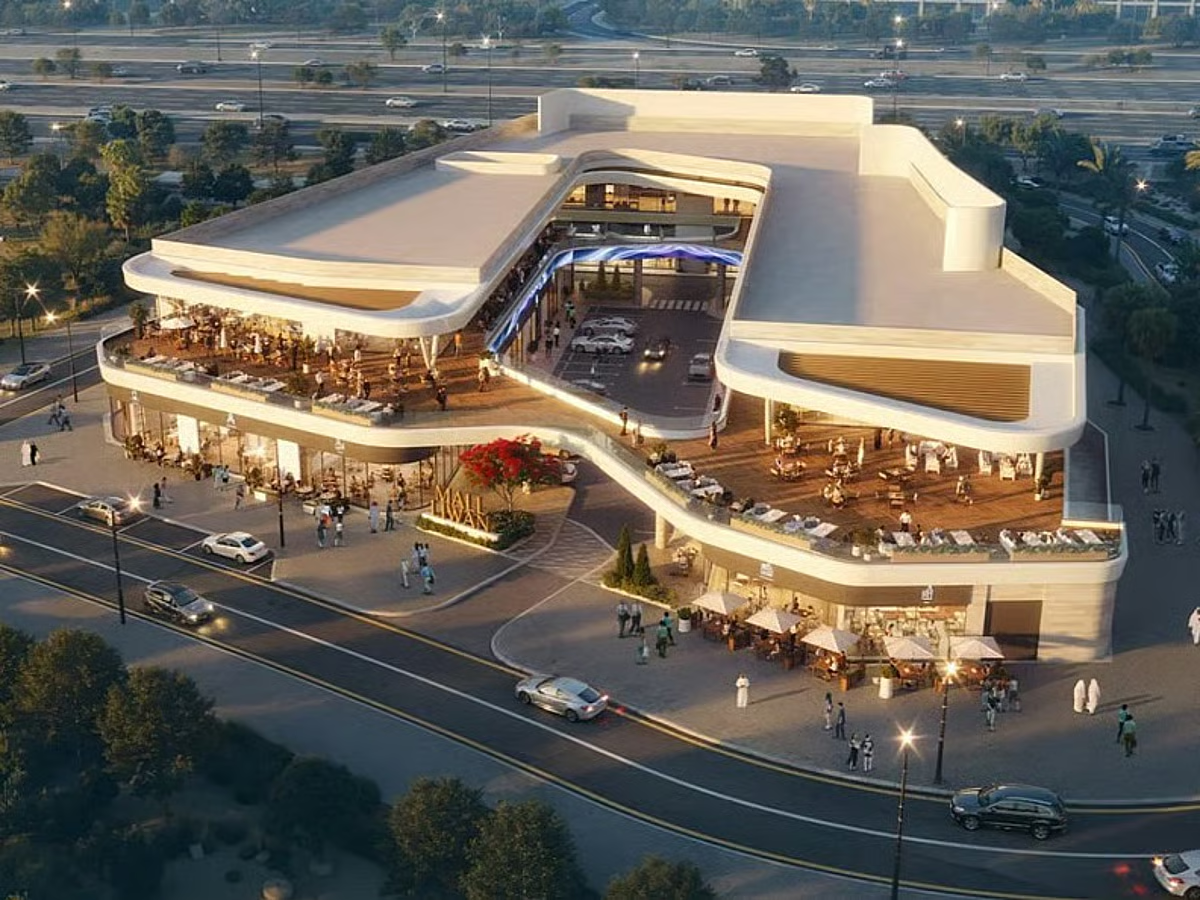

The United Arab Emirates is poised for significant retail expansion with the announcement of seven new UAE malls slated to open in 2026. Developers have unveiled projected opening dates for these projects, representing a substantial investment in the country’s consumer and tourism sectors. These additions aim to cater to a growing population and increasing visitor numbers, further solidifying the UAE’s position as a global retail hub.
The new shopping centers will be located across various emirates, including Dubai, Abu Dhabi, Sharjah, and Ras Al Khaimah, with a combined gross leasable area exceeding 6.8 million square feet. According to reports from property analysts, the projects represent a total investment value of approximately AED 18 billion (USD 4.9 billion). The staggered openings throughout 2026 are designed to avoid market saturation and allow for phased integration into existing retail landscapes.
Expanding Retail Landscape: New UAE Malls on the Horizon
The announcement reflects the UAE’s continued economic diversification efforts, moving beyond reliance on oil revenues. The retail sector is identified as a key contributor to non-oil GDP growth, and these new developments are expected to generate significant employment opportunities and boost local economies. The Ministry of Economy has consistently emphasized the importance of strengthening the retail environment to attract both domestic and international investment.
Project Details and Timelines
The largest of the planned malls, ‘The Oasis,’ in Dubai, is scheduled to open in the first quarter of 2026. It will feature over 400 retail outlets, an indoor waterpark, and a luxury hotel. ‘Al Fayda Mall’ in Abu Dhabi, targeting a late 2026 launch, will focus on family entertainment and community-based retail.
Sharjah’s ‘City Centre Al Rahmaniya’ is expected to open in the second half of 2026, aiming to serve the growing population in the emirate’s eastern region. Meanwhile, Ras Al Khaimah will see the opening of ‘Hayat Mall’ in the third quarter, designed to capitalize on the emirate’s increasing tourism appeal. Smaller-scale community malls are also planned for Ajman and Fujairah, with opening dates currently set for the fourth quarter of 2026.
Additionally, a unique ‘experiential retail’ destination, ‘The Forum,’ is planned for Dubai’s Jumeirah Village Circle. This project will prioritize interactive entertainment and dining experiences, moving away from traditional shopping formats. Developers are focusing on creating destinations that offer more than just retail, aiming to become social hubs for residents and tourists.
Factors Driving the Expansion
Several factors are contributing to this surge in shopping mall development. A growing population, fueled by both natural increase and immigration, is driving demand for retail spaces. The UAE’s robust tourism sector, particularly during the winter months, also plays a crucial role.
However, the rise of e-commerce presents a challenge to traditional brick-and-mortar retail. Developers are responding by incorporating online-to-offline strategies, integrating digital technologies into the mall experience, and offering unique services not readily available online. This includes features like click-and-collect services, personalized shopping experiences, and immersive entertainment options.
The government’s supportive policies, including streamlined regulations and investment incentives, are also encouraging private sector participation in retail development. The UAE’s stable political environment and strong infrastructure further enhance its attractiveness as an investment destination. The country’s strategic location, serving as a gateway between East and West, also contributes to its retail prominence.
The increasing disposable income of residents, coupled with a preference for experiential shopping, is another key driver. Consumers are increasingly seeking destinations that offer a combination of shopping, dining, entertainment, and social interaction. This trend is influencing mall design and tenant mix, with a greater emphasis on lifestyle brands and unique experiences. The demand for retail space is therefore evolving.
In contrast to some global markets experiencing retail decline, the UAE continues to demonstrate strong growth in this sector. This is partly attributed to the country’s relatively young population and its high rate of urbanization. The UAE also benefits from a high level of consumer confidence and a strong purchasing power.
Impact on Existing Retail Infrastructure
The influx of new commercial properties will likely intensify competition among existing malls. Established players are responding by undertaking renovations and expansions to enhance their offerings and attract customers. Analysts predict a potential shift in tenant mix, with a greater focus on luxury brands and unique experiences to differentiate themselves.
The new malls are also expected to create ripple effects on surrounding businesses, potentially boosting foot traffic and economic activity in their respective areas. However, concerns remain about potential oversupply in certain locations, particularly if economic conditions deteriorate. The success of these projects will depend on their ability to attract and retain tenants, as well as to adapt to changing consumer preferences.
The development of these malls is also expected to impact logistics and supply chain infrastructure. Increased demand for goods will require efficient transportation networks and warehousing facilities. The government is investing in infrastructure projects to support the growth of the retail sector and ensure smooth supply chain operations.
The long-term implications of these developments remain to be seen. The report indicates that the success of these new malls will depend on a variety of factors, including economic growth, consumer spending, and the ability to adapt to the evolving retail landscape. Monitoring occupancy rates and tenant performance will be crucial indicators of their success.
The next step involves securing final approvals for construction plans and commencing marketing campaigns to attract tenants. Developers are expected to announce further details regarding tenant lineups and specific features of each mall in the coming months. The deadline for completing construction and obtaining operating licenses is set for late 2025, allowing for a phased opening throughout 2026. Ongoing monitoring of economic indicators and consumer behavior will be essential to assess the long-term viability of these projects.