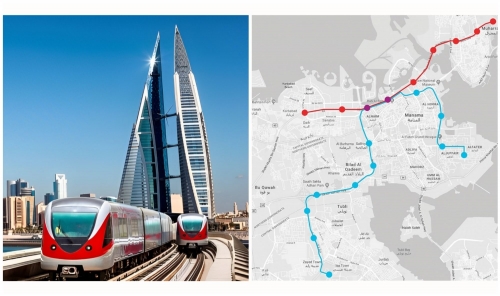

Bahrain is witnessing a surge in demand for public transportation, with current bus ridership numbers demonstrating a clear need for expanded infrastructure. Recent figures reveal approximately 33,000 bus trips taken on regular days, escalating to 50,000 on weekends and peaking at 75,000 during major events. This growing reliance on mass transit is a key driver behind the ambitious Bahrain Metro project, poised to revolutionize transportation within the Kingdom.
Bahrain Metro: Addressing Growing Transportation Needs
The Minister of Transportation and Telecommunications, Dr Shaikh Abdulla bin Ahmed Al Khalifa, highlighted these statistics during a recent parliamentary session, emphasizing their significance in supporting the development of a modern, efficient metro system. The proposed Bahrain Metro isn’t just a future aspiration; it’s a concrete plan with defined routes designed to alleviate congestion and offer a viable alternative to private vehicle use.
This project is considered one of the ministry’s most important initiatives, representing a substantial investment in the future of Bahrain’s infrastructure. It aims to cater to the increasing population and the demands of a rapidly developing economy.
Proposed Metro Routes and Stations
The initial phase of the Bahrain Metro will consist of two primary lines. The first will connect Bahrain International Airport to the bustling commercial district of Seef. The second line will run from Juffair, a popular residential and entertainment area, to the Educational Area, serving students and faculty alike.
The first phase will feature a total of 20 stations, strategically positioned to maximize accessibility. Crucially, two interchange stations are planned: one at Bahrain Financial Harbour and another at the Central Market in Manama. These interchange points will allow for seamless transfers between the two lines, enhancing the overall convenience of the system.
Progress and Future Expansion of Public Transport in Bahrain
Work is currently focused on refining the routes, carefully selecting station locations near major residential and commercial hubs, and ensuring easy access to these stations. This involves close collaboration with the Ministry of Housing to integrate the metro into urban planning and the development of robust feeder bus services. These feeder buses will act as vital links, extending the metro’s reach to areas not directly served by the main lines.
Additionally, the ministry is actively addressing logistical challenges, including land acquisition and the relocation of existing utilities along the planned corridors. This proactive approach demonstrates a commitment to minimizing disruption and ensuring the project stays on track.
Parliamentary Support and Calls for Acceleration
The progress of the Bahrain Metro has been met with enthusiasm from members of parliament. MP Lulwa Al Rumaihi welcomed the advancements in the first phase and urged the swift commencement of subsequent phases. She rightly pointed out that extending the metro network across all governorates is essential to reduce reliance on private cars, a major contributor to traffic congestion, particularly in densely populated areas.
This sentiment underscores the broader goal of creating a sustainable and integrated transportation system for Bahrain. Improved public transportation options are vital for reducing carbon emissions and enhancing the quality of life for residents.
Beyond the Metro: Enhancing the Existing Bus Network
While the Bahrain Metro represents a significant leap forward, the Ministry of Transportation and Telecommunications recognizes the importance of optimizing the existing bus network. Strengthening feeder bus services, as mentioned earlier, is a key component of this strategy.
Furthermore, ongoing analysis of bus ridership data allows for adjustments to routes and schedules, ensuring that the bus system remains responsive to the evolving needs of the population. This holistic approach, combining a state-of-the-art metro with a modernized bus network, is crucial for creating a truly effective and accessible mass transit system.
The minister also appealed for continued parliamentary support, emphasizing that the success of the project relies on collaborative efforts. This collaborative spirit is essential for navigating the complexities of a large-scale infrastructure project and ensuring its long-term viability.
In conclusion, the development of the Bahrain Metro is a pivotal moment for the Kingdom’s transportation infrastructure. Driven by a demonstrable increase in demand for public transport, the project promises to alleviate congestion, enhance accessibility, and contribute to a more sustainable future. With ongoing progress, parliamentary support, and a commitment to integrating the metro with existing bus services, Bahrain is well on its way to establishing a world-class public transportation system. Stay informed about the latest updates on the Bahrain Metro project by visiting the Ministry of Transportation and Telecommunications website and following local news sources.