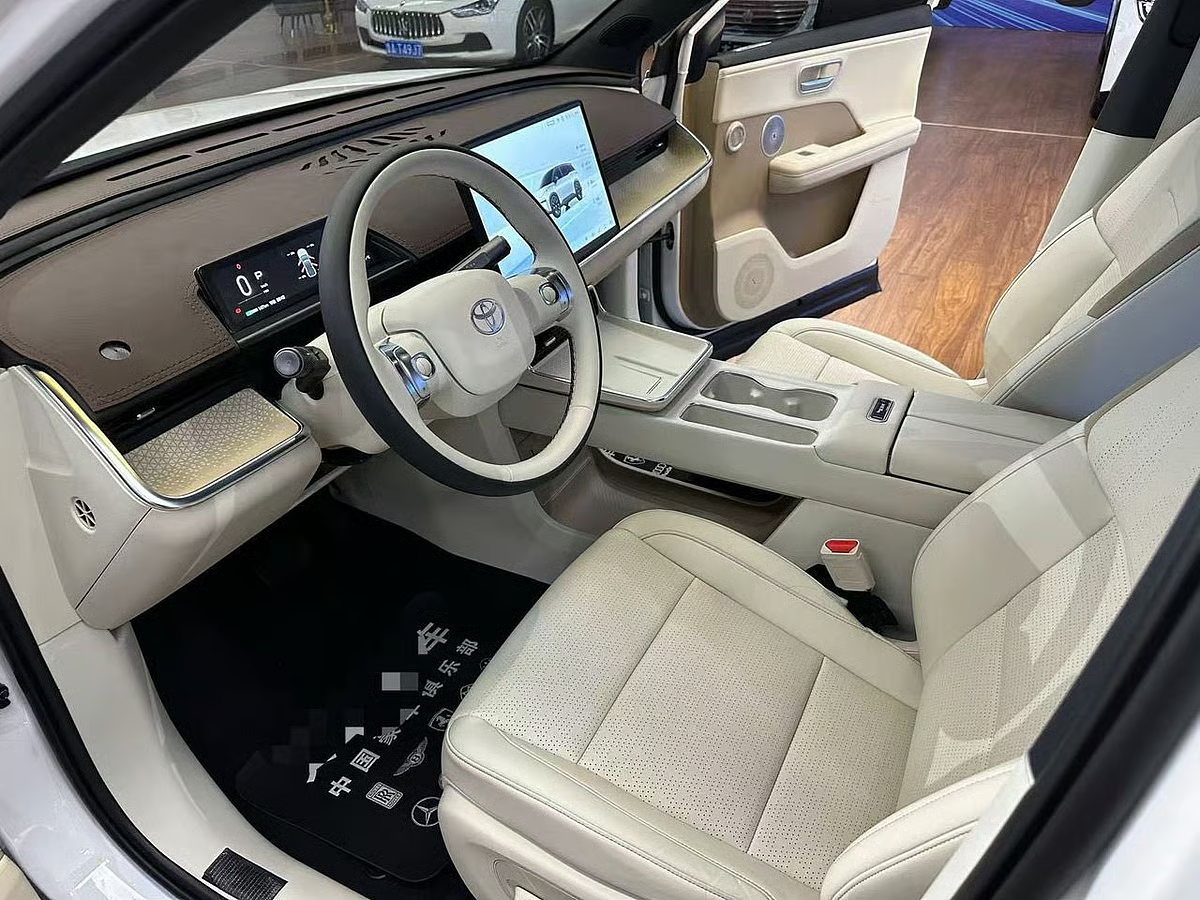

Toyota is bolstering its electric vehicle offerings with an updated bZ3 sedan, featuring advanced driver-assistance systems (ADAS) aiming for near self-driving capabilities. The 2026 model, launched in China, incorporates Momenta 5.0 technology, offering features like Navigate on Autopilot (NOA) for both urban and highway driving, and remote parking assistance. This move comes as Toyota seeks to gain ground in the competitive Chinese EV market.
The refreshed bZ3 is currently available exclusively in China, a key battleground for electric vehicle manufacturers. FAW Toyota, the joint venture producing the vehicle, is hoping the new features and aggressive pricing will boost sales, which have lagged behind domestic rivals like BYD and Tesla. The launch price for the base “Joy” trim is 93,800 yuan, roughly equivalent to $13,400 USD.
The Rise of Advanced Driver-Assistance Systems in Electric Vehicles
The core of the bZ3’s upgrade lies in the Momenta 5.0 ADAS suite. This system utilizes a comprehensive array of 32 sensors, including a roof-mounted lidar, five radar units, twelve ultrasonic sensors, and eleven cameras. These sensors feed data into a 544 TOPS (Tera Operations Per Second) chip, enabling what Toyota describes as Level 2+ autonomy.
Key Features of Momenta 5.0
Level 2+ autonomy allows the vehicle to handle steering, acceleration, and braking in certain conditions, but requires the driver to remain attentive and ready to take control. The NOA function is particularly noteworthy, promising automated navigation on both city streets and highways. Remote parking, a feature increasingly common in new vehicles, allows drivers to maneuver the car into tight spaces using a smartphone app.
However, it’s important to note that “self-driving” remains a complex and evolving term. While these systems significantly enhance driver convenience and safety, they are not fully autonomous and require constant driver supervision. The industry is still working towards achieving higher levels of automation, often referred to as Level 3 and beyond.
bZ3 Sales Performance and Market Challenges
The initial launch of the bZ3 in 2023 generated significant buzz, with approximately 5,000 orders placed on the first day at a price of 169,000 yuan. However, sales momentum slowed considerably, averaging around 5,000 units per month. According to FAW/GAC Toyota, total battery electric vehicle (BEV) sales for 2024 reached approximately 40,000 units.
This performance contrasts sharply with the success of competitors like BYD, which dominates the Chinese EV market, and Tesla, whose Model 3 remains a popular choice. BYD, for example, reported significantly higher sales figures throughout 2024. The lower price point of the 2026 bZ3 is intended to address this disparity and attract a wider customer base.
Industry analysts suggest the new pricing could be disruptive. The bZ3’s affordability positions it to compete directly with other mass-market EVs in China. Additionally, the advanced ADAS features, if proven reliable, could be a key differentiator. The success of the bZ3 will likely depend on consumer perception of these features and Toyota’s ability to build trust in its autonomous driving technology.
Competition in the Chinese EV Market
The Chinese EV market is characterized by intense competition and rapid innovation. Numerous domestic manufacturers are vying for market share, offering a wide range of electric vehicles at various price points. Tesla, while a significant player, faces increasing pressure from local rivals. This competitive landscape necessitates continuous improvement and adaptation from all manufacturers.
The integration of advanced technologies, such as lidar and high-performance computing chips, is becoming increasingly common in new EVs. These technologies are essential for enabling higher levels of driver assistance and, ultimately, full autonomy. The race to develop and deploy these technologies is a key driver of innovation in the automotive industry.
Meanwhile, government regulations and consumer preferences are also shaping the EV market. China’s government has been actively promoting the adoption of electric vehicles through subsidies and other incentives. Consumer demand for EVs is also growing, driven by concerns about air pollution and the rising cost of gasoline. The demand for electric cars is expected to continue to increase in the coming years.
The bZ3’s reliance on Momenta, a Chinese technology company, for its ADAS system is also noteworthy. This collaboration highlights the growing importance of partnerships between automakers and technology providers in the development of autonomous vehicles. Such partnerships allow automakers to leverage the expertise of specialized companies and accelerate the development of new technologies.
Looking ahead, Toyota will be closely monitoring sales figures and consumer feedback on the 2026 bZ3. The company has not yet announced plans to launch the updated model in other markets, but a global rollout could follow if the vehicle proves successful in China. Further developments in ADAS technology and regulatory approvals will also be crucial factors in determining the future of the bZ3 and Toyota’s broader EV strategy. The next key indicator will be sales data for the first quarter of 2026, providing a clearer picture of the bZ3’s market reception.